
Forty-eight brand-new F-35A stealth fighters are being moved into “China’s backyard,” turning Japan into the front line of a fast-forming 5th-generation airpower wall.
Story Snapshot
- The U.S. Air Force is finalizing the basing of 48 F-35A Lightning II fighters at Misawa Air Base in northern Japan by February 2026, replacing 36 F-16s.
- The deployment is designed to integrate with allied F-35 fleets and Japan’s sea-based aviation plans, including the JS Kaga refit for F-35B operations.
- Defense reporting ties the move to deterrence along the “First Island Chain,” where China’s growing J-20 force is a central driver.
- Lockheed Martin projects 300+ F-35s operating across the Asia-Pacific region by around 2030, signaling a broader regional shift.
Misawa’s F-35A Arrival Replaces F-16s With a Stealth-Centered Posture
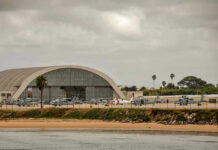
The U.S. Air Force is preparing to base 48 new F-35A fighters at Misawa Air Base, a major change from the 36 F-16s long associated with the installation. Reporting indicates the deployment is being finalized by February 2026 after facility preparations at Misawa. Basing the F-35A in northern Japan places a stealth-capable aircraft closer to potential flashpoints in the East China Sea and Taiwan Strait.
The operational logic described in defense coverage centers on building a networked “5th-generation” presence that can share targeting data and operate as a combined force with allies. The F-35’s sensor suite and secure datalinks are repeatedly highlighted as a major advantage in contested airspace, especially when multiple partner nations can exchange information. In plain terms, the jets are not just being moved; a regional system is being tightened.
Japan’s Expanding F-35 Fleet and Carrier Refits Multiply Deterrence Options
Japan’s Ministry of Defense is simultaneously expanding its own F-35 inventory, with reporting citing 105 F-35As and 42 F-35Bs in the acquisition plan, making Tokyo a centerpiece buyer and operator. Japan has also moved toward operating F-35Bs at sea, including the refit of the JS Kaga to support short takeoff and vertical landing operations. That pairing creates land-and-sea flexibility that complicates any adversary’s planning.
Coverage frames this posture as part of reinforcing the “First Island Chain,” a geographic barrier running from the far north Pacific down toward the Philippines. The strategic premise is straightforward: forward basing and allied integration can reduce reaction time and raise the costs of aggression. For Americans who value national sovereignty and credible deterrence over globalist “engagement theater,” the key point is that allies are investing in real capability rather than slogans.
China’s J-20 Numbers Drive the Urgency—and Highlight the “Quantity vs. Network” Debate
Defense reporting links the acceleration to China’s J-20 force, described as exceeding 300 aircraft by early 2026 with production capacity cited at roughly 120 jets annually. Those figures underscore why planners focus on more than individual aircraft performance. Some analysis cautions that sheer quantity can strain even advanced fleets if production and readiness lag. Other analysis emphasizes the F-35’s ability to operate as a connected force rather than as isolated jets.
The available research does not provide a single, apples-to-apples readiness comparison between J-20 units and allied F-35 squadrons, so claims about who would “win” in a direct fight remain more speculative than certain. What is concrete is the direction of travel: China is building mass, while the U.S. and allies are building interoperability. Deterrence depends on both capability and the political will to use it if required.
Production, Deliveries, and the Regional Buildout Signal a Long-Term Competition
Industry reporting adds an industrial dimension to the strategic picture. Lockheed Martin officials have projected more than 300 F-35s in the Asia-Pacific region by around 2030, and separate reporting points to delivery targets in 2026 as backlogs are addressed. Singapore’s plan to receive its first F-35s later in 2026, with a longer-term fleet goal, reinforces that the buildout is multinational, not just a U.S.-Japan project.
48 Brand New F-35A Fighters Will Now Be Based in China’s Backyardhttps://t.co/WAhbcoQ5kr
— 19FortyFive (@19_forty_five) February 13, 2026
For U.S. readers still frustrated by years of domestic overspending and elite-driven distractions, this story is a reminder that hard power still matters—and it costs money, planning, and consistent priorities. The research presented focuses on basing, fleet growth, and integration, not on partisan talking points. The practical takeaway is that forward-deployed deterrence in the Pacific is being hardened through aircraft, basing, and allied coordination, not press releases.
Sources:
48 Brand New F-35A Fighters Will Now Be Based in China’s Backyard
Singapore is in line to get its first F-35 fighters later this year
105 Brand New F-35A Stealth Fighters Will Soon Be Based in China’s Backyard
Taiwan to build 10 new light frigates for air defense and anti-submarine warfare
US Air Force Will Need 500 Fighters & Bombers to Counter China
Think Tank Calls for Major Expansion of US Air Force Fleet to Counter China
U.S. Air Force prepares Misawa base for F-35 deployment