

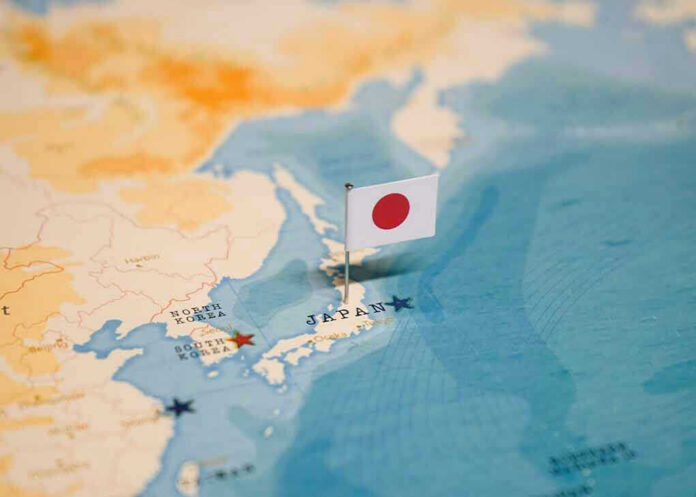
Beijing refuses to back down from its aggressive stance toward Japan despite Prime Minister Sanae Takaichi’s landslide electoral victory, doubling down on threats of retaliation while the Trump administration watches a critical flashpoint escalate in the Asia-Pacific.
Story Snapshot
- China vows “resolute response” to Japan one day after Takaichi’s coalition wins February 8, 2026 lower house elections
- Beijing demands Japan withdraw November 2025 Taiwan remarks, refuses policy change regardless of Tokyo’s democratic mandate
- Crisis includes military escalation with fire-control radar incidents, economic sanctions on seafood exports, and tourism bans
- Taiwan has become the central flashpoint driving dangerous military confrontations and economic coercion between Asia’s major powers
Beijing Rejects Democratic Outcome
Chinese Foreign Ministry official Lin Jian announced on February 9, 2026, that China’s hardline policy toward Japan will remain unchanged despite Takaichi’s electoral victory. Beijing demanded the Japanese prime minister retract her November 2025 parliamentary statement warning that Chinese use of force against Taiwan would create a life-threatening situation for Japan. This dismissal of Japan’s democratic process reveals Beijing’s contempt for sovereignty when it conflicts with Communist Party objectives. The People’s Republic expects foreign democracies to submit to its demands regardless of what their voters choose.
Taiwan Remarks Trigger Coordinated Punishment
Prime Minister Takaichi’s November 7, 2025 statement on Taiwan sparked immediate Chinese retaliation across multiple fronts. Beijing imposed flight restrictions, tourism bans, and reinstated seafood import restrictions that had been lifted just months earlier during a brief diplomatic thaw. Nearly half a million flight bookings to Japan were cancelled within three days of China’s travel warning, inflicting direct economic damage on Japanese businesses. This coordinated assault demonstrates how the Chinese Communist Party weaponizes economic interdependence to punish nations that dare acknowledge the Taiwan security threat. For conservatives who understand the dangers of economic dependency on hostile powers, this crisis validates concerns about globalist trade policies.
Dangerous Military Escalation Near Okinawa
Chinese military aggression reached alarming levels on December 6, 2025, when Chinese jets directed fire-control radar at Japanese fighters during large-scale exercises near Okinawa. Fire-control radar represents target-locking before weapons release, bringing both nations to the brink of armed conflict. This followed months of Chinese reconnaissance planes violating Japanese airspace and fighter jets approaching within 30 meters of Japanese aircraft. The erosion of communication channels between Tokyo and Beijing heightens miscalculation risks that could trigger wider regional war. Under President Trump’s second administration, America’s commitment to defending its Japanese allies faces a critical test as Beijing probes resolve.
Electoral Mandate Strengthens Japanese Resolve
Takaichi’s coalition victory on February 8, 2026, delivered a clear mandate for her security-focused agenda despite Beijing’s sustained pressure campaign. Japanese voters rejected intimidation, instead endorsing stronger defense postures and increased military spending. Analysts expect Takaichi to pursue constitutional revisions enabling more robust self-defense capabilities and sharply increased defense budgets. This represents a fundamental shift in Japanese strategic thinking after decades of pacifism. For American conservatives who value allies willing to shoulder defense burdens, Japan’s awakening to regional threats offers hope for strengthened partnership against Chinese expansionism in the Indo-Pacific.
Communist Party Defines Core Interests
Beijing frames Taiwan as a non-negotiable “core interest” where it will tolerate no foreign interference, even factual observations about security implications. China’s definition of core interests expands continuously—from territorial claims to economic spheres to ideological conformity demanded from trading partners. Chinese analysts accused Japan of being “out of step” with Western nations pursuing pragmatic engagement with Beijing, revealing expectations that democracies should abandon principles for commercial access. This clash between authoritarian demands and democratic sovereignty represents the central challenge of our era. Japan’s refusal to subordinate national security to economic expediency deserves support from all who value freedom over appeasement.
Sources:
The Breakdown in Japan-China Relations – Politics Today
The End of the Diplomatic Thaw Between Japan and China – SWP Berlin
China says its policy toward Japan will not be changed by one election – Korea JoongAng Daily
Japan-China Relations – Nippon.com