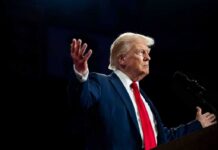

President Trump boldly raises worldwide tariffs to 15% despite Supreme Court limits, praising dissenting justices in a defiant stand for American economic sovereignty.
Story Highlights
- Trump invokes rare Section 122 authority for a temporary 15% duty on all U.S. imports starting February 24, 2026, targeting balance-of-payments deficits.
- Supreme Court ruling curtails prior IEEPA tariff powers, prompting swift shift to new legal basis while Trump lauds dissenters for exposing majority flaws.
- Broad exemptions protect critical minerals, energy, pharmaceuticals, and USMCA goods, shielding key sectors from impact.
- Action promises reshoring of manufacturing jobs and better trade deals, advancing America First policies against globalist imbalances.
Trump’s Swift Tariff Response to Supreme Court Ruling
On February 21, 2026, President Trump signed a proclamation imposing a 10% ad valorem import duty on all U.S. imports, effective February 24 at 12:01 a.m. ET. He quickly raised it to 15% after a Supreme Court decision limited prior authorities like IEEPA. This uses Section 122 of the Trade Act of 1974 to address fundamental international payment problems, including persistent deficits. Trump praised dissenting justices for critiquing the majority’s restrictive stance. The 150-day measure aims to curb dollar outflows and boost domestic production, echoing Nixon’s 1968 surcharge.
Strategic Exemptions Safeguard American Priorities
Exemptions under Annex II cover critical minerals, energy products, pharmaceuticals, and goods compliant with the USMCA from Canada and Mexico. Steel and aluminum duties apply based on content, not origin. These mirror prior IEEPA exclusions, protecting supply chains vital for national security and energy independence. Importers of metals, vehicles, and electronics face the brunt, but energy and pharma sectors remain shielded. This targeted approach minimizes disruption while pressuring unfair traders.
Building on Proven America First Trade Wins
Trump’s strategy extends first-term successes like Section 232 steel tariffs, which forced deals with partners. Recent 2025 hikes on China de minimis shipments and February 2026 agreements with Argentina and others show leverage at work. Over 50% of global GDP partners now align via bilateral pacts. The White House calls this essential for a manufacturing Golden Age, countering eroded worker confidence from past globalist policies. Courts constrain but do not stop executive action for fair trade.
Economic Impacts Favor Workers Over Global Elites
The 150-day duty could generate $1.3 trillion in revenue over 2026-2035 if not extended, funding priorities without new taxes. Manufacturers gain from reshoring, creating jobs in heartland communities long hurt by offshoring. Short-term price hikes hit commodities, with 0.3 percentage point unemployment rise by end-2026 possible. Long-term GDP dips 0.1%, or $30 billion yearly, but reciprocity boosts exports. Yale models note fiscal gains outweigh drags when paired with deals pressuring partners like China and the EU.
Expert Views and Path Forward
White House statements frame the tariffs as vital national interest protection despite the disappointing SCOTUS outcome. Trade trackers confirm real-time updates on exemptions and country additions. Experts see pro-tariff logic in fixing imbalances and forcing fair play, though some warn of inflation risks. Uncertainties include 150-day extensions needing Congress and full Annex II details. Trump’s praise for dissenters rallies conservatives against judicial overreach eroding executive tools for sovereignty.
Sources:
Trade Compliance Resource Hub: Trump 2.0 Tariff Tracker
Yale Budget Lab: State of Tariffs – February 21, 2026