
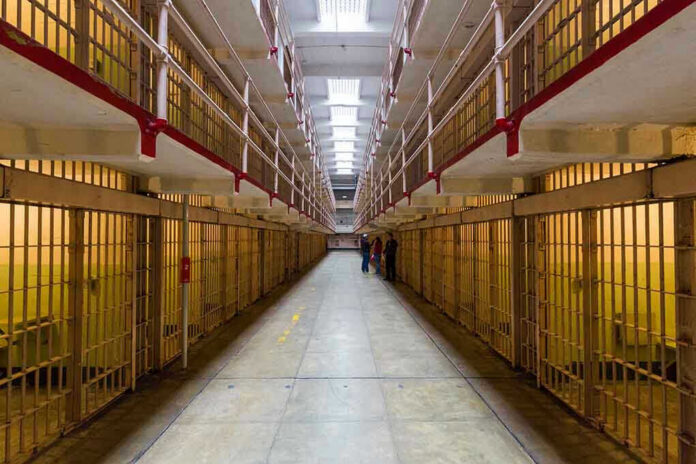
A 73-year-old Indigenous leader just died after nearly three years in a Nicaraguan prison, and the same regime cozying up to Russia is daring the free world to look away.
Story Snapshot
- Nicaraguan Indigenous leader and political prisoner Brooklyn Rivera died in custody after more than 970 days held incommunicado.
- The Ortega-Murillo regime hid his death for hours, kept control of his body, and blamed a post-COVID infection without transparent proof.
- Rivera is at least the seventh or eighth political prisoner to die under this regime, adding to a clear pattern of abuse.
- As Nicaragua grows closer to Russia, his death is fueling calls for tougher United States sanctions and stronger backing for freedom in the region.
A Political Prisoner Dies After Nearly Three Years in the Dark
Indigenous leader and opposition figure Brooklyn Rivera spent more than 970 days locked away by the Nicaraguan regime before dying at age 73 under state control.[1][2] Reports describe him as a political prisoner and head of the Indigenous party Yatama, detained since late September 2023 after authorities lured him back to his home region and then denied for months that he was even under arrest.[1][2] Family members say he was healthy when taken and then kept incommunicado with no visits allowed.[2]
Nicaragua’s Ministry of Health finally admitted Rivera’s death on May 31, saying his “physical and neurological deterioration” came from a bacterial infection triggered by COVID‑19.[2] That statement, carried by regime-aligned media, promised proper medical procedures and certification of his death, but offered no public autopsy, charts, or independent proof.[2] Regime critics note this is the same state that controlled his prison conditions, medical access, and information from the start, making its version hard to verify.[1][2]
Concealed Death, Controlled Body, and a Pattern of Prisoner Abuse
Nicaraguan outlets report that Rivera died the evening of May 30, yet the regime concealed his death for about fifteen hours before confirming it, and even then left out basic facts such as the time of death.[1][5] Sources close to his party say authorities refused to hand his body to his family, blocking plans to bury him in his home community and keeping him effectively a prisoner even in death.[1][5] Human rights observers argue this secrecy fits a wider pattern of hiding abuse inside the prison system.[1][5]
Local and international reports list Rivera as at least the seventh or eighth political prisoner to die under the Ortega-Murillo regime’s custody.[3][5] Nicaraguan media and rights groups have tracked earlier cases, including several detainees whose health sharply declined in confinement and one United States citizen, Eddy Montes, killed by police while imprisoned.[3][4] The United States government has previously condemned these deaths and labeled those held by Managua as political prisoners targeted for their views, not crimes.[4][5][6]
From Secret Cells to Sanctions: Why This Matters to American Readers
For many conservatives, Rivera’s case is a warning about what happens when a government stops fearing its people and starts fearing criticism instead. The Ortega-Murillo regime has already forced opponents into exile, stripped citizenship from dissidents, and deported more than 200 political prisoners on a single flight to the United States after labeling them “traitors.”[6] Those freed were described as refugees fleeing an authoritarian crackdown, not common criminals, by United States officials and reporters covering the release.[6]
That same regime is now tightening ties with Russia while its jails produce a growing list of dead dissidents. This combination alarms lawmakers who see Nicaragua as another foothold for hostile powers in the Western Hemisphere. The United States has already imposed sanctions and visa bans on regime insiders over political repression and prisoner abuses, and Rivera’s death is fueling calls to go further, including targeting judges, police chiefs, and business partners who help keep the dictatorship afloat.[3][4][5]
What Rivera’s Death Says About Authoritarian Playbooks
Rivera’s story also shows a common pattern in authoritarian systems: enforced disappearance, medical neglect, and then a contested cause of death once it is too late.[1][2][3] Governments like Ortega’s control the cell doors, the hospital rooms, and the paperwork, so they can claim a “natural” cause while blocking outside checks.[1][2] Families and allies are left to rely on past health, sudden decline in custody, and a trail of similar cases to argue that the state is at fault.[2][3][5]
🇺🇸🇳🇮⚡️- "The United States will not ignore the Murillo-Ortega dictatorship’s responsibility for the horrific death of political prisoner Brooklyn Rivera. U.S.-sanctioned Lumberto Campbell Hooker was directly involved in denying medical care to Brooklyn Rivera and prevented his…
— Rerum Novarum // Intel, Breaking News, and Alerts (@officialrnintel) June 8, 2026
For Americans who care about liberty, this should sound familiar. Every time a regime like this jails opponents, censors media, and blames vague illnesses for deaths in custody, it sends a message to the world about what unchecked power looks like. The United States cannot fix every injustice, but it can refuse to bankroll or ignore them. Strong, targeted sanctions and loud support for political prisoners tell other rulers watching that there is still a cost for crushing dissent.[3][4][5]
Sources:
[1] Web – A Dead Political Prisoner Leads to More Pressure, as Nicaragua Grows …
[2] Web – Victim of dictatorship, Nicaraguan indigenous leader and political …
[3] YouTube – Outrage over death of political prisoner Brooklyn Rivera …
[4] Web – These Are the 8 Political Prisoners Who Died in Custody in Nicaragua
[5] Web – Political Prisoners in Nicaragua – United States Department of State
[6] Web – Release of Political Prisoners from Nicaragua to Guatemala
© primechronicle.org 2026. All rights reserved.