

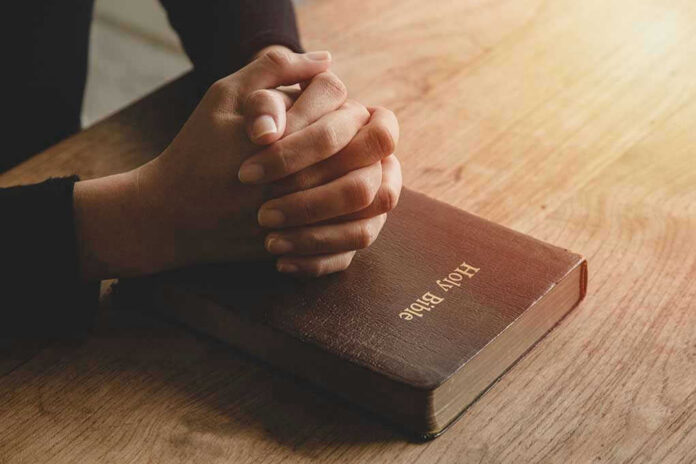
As Washington spins on war, inflation, and culture fights, one old declaration keeps cutting through the noise: “God is good”—and millions of Americans are saying it louder than ever.
Story Snapshot
- “God is good” isn’t a single breaking-news event; it’s a long-standing biblical claim about God’s character that continues to shape public faith and culture.
- Core Christian sources describe God’s goodness as morally perfect, without evil, and expressed through mercy, law, and redemption.
- Modern worship music and viral lyric content keep the phrase circulating widely, especially as Americans look for stability amid uncertainty.
- The available research focuses on theology and worship trends, not on partisan politics or specific government actions tied to the phrase.
A Biblical Claim That Refuses to Fade
Scripture-based teaching frames “God is good” as more than a positive slogan—it’s a statement about God’s nature. The claim rests on a consistent theme: God is the standard for goodness, unlike human goodness which is limited and often compromised. The research points to Old and New Testament passages that tie goodness to creation, God’s commandments, and God’s redemptive purpose, presenting goodness as unchanging rather than situational.
That matters culturally because Americans don’t say “God is good” only when life is easy. The research emphasizes that the phrase often shows up in suffering and doubt, offering a direct rebuttal to the idea that hardship proves God is absent or cruel. The theological framing argues that evil does not come from God’s character, and that God’s actions are aimed toward ultimate justice and restoration rather than chaos.
What “Good” Means in Christian Teaching
In the provided sources, “good” is defined in moral and spiritual terms, not as a vague “good vibes” feeling. The argument is that God contains no darkness or corruption, and that His decisions are righteous even when humans cannot see the full picture in the moment. This approach treats goodness as objective and rooted in God’s character—an important distinction in a culture that increasingly treats morality as personal preference.
That distinction also explains why the phrase persists across denominations and generations. If goodness is merely “what works for me,” it changes with politics, markets, and trends. If goodness is anchored in God’s nature, it stays put even when institutions fail. For many conservative Americans who feel battered by years of ideological pressure—from schools to workplaces to entertainment—the appeal is clear: it grounds truth outside government, outside media narratives, and outside elite approval.
Why Worship Music Keeps Driving the Message
The research shows the phrase’s modern momentum is strongly connected to contemporary Christian music and streaming platforms. Worship artists have released songs and lyric videos centered on the theme, repeating “God is good” as a steady refrain meant to be remembered in stress and uncertainty. In practice, this turns a theological claim into a portable confession—one people can carry in their cars, at the gym, or at home when headlines feel relentless.
The endurance of “God is good” lands in a real-world America where faith is often pushed out of public life and replaced with ideological substitutes. The research doesn’t claim that government policies are driving the phrase’s resurgence, but it does show why many Americans return to it: it asserts a fixed moral order and a source of hope not dependent on political outcomes. In a nation tired of chaos, that clarity resonates.
Sources:
https://www.gotquestions.org/God-is-good.html
https://lifehopeandtruth.com/god/who-is-god/god-is-good/