

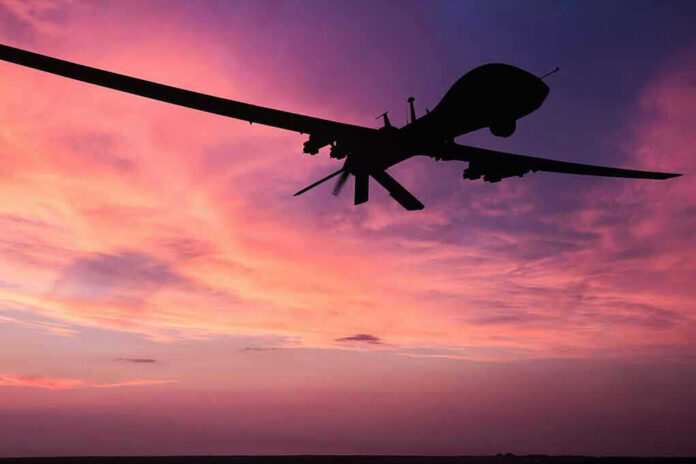
Green Berets just proved the elites wrong by sneaking 90 miles through drone-filled enemy territory undetected, defying the modern myth that such stealth missions are impossible in today’s tech-dominated world.
Story Highlights
- Teams from 2nd Battalion, 10th Special Forces Group traversed over 90 miles of simulated enemy land in Germany without detection by drones or personnel.
- Operated weaponless in harsh winter conditions, using nighttime moves and mission gear to evade simulated forces, civilians, and advanced surveillance.
- Launched strike drones at targets and received resupply, validating multi-domain tactics amid Ukraine-inspired drone threats.
- Exercise signals U.S. military readiness under President Trump’s second term, bolstering deterrence against Russia in Europe.
Exercise Deep Strike: Defying Drone Dominance
In February 2026, Green Berets from the 2nd Battalion, 10th Special Forces Group (Airborne), under U.S. Special Operations Command Europe (SOCEUR), executed Exercise Deep Strike at the Joint Multinational Readiness Center in Hohenfels, Germany. Teams of eight or more operators covered over 90 miles—approximately 150 kilometers—through simulated enemy territory. They remained completely undetected by opposing drones, personnel, or civilians including farmers, hikers, and law enforcement. Harsh winter conditions and flat, expansive terrain amplified the challenge, mirroring Eastern European battlefields.
Adapting to the Drone Era
SOCEUR tasked the Hohenfels Wolverine Training Battalion—composed of former Green Berets—with planning the exercise in October 2025. Teams moved only at night, carrying mission-specific gear but no weapons, to test pure infiltration skills. They evaded simulated conventional forces equipped with thermal sensors, much like those dominating Ukraine’s battlefields since 2014. Upon reaching objectives, operators launched strike drones at high-value targets and coordinated helicopter extractions. SOCEUR’s Theater Edge Innovation Lab and drone designers provided technical support, validating unmanned systems for strikes and resupply.
Proving the “Impossible” Possible
A team sergeant described the mission as far from “a simple walk in the woods,” emphasizing endurance against complex electronic warfare. Planners stressed preparation for modern warfare by adapting to evolving threats. Public perception holds that drone ubiquity—fueled by cheap FPV and thermal models—renders deep infiltrations impossible. This exercise shattered that notion through disciplined low-profile operations and gear discipline. It builds on historical Green Beret expertise from World War II OSS roots to Vietnam reconnaissance, now evolved for peer competitors like Russia and China.
Distinct from standard patrols or precedents like Robin Sage, Deep Strike integrated offensive drone use without arms, directly incorporating Ukraine lessons such as Marine Corps thermal-masking innovations. The simulated environment at JMRC Hohenfels replicated potential Baltic or Black Sea operations, with no real adversaries involved.
Strategic Wins for America First Defense
Short-term gains include boosted operator confidence and immediate tech refinements from lab data. Long-term, the exercise establishes a scalable model for U.S. and NATO deep-strike training, countering drone saturation in high-threat zones. Politically, it strengthens deterrence in Europe amid ongoing Russia-Ukraine tensions, aligning with President Trump’s America First priorities. Socially, it reinforces Special Operations Forces’ elite status, while economically impacting training budgets minimally. Defense contractors may advance stealth gear and unmanned systems based on these findings.
Post-exercise analysis continues, with April 9, 2026, releases via Military Times and DVIDS signaling broader rollout to SOF and NATO allies. Plans call for a permanent training lane to build collective combat power, ensuring American warriors maintain their edge despite bureaucratic elite skepticism.
Sources:
Green Berets infiltrate 90-plus miles undetected in weeklong exercise (Military Times)
Green Berets avoid drone detection during new training scenario (DVIDS)