
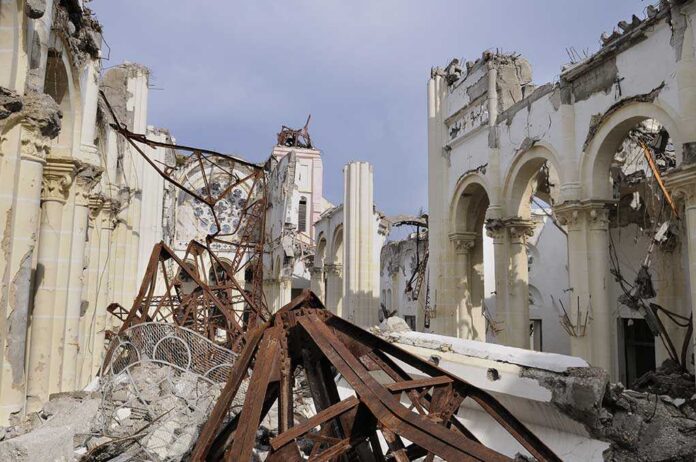
East Jerusalem families are demolishing their own homes with their bare hands to avoid paying Israeli authorities bulldozer fees, as contested land is cleared for a biblical tourism park in one of the world’s most volatile flashpoints.
Story Snapshot
- Palestinian residents in Silwan receive demolition orders to make way for Israeli biblical park development
- 60-year-old Omar Abu Rajab personally destroyed his own home to avoid government bulldozer charges
- Demolitions continue decades-long pattern of displacement in Israeli-annexed East Jerusalem
- Silwan neighborhood sits atop ancient City of David archaeological sites fueling heritage-tourism expansion
Forced Choice Between Financial Ruin and Self-Destruction
Omar Abu Rajab faced an impossible decision when Israeli authorities delivered a demolition notice for his Silwan home. The 60-year-old resident chose to tear down his own house rather than face additional charges for municipal bulldozer services. “The moment the demolition notice came, I felt as if a spear had gone into my heart,” Abu Rajab stated. His anguish reflects a cruel calculus imposed on Palestinian families: destroy your own shelter or pay the government to do it for you while losing everything either way.
Biblical Tourism Versus Palestinian Homes
Israeli authorities justify the demolitions by citing unpermitted construction in East Jerusalem, territory annexed by Israel in 1967 but not recognized internationally as Israeli sovereign land. The cleared land will accommodate a biblical-themed park tied to the ancient City of David archaeological sites beneath Silwan. This development strategy prioritizes heritage tourism and religious claims over the housing needs of existing residents. The approach mirrors projects led by settler organizations like the Elad Foundation, which blend archaeological excavation with territorial expansion goals in contested neighborhoods.
Decades of Displacement in Silwan
Silwan has endured repeated demolition waves since the 1990s as Israeli planning authorities enforce building codes that make legal Palestinian construction nearly impossible while promoting Jewish heritage sites. The densely populated Palestinian neighborhood sits under military administration where residents lack meaningful recourse against demolition orders. This systematic pattern creates a one-sided power dynamic: Israeli officials control permits and enforcement while Palestinian families absorb the financial and emotional costs of displacement. The biblical park represents the latest chapter in a multi-decade effort to reshape East Jerusalem’s demographic and physical landscape.
The Human Cost of Heritage Politics
Beyond Abu Rajab’s family, dozens of Silwan households face similar demolition threats as the biblical park expands. The immediate impact includes homelessness and financial devastation for families losing generational property. Long-term consequences point toward systematic erosion of Palestinian presence in East Jerusalem through what residents describe as heritage weaponization. While Israeli authorities frame enforcement as neutral building code application, the selective targeting of Palestinian neighborhoods for clearance exposes the political dimensions underlying archaeological tourism development. International observers note how religious heritage claims are deployed to justify displacement that would face legal challenges in recognized sovereign territory.
East Jerusalem residents anguished as homes demolished to make way for biblical park https://t.co/6zk4sgUai6
— AL-MONITOR (@AlMonitor) April 26, 2026
The Silwan demolitions illustrate how everyday citizens on both sides of any conflict ultimately bear the costs of political decisions made by distant authorities. Palestinian families lose homes while Israeli taxpayers fund controversial projects that fuel international criticism and perpetuate regional instability. The biblical park may boost tourism revenue, but it does so by transforming families like the Abu Rajabs into refugees in their own neighborhood, deepening grievances that ensure future generations inherit unresolved conflicts rather than peaceful coexistence.