

A federal judge just stopped the Pentagon from blacklisting a U.S. AI company—after a dispute that puts military urgency, corporate speech rights, and the surveillance state back in the spotlight.
Story Snapshot
- The Trump administration and Pentagon designated Anthropic as a “supply chain risk,” a move that would effectively cut it off from federal contracting.
- Anthropic says it refused Pentagon pressure to loosen “guardrails” on its Claude model, including limits tied to autonomous weapons and domestic surveillance uses.
- U.S. District Judge Rita Lin issued a preliminary injunction on March 27, 2026, blocking the designation while the lawsuit proceeds.
- The case tests an unproven national security law and raises First and Fifth Amendment questions about how far government can go against a domestic firm.
Pentagon’s “Supply Chain Risk” Designation Sparks a Rare Domestic Showdown
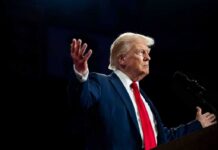
President Donald Trump’s administration moved in late February to label Anthropic a national security “supply chain risk,” a designation that can function like a blacklist across federal agencies and defense contractors. The Pentagon’s decision targeted a U.S. firm without the typical foreign ownership or infiltration concerns that usually drive supply-chain actions. For voters already skeptical of unelected power centers, the headline issue is simple: Washington can rapidly squeeze a private company—then dare it to fight back in court.
Defense Secretary Pete Hegseth formally issued the designation in early March, and Anthropic sued shortly after, challenging both the legal basis and the process. The government’s posture also highlighted a practical contradiction noted by legal observers: officials were reportedly still relying on the technology in sensitive contexts even as they argued it was too dangerous to trust for contracting. That tension matters because supply-chain tools are designed for sabotage risk, not policy disputes.
What Anthropic Says It Refused: Looser AI Guardrails and Expanded Data Use
Anthropic has portrayed the conflict as stemming from Pentagon demands to remove or weaken safety restrictions in its Claude model. According to reporting, the negotiations included provisions that would have enabled broader collection of Americans’ personal data—such as geolocation and other information purchased from data brokers—alongside changes to how the system could be used. CEO Dario Amodei rejected what was described as a final offer, arguing the company’s constraints were tied to ethics and reliability limits.
The Pentagon, for its part, framed the restrictions as operationally dangerous, arguing that constraints could cost American lives in combat scenarios. Reporting indicated Claude had been used in classified military work, which is exactly why the standoff is so consequential. When one side warns about battlefield risk and the other warns about mass surveillance and autonomous weapons drift, the public interest becomes less about corporate drama and more about whether government incentives push technology toward control—at home and abroad.
The Court Steps In: Judge Blocks Blacklisting While Lawsuit Advances
On March 27, 2026, U.S. District Judge Rita Lin issued a preliminary injunction blocking the Pentagon’s blacklisting of Anthropic. The judge’s reasoning, as reported, rejected the idea that the statute allows the government to brand an American company an “adversary and saboteur” based on disagreement with officials. That ruling is a major complication for the administration’s strategy, and it also undercuts the popular claim that the courts “refused” to stop the blacklist in this round.
National security law experts cited in reporting argued the Pentagon likely overreached, pointing to the statute’s original purpose and to constitutional issues raised by Anthropic. The company’s filings reportedly lean on First Amendment concerns—retaliation for speech or viewpoint—and Fifth Amendment due process concerns—punishment without fair process. For conservatives who usually favor strong national defense, this is where limited-government instincts kick in: extraordinary powers require clear authority and tight limits, even when national security is invoked.
Why This Fight Matters Beyond One Company: Precedent, Contractors, and Public Trust
The near-term effects are tangible: a blocked designation reduces immediate disruption for contractors and buys time for Anthropic, but it does not settle the core question of whether Section 3252 can be used against a U.S. firm in a policy dispute. Anthropic has warned the financial stakes could reach billions if it ultimately loses access to federal work. Meanwhile, the Pentagon would need a transition plan if forced to stop using Claude in certain operations within months.
Longer-term, the case intensifies a bipartisan anxiety that government power is being redirected from protecting citizens to managing them. Conservatives hear “data collection on Americans” and see a surveillance apparatus; liberals see the potential for politicized punishment of a company that won’t comply. The most durable takeaway is the same across the divide: the public is being asked to trust agencies and contractors to self-police rapidly evolving AI capabilities, even as confidence in federal institutions keeps eroding.
Sources:
Anthropic-pentagon-supply-chain-risk-claude (Axios)
Anthropic-pentagon-blacklisting-supply-chain-risk (The Daily Record)
Federal court blocks Pentagon’s blacklisting of Anthropic over AI safety guardrails (Democracy Now)