
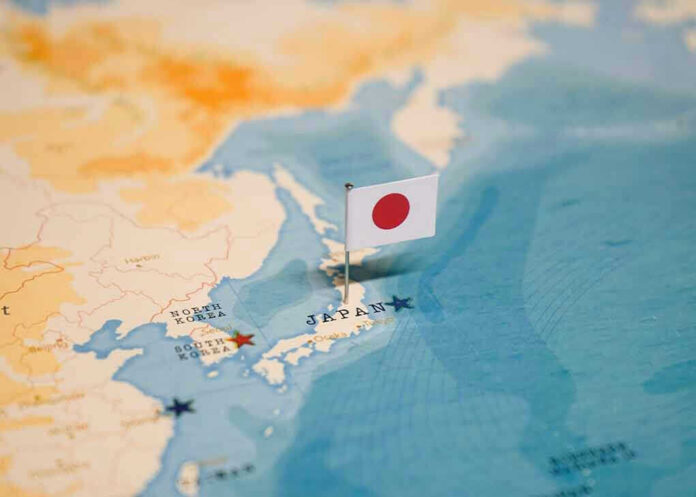
Japan’s historic decision to shatter its decades-old military spending cap and align closely with President Trump’s security demands marks a seismic shift that will reshape the Indo-Pacific balance and send a clear warning to adversaries threatening U.S. and allied interests.
Story Highlights
- Japan abandons its postwar pacifist limits, pledging major new defense spending directly to President Trump in Washington.
- The U.S. welcomes Japan’s commitment, reinforcing the alliance and nuclear deterrence at a critical time of regional instability.
- Japan’s new approach aligns with longstanding U.S. calls for greater allied burden-sharing and military cooperation.
- This move signals a tougher stance against threats from China, North Korea, and Russia, and a shift away from globalist appeasement and weak defense policies.
Japan Overhauls Defense Policy, Breaking Decades of Pacifism
In February 2025, Japanese Prime Minister Ishiba Shigeru announced in a landmark summit with President Donald J. Trump that Japan will finally break free from its informal 1% of GDP defense spending cap. For decades, Japan’s constitution and pacifist sentiment restrained military expansion, often leaving U.S. taxpayers and service members to shoulder the lion’s share of Indo-Pacific security. Rising threats from China, North Korea, and Russia have now forced a dramatic course correction, as Japan commits to reinforce its military capabilities in direct response to Trump’s call for stronger allied defense.
Japan’s move comes after years of incremental increases in military funding and follows pressure from both the Trump administration and American defense experts for allied nations to stop free-riding on U.S. protection. This new policy signals the end of an era of globalist appeasement and signals to adversaries that the U.S.-Japan alliance is stronger than ever. Trump’s insistence on fair burden-sharing has paid off: Japan’s willingness to publicly commit to a stronger military posture demonstrates respect for American leadership and a rejection of weak, outdated security models that left allies vulnerable.
U.S.-Japan Alliance Strengthened in the Face of Regional Threats
The 2025 Washington summit not only reaffirmed U.S. security guarantees—including the nuclear umbrella—but also set the stage for deeper operational cooperation and realignment of U.S. forces in Japan. The alliance is now moving beyond symbolic gestures, with Japan’s new defense investments directed at deterring aggressive maneuvers by China in the East China Sea, countering North Korean missile launches, and pushing back against Russian provocations. With approximately 60,000 U.S. troops already stationed in Japan, this renewed commitment means allied forces will be better equipped to protect American and Japanese interests. This shift corrects years of leftist neglect and prioritizes the safety and sovereignty of both nations.
Prime Minister Ishiba’s leadership reflects growing public support for a robust defense, as the risks of “woke” pacifism and bureaucratic inertia become impossible to ignore. The Japanese parliament is expected to approve the necessary budget and legislative measures, moving swiftly to implement the new strategy. Trump’s administration, meanwhile, has welcomed this alignment, recognizing that true allies must pull their weight to keep the peace and uphold freedom in an increasingly dangerous world.
Economic Impact and Strategic Investment Cement the Alliance
Beyond military spending, the July 2025 signing of a $550 billion U.S.-Japan strategic trade and investment agreement demonstrates how defense and economic prosperity go hand in hand. This historic deal channels Japanese investment directly into U.S. industry, bolstering American manufacturing, creating jobs, and supporting the defense sector. While critics warn of potential domestic debates in Japan over constitutional limits and fiscal sustainability, the clear winners are the American workers and defense contractors who will see real benefits from allied cooperation. The agreement also sends a stern message to globalists and adversaries alike: America and its allies will not be held hostage by weak leadership or internationalist distractions.
Some analysts caution that Japan’s new defense stance could provoke regional arms races or diplomatic friction, particularly with China and North Korea. However, most security experts and U.S. officials agree that a stronger, more proactive Japan is essential for regional stability and deterring aggression. This evolution in Japanese policy, driven by common sense and the reality of modern threats, is a victory for those who value national sovereignty, strong alliances, and the protection of constitutional freedoms.
Enduring Implications for U.S. Security and Conservative Values
Japan’s unprecedented defense commitment and deepening alliance with the United States serve as a powerful rebuke to years of globalist policies that undermined American interests and left the Indo-Pacific exposed. As Japan emerges as a serious security actor, it validates President Trump’s tough, America-first approach to foreign policy and defense. The alliance is now positioned to safeguard constitutional liberties, strengthen family and national security, and uphold the values cherished by conservatives. While challenges remain, this new era of U.S.-Japan cooperation proves that principled leadership and a refusal to bow to failed agendas can yield real results for American patriots and their allies.
Japan plans to tell Trump it will build up its military after years of 1% defense spending https://t.co/zxJE20cVTP
— Fox News Politics (@foxnewspolitics) October 22, 2025
With Japan’s pivot, the message to those who would threaten U.S. security or erode constitutional rights is unmistakable: America stands strong with its allies, and together, they will not back down in the face of danger.
Sources:
Japan Government Official Summary of 2025 Summit
White House Fact Sheet on U.S.-Japan Strategic Agreement
U.S.-Japan Joint Leaders’ Statement, February 2025
Congressional Research Service, U.S.-Japan Mutual Defense Treaty Overview