
America just put a U.S. Navy-enforced chokehold on Iran’s ports and Hormuz toll scheme—an escalation that could hit your gas bill as fast as it hits Tehran’s leverage.
Story Snapshot
- The U.S. military blockade of Iranian ports and coastal areas officially began Monday, April 13, 2026, at 10:00 a.m. ET after U.S.-Iran talks in Pakistan collapsed.
- The operation is not a total shutdown of the Strait of Hormuz; vessels traveling between non-Iranian ports are still permitted to transit the strait under stated U.S. parameters.
- U.S. Central Command says enforcement applies to vessels of all nations entering or departing Iranian ports, with interdictions tied to payments made to Iran.
- Iran’s military has threatened retaliation, while oil prices moved sharply higher on fears of wider conflict and supply disruption.
Blockade Start Time and What the U.S. Says It’s Targeting
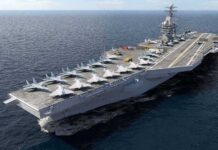
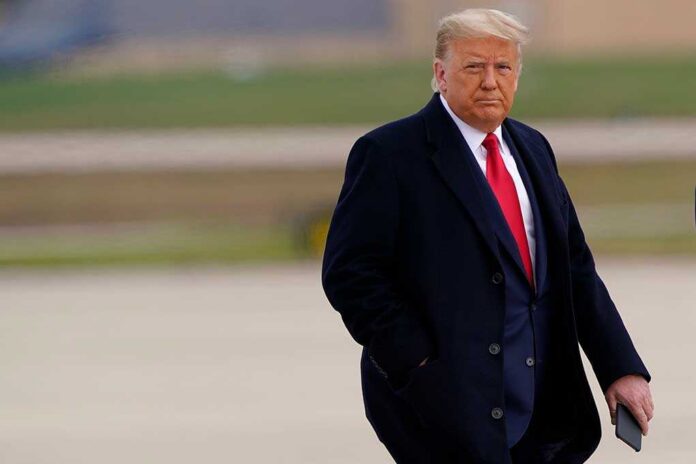
U.S. Central Command confirmed that blockade operations began at 10:00 a.m. Eastern Time on Monday, April 13, 2026, following the breakdown of high-level negotiations in Pakistan. President Trump announced the move after talks ended without an agreement, framing enforcement around Iranian maritime activity rather than declaring a blanket closure. The key distinction in available reporting is that the blockade targets Iranian ports and coastal areas while permitting certain non-Iran-related transits.
The Strait of Hormuz Blockade Has Officially Begun https://t.co/9ytrmAzAX6
— † Crusader (@Wil_Johnson1) April 13, 2026
U.S. parameters described in reporting include a claim that enforcement will be applied “impartially” to vessels of all nations when those vessels are entering or departing Iranian ports and coastal areas. That matters because it changes the compliance burden for shipping companies and insurers, not just for Iran. It also signals the U.S. view that Iranian collection of maritime “tolls” is illegitimate, with interdictions reportedly tied to whether vessels have paid Iran.
Why This Isn’t a Full Hormuz Shutdown—and Why Prices Still Jumped
The Strait of Hormuz remains a global chokepoint, with reporting citing roughly 20% of the world’s energy supplies moving through the corridor. Even if the U.S. allows ships traveling between non-Iranian ports to transit, markets tend to price in worst-case risks: miscalculation, missile or drone strikes, mining incidents, or insurance disruptions that keep tankers idle. That uncertainty, more than any single headline, is what tends to push oil prices higher quickly.
For American households, the political fight at home often misses the mechanics of how overseas shocks hit wallets. Higher crude prices can flow through to gasoline, diesel, and shipping costs, which then pressure grocery prices and consumer goods. Conservatives frustrated by inflation and fiscal mismanagement will likely see this as another reminder that energy security is national security. Liberals worried about inequality will see the same price spike as proof that working families are the first to pay.
The Risk of Escalation After Failed Talks in Pakistan
The blockade follows a conflict that began February 28 involving the U.S., Israel, and Iran, with a two-week ceasefire described as fragile. Reporting indicates Iran previously responded to U.S.-Israeli strikes by effectively closing the strait, creating a cycle of maritime restrictions and counter-restrictions. Iran’s military has threatened retaliation and denounced U.S. actions as piracy, while also asserting it maintains control in the area—statements that raise the odds of tense encounters at sea.
Enforcement Questions: Mines, Interdictions, and the “Deep State” Trust Gap
Reporting says President Trump instructed the Navy to interdict vessels in international waters that have paid tolls to Iran and to begin destroying mines the U.S. alleges Iran placed in the strait. However, the public record in the provided research leaves important operational details unclear, including which allied nations—if any—are participating, and what specific rules of engagement will govern boarding, diversion, or use of force. Those gaps feed distrust across the spectrum.
That trust gap is political fuel in 2026 because many Americans—right and left—believe federal institutions respond faster to geopolitical crises than to domestic problems like debt, border security, and cost-of-living pressure. The blockade may be viewed by supporters as a direct, deterrence-based move that avoids nation-building. Critics will focus on the risk of escalation and economic fallout. The hard reality is that both views hinge on what happens next at sea, not on speeches in Washington.