
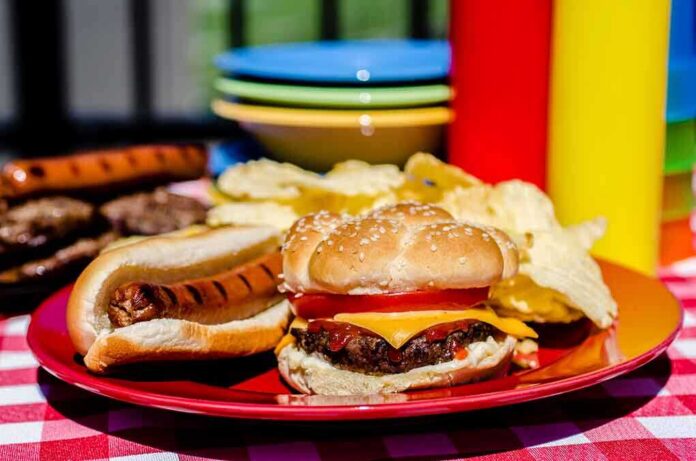
A $21 burger could jump to $33 in New York City, as a radical $30 minimum wage bill threatens to gut family restaurants and kill jobs nationwide.
Story Snapshot
- NYC Council introduces bill for $30/hour minimum wage by 2030, scrapping tipped-wage credits that keep restaurants afloat.
- Hell’s Kitchen restaurant group projects massive price hikes: $14 wine to $22, $24 salmon salad to $37 by 2031.
- Restaurateurs like Sean Hayden warn of halving staff, QR-code automation, and airport-style service cutting the heart from NYC dining.
- Precedents in California fast-food and L.A. hotels show real job losses, price surges, proving progressive wage hikes hurt workers and small business most.
Bill Details and Projections
New York City Council members introduced a bill in April 2026 to phase in a $30 per hour minimum wage by 2030, eliminating the tipped-wage credit currently allowing lower base pay supplemented by tips. A coalition of 40 independent restaurants in Hell’s Kitchen modeled stark impacts based on an interim $19.33 hourly rate by 2031. Their analysis shows a $21 hamburger rising 57% to $33, a $14 glass of wine surging to $22, and a $24 salmon salad hitting $37. Thin restaurant margins, already strained by high NYC costs, face existential pressure from this near-doubling of labor expenses.
“A $33 Burger? As New York City Eyes $30 Minimum Wage, Restaurants Brace for Impact”
— Hickory (@OldRedCedar) April 25, 2026
Restaurateurs Sound the Alarm
Sean Hayden, owner of five Hell’s Kitchen restaurants employing over 200, predicts halving staff and switching to impersonal QR-code ordering, turning vibrant eateries into airport-like depots. Melissa Fleischut, president of the NY State Restaurant Association, warns prices have reached a consumer tipping point. Queens business owner Moe Chan bluntly states his operation cannot afford $30 wages. These voices highlight how government mandates ignore small business realities, prioritizing ideology over survival in a city where tipped credits have long cushioned operations.
Failed Precedents from Blue-State Experiments
California’s 2024 $20 fast-food wage triggered layoffs, price hikes, and kiosk automation, echoing warnings for NYC. Los Angeles hotel workers lost about 650 jobs after a September 2025 ordinance, with Oxford Economics forecasting 14,000 cuts citywide—actual reductions hit 6% of positions. D.C. and Chicago tip phaseouts to $16-17 sparked price surges and partial reversals. These cases prove aggressive wage hikes displace low-skill workers, inflate costs for families, and accelerate job-killing tech, betraying promises of prosperity.
Both conservatives and liberals see the pattern: distant elites in city halls push policies that crush the working class while protecting their own. In 2026, with President Trump’s America First successes contrasting blue-city failures, this bill exemplifies deep-state overreach—unaccountable mandates eroding the American Dream of hard work paying off through free enterprise.
Stakeholders and Political Push
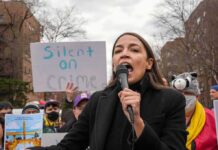
Mayor Zohran Mamdani campaigned on “$30 by ’30” in 2025, claiming $38 hourly is needed for basics, though he has not formally endorsed the early-stage bill introduced by Council Member Sandy Nurse. Proponents argue higher pay stimulates the economy by putting more money in workers’ pockets. Yet opponents, backed by real-world data, counter that ripple effects—like city sanitation workers jumping from $21 to $30—strain budgets and risk closures. Power lies with Council and the Mayor, but business outcry via media amplifies the human cost.
This fight underscores bipartisan frustration with government failing everyday Americans. Conservatives decry assaults on free markets fueling inflation; liberals lament growing divides as jobs vanish. Common ground emerges: officials prioritize reelection over solutions, letting small businesses—the backbone of communities—collapse under elite experiments.
Sources:
A $33 Burger? As New York City Eyes $30 Minimum Wage, Restaurants Brace for Impact
Business owner says ‘we don’t have money’ as NYC proposes minimum wage hike: report