
Major asset managers BlackRock, Vanguard, and State Street control vast stakes in companies driving global deforestation, raising alarms about unelected financial giants shaping America’s food supply and beyond.
Story Snapshot
- BlackRock, Vanguard, and State Street hold $700 billion in Consumer Goods Forum companies that missed 2020 deforestation targets.[1]
- The firms own $10.6 billion in 15 agribusinesses linked to ongoing deforestation and land rights violations as of Q1 2020.[3]
- These asset managers voted against 16 shareholder resolutions on deforestation reporting and prevention.[1]
- In 2024, they opposed all analyzed biodiversity and deforestation resolutions despite record investor filings.[6]
- Critics highlight investments funding destruction of Indigenous lands in Liberia, including endangered species habitats.[2]
Asset Managers’ Investments Tied to Deforestation Risks
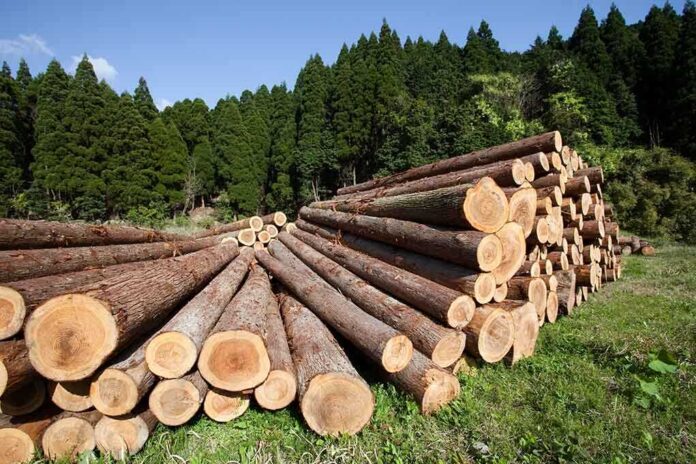
BlackRock, Vanguard, and State Street manage trillions in assets and hold significant positions in sectors prone to deforestation. A Friends of the Earth report details $700 billion invested in Consumer Goods Forum (CGF) companies, which failed to meet 2020 deforestation targets. Nestlé, a key CGF member, admitted missing those goals. These holdings span soy, beef, palm oil, pulp, paper, rubber, and timber industries.[1]
The same report identifies $10.6 billion in bonds and shares owned by the three firms in 15 agribusiness producers, traders, and processors. These companies face accusations of ongoing deforestation and land rights violations as of the first quarter of 2020. BlackRock ranks among the top three shareholders in 25 high-risk deforestation companies and top ten in 50 others.[3][8]
Proxy Voting Patterns Oppose Shareholder Demands
BlackRock, Vanguard, and State Street voted against 16 shareholder resolutions calling for companies to report on or prevent deforestation. This pattern persisted into 2024, where the firms opposed all analyzed biodiversity and deforestation-related resolutions, according to Global Witness. Record numbers of such resolutions appeared that year, yet opposition from these giants tipped the scales.[1][6]
A 2019 report by Friends of the Earth U.S., Amazon Watch, and Profundo tracked BlackRock’s holdings in deforestation-risk sectors from 2014 to 2018. Investments grew by over $500 million during that period. The firms’ scale as passive index investors amplifies their voting power, often drowning smaller shareholder efforts.[5][8]
Impacts on Indigenous Communities and Food Security
Investments by BlackRock and Vanguard finance agribusiness operations in Liberia’s Upper Guinea Forest. Environmental attorney Alfred Brownell, a 2019 Goldman Prize recipient, states these activities destroy habitat for endangered pygmy hippos and chimpanzees. Operations also damage Indigenous lands, shrines, and burial grounds.[2]
These patterns extend to America’s food supply, as deforestation-linked commodities like soy and palm oil underpin global agriculture and consumer goods. Critics argue such investments prioritize returns over sustainability, fueling supply chain vulnerabilities. Reports rely on NGO analyses without direct SEC filings or satellite data linking specific holdings to deforestation hectares.[3][7]
Counterpoints and Broader Scrutiny
BlackRock supported a shareholder resolution in October 2020 urging Procter & Gamble to report on palm oil deforestation. This instance shows selective engagement rather than uniform opposition. The firms face parallel lawsuits, including one from 11 Republican-led states alleging antitrust violations in coal markets through climate activism.[4]
Texas Attorney General Ken Paxton filed that November 2024 suit, claiming the asset managers conspired to constrict coal output via investments. BlackRock, Vanguard, and State Street sought dismissal in March, arguing no evidence of agreement exists and coal production rose from 2021-2022. They called the claims baseless.[2 from search results]
Across political lines, frustrations mount over these financial titans’ influence. Conservatives decry perceived manipulation of energy and food markets, echoing coal suit concerns. Liberals highlight environmental harms and Indigenous displacements. Both sides see unaccountable elites—often labeled the deep state—prioritizing power over American interests, from affordable food to energy independence. This shared distrust underscores government failures to rein in corporate overreach, departing from founding principles of accountable power. Ongoing NGO campaigns since 2018 reveal a pattern, yet low resolution passage rates (around 2%) persist due to the Big Three’s dominance.[8]
Sources:
[1] BlackRock, other asset managers enabling deforestation, says …
[2] Frontline Leaders Call on BlackRock and Vanguard to Adopt …
[3] Largest U.S. Investors Undermine Efforts To Halt Rainforest …
[4] BlackRock to no longer accept idleness on deforestation
[5] BlackRock named as largest investor in deforestation
[6] World’s major asset managers shoot down biodiversity resolutions
[7] BlackRock, JP Morgan, Vanguard lead on deforestation financing …
[8] [PDF] BlackRock’s BIG Deforestation Problem | Amazon Watch