
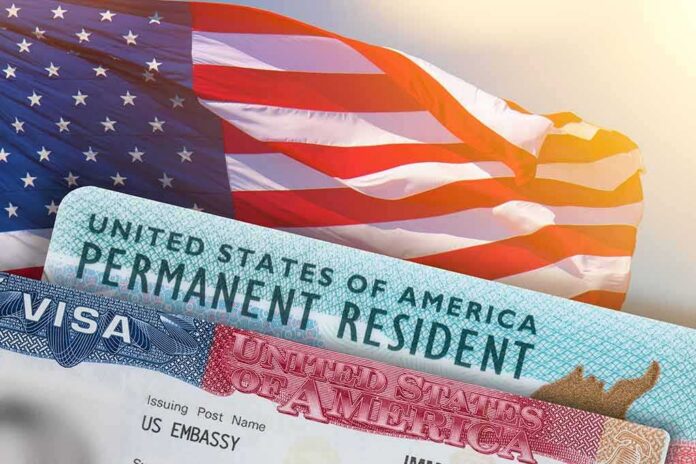
A new data point meant to shame President Trump instead spotlights a stunning 96% plunge in legal immigration from majority‑Muslim nations since late 2024, revealing how sweeping federal controls can reshape who gets a chance to come to America.
Story Highlights
- Cato Institute data show a 96% drop in legal immigration from 45 majority-Muslim countries since December 2024.
- Monthly immigrant visas and refugee admissions reportedly fell from 21,096 to 808 by February 2026.
- A federal judge struck down related processing freezes for 39 countries, calling them unlawful.
- Lawsuits also challenge the State Department’s visa suspensions as beyond its authority.
What sparked the 96% drop in legal immigration
Policy changes by the administration and agencies drove the sharp fall. The Cato Institute, citing State Department data, reported a 96 percent cut in legal immigration from 45 majority‑Muslim countries between December 2024 and February 2026. It said monthly immigrant visas and refugee admissions fell from 21,096 to 808 in that span. It also said refugee resettlement from those countries fell to zero in February 2026. These are striking figures, drawing praise and alarm across the spectrum.
Two presidential proclamations restricted entry for nationals of 39 countries, with varying scope. Analysts said the later order took effect on January 1, 2026. The restrictions included full or partial entry limits that reached immigrant and some temporary visas. Supporters argued the measures protected national security and tightened vetting. Critics said the bans were broad, nationality based, and lacked clear end points or individualized review. That clash set the stage for court fights.
Courts push back on processing freezes for 39 countries
A federal judge in Rhode Island ruled that policies at United States Citizenship and Immigration Services unlawfully blocked final decisions on asylum, work permits, green cards, and citizenship for people from the 39 listed countries. The court said the freezes “placed the lives of countless individuals on hold—solely by virtue of their countries of birth.” The ruling forced the agency to restart adjudications. Immigrant service groups and unions brought the case and won relief for many applicants.
A separate lawsuit targets the State Department’s suspension of visa processing for those same countries. Plaintiffs argue that while a president may restrict entry, the agency must still adjudicate visas as the law requires. This claim tests where executive power ends and where statutory duties begin. If courts agree, consular posts would need to process cases even when travel is barred, creating a queue for when entry rules ease.
Why both sides see proof of a deeper problem
Supporters of the crackdown point to the 96 percent drop as proof that tough rules can curb flows fast. They say this protects jobs, lowers costs, and reduces risks from weak vetting abroad. Opponents see the same number as evidence that the system is arbitrary and punishes people because of birth, not behavior. They warn of families split and workers stuck. Many Americans, left and right, see a larger issue: big federal actions with little transparency and huge human impact.
The stakes reach beyond one policy fight. If agency freezes fall in court, the government must show its work and follow the law’s process, even during security crackdowns. If the bans stand, America may accept far fewer legal immigrants from entire regions for years. Either path shapes labor markets, community ties, and the nation’s promise that fair rules and due process apply to all. The number that sparked the debate is real; what it means for American values is the hard part.
Sources:
cato.org, thenationalnews.com, reuters.com, cbsnews.com
© primechronicle.org 2026. All rights reserved.