
In Madison, Wisconsin, a police killing, a street blockade, and a city that is quietly helping both have turned one neighborhood into a test of how far government will bend under pressure — and for whom.
Story Snapshot
- A Madison officer fatally shot 38-year-old Corey Ruiz after police say he injured an officer with a knife during an arrest struggle.
- Protesters have blockaded a two-block stretch of Williamson Street near the shooting site, shutting down traffic and nearby events for days.
- The City of Madison is tolerating the blockade and supplying amenities like portable toilets, even as the shooting remains under state homicide investigation.
- Ruiz’s family and civil-rights lawyers call the killing an “unjustified” execution, while police and state officials stress due process and transparency.
How the Shooting of Corey Ruiz Sparked a Neighborhood Standoff
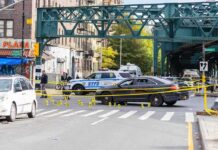
On July 22, Madison police responded to reports of a man stealing bicycles and checking car doors in the city’s Marquette neighborhood, a mixed residential and business area near the state Capitol. Officers confronted 38-year-old Corey Ruiz, who was riding a bicycle, and a struggle followed on Williamson Street, a busy corridor lined with shops and homes. Police say Ruiz pulled a fixed-blade knife, resisted arrest, and injured a veteran officer during the fight. Another officer tried a stun gun, but it did not stop him. The wounded officer then fired three shots at close range while Ruiz was on or near the ground, killing him.
Bystander video of the shooting traveled quickly online and on local news, showing multiple officers around Ruiz and raising questions about whether deadly force was needed once he was on the pavement. Police experts and civil-rights advocates reviewing the footage have flagged concerns about tactics, use of the stun gun, and the moment the officer fired while others held Ruiz down. All four officers involved were placed on administrative leave, and the Wisconsin Department of Justice Division of Criminal Investigation opened what officials call an “independent” homicide investigation, meaning the officer could eventually face criminal charges or be cleared.
Protesters Turn Williamson Street Into a Semi-Permanent Blockade
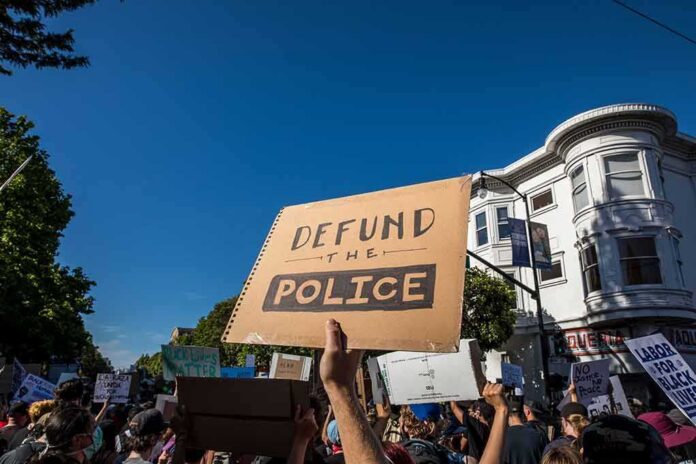
Within a day of the shooting, hundreds of protesters gathered for vigils and marches, demanding accountability and an end to what they describe as a pattern of police violence against Black residents. Demonstrators then moved beyond rallies and created barricades across a two-block stretch of Williamson Street, near the intersection with South Baldwin where Ruiz was shot. They pieced together makeshift barriers from cars, pallets, garbage cans, mattresses and furniture, effectively closing the street to normal traffic and deliveries. The blockade has lasted for days, and city notices say the intersection will remain closed “until further notice,” leaving residents and businesses in limbo.
The blockade’s impact has spread across Madison’s civic life. Organizers shut down the popular Concerts on the Square event after taking over the stage to address the crowd about Ruiz’s death and broader racial injustice. The Madison Public Market postponed its grand opening, AtwoodFest was canceled, and the Dane County Farmers’ Market closed early, all citing the protests and related street closures. While the exact economic costs are not yet measured, these canceled events show how one police incident can ripple out into daily life, hurting workers, vendors, and families who depend on community gatherings for income and connection.
A City Walking a Tightrope Between Protest Rights and Public Order
City leaders have chosen a careful, accommodating stance as tensions rise. Mayor Satya Rhodes-Conway has promised a “rigorous” investigation and urged residents to stay peaceful, linking this case to long-standing concerns over police accountability in Madison. A blog post from the city council member representing the district acknowledged that Ruiz was shot while four officers tried to detain him and one was injured by a knife, but also invited neighbors to a listening session and encouraged “peaceful protests.” The city has cordoned off the affected blocks and, according to national reporting, supplied portable toilets and other amenities to the protest camp, even as the street remains blocked.
That support has fueled anger among many citizens who feel government often bends over backward for loud activist groups while regular people and small businesses are stuck paying the price. Williamson Street is a key route toward the Capitol, and when it stays closed day after day, workers face longer commutes, customers stay away, and emergency access can become more complicated. Yet there is no public record so far of the city seeking an injunction, issuing mass arrests, or directing police to clear the barricades. To frustrated residents across the political spectrum, this looks like another example of officials avoiding hard decisions for fear of backlash – even as they insist everyday Americans must follow the rules.
Family Demands Justice While Many Question a System That Fails Everyone
Ruiz’s relatives and their attorneys describe the shooting as an “unjustified and unconstitutional” execution, arguing that officers should have controlled the situation without killing him. National civil-rights lawyer Ben Crump has joined the case, calling for the officer to face criminal charges and for wider reforms to Madison police policies. Advocacy groups such as the NAACP Legal Defense Fund say the incident fits a familiar pattern: police highlight a weapon and officer injury, body-camera evidence is missing or limited, and the public is asked to wait months for a state investigation before learning whether anyone will be held accountable. For many on the left, Ruiz’s death underscores what they see as a system that protects officers more than communities.
Check out the video below. I go over publicly available information to give a responsible analysis of the shooting of Corey Ruiz by Madison Police. Watch and repost. https://t.co/vjXe2umNP3
— LASD Chief Patrick Jordan (Retired) (@LASDJordan) July 29, 2026
At the same time, other residents see a different failure. Public records show Ruiz had multiple past convictions for resisting or threatening police, and video appears to show him armed and fighting officers who were trying to arrest him. For many conservatives, this case speaks to a deeper breakdown: when people refuse lawful orders, flee, or pull weapons on officers, deadly outcomes become more likely, and a government that then tolerates illegal blockades sends a message that rules are optional. Both sides share a core frustration — they believe government leaders and “deep state” institutions seem more focused on managing optics, handing out statements, and appeasing the loudest voices than on delivering equal justice, real safety, and a fair shot at the American Dream.
Sources:
nypost.com, abcnews.com, en.wikipedia.org, nbcnews.com, theguardian.com, youtube.com, facebook.com, cityofmadison.com, reuters.com, wausaupilotandreview.com, nytimes.com, pbs.org, naacpldf.org
© primechronicle.org 2026. All rights reserved.