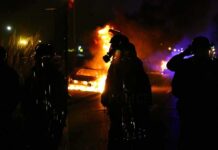

Iran’s Revolutionary Guard fired missiles toward a U.S.-used air base in Jordan, pulling Washington and Tehran into a fresh and dangerous exchange that both sides call self-defense.
Story Snapshot
- Iran said it launched missiles at Jordan’s Muwaffaq Salti Air Base used by U.S. forces.
- Jordan reported intercepts, while U.S. strikes hit Iranian launchers days earlier.
- U.S. Central Command framed its strikes as reducing threats to American troops.
- Both governments claim legal self-defense, fueling a tit-for-tat cycle.
What Each Side Says Happened
Iran’s Revolutionary Guard said it fired missiles at Jordan’s Muwaffaq Salti Air Base, where U.S. forces operate. Jordan’s military reported intercepting several missiles and described limited or no damage from that phase of the attack. Days earlier, a U.S. official said American forces struck two Iranian launchers on Larak Island, linking the action to active hostilities in the Gulf. Iran has vowed to respond to the Larak strike and framed its actions as punishment for U.S. aggression.
U.S. Central Command described American strikes on Iranian targets as defensive steps meant to lower risks to U.S. troops, commercial shipping, and nearby countries. Major outlets reported Washington viewed Iran’s missile fire toward Jordan as an attempted surprise attack on U.S. positions, which set off further exchanges. This back-and-forth continued over multiple days, with reporting that both sides calibrated actions while still pushing the limits of the other’s red lines.
Why Jordan Became a Flashpoint
Iranian officials said they target places used to launch or support U.S. operations. Because American forces operate from bases in Jordan, Iran argued that Jordan’s territory becomes at risk when Washington uses it for missions against Iran. Jordan, a U.S. partner, said it intercepted incoming missiles and acted in its own self-defense. Iran’s United Nations ambassador rejected Jordan’s position and claimed Tehran’s actions were lawful and proportionate self-defense under international law.
Reuters and other outlets reported varying outcomes and timelines. Some accounts noted no damage in early intercepts, while other reports across the month cited U.S. and allied casualties in separate incidents as the cycle expanded. These mixed details are common in fast-moving conflicts. Early reports often highlight official statements, while hard proof like debris analysis, satellite images, or legal filings can come later, if released at all. That delay lets competing stories set in before fuller audits occur.
How This Fits a Wider Pattern—and Why It Matters at Home
Reuters described U.S.-Iran flare-ups in 2026 as having a familiar shape: strikes, retaliation, and new risks each week. That pattern raises the odds of mistakes. Each side claims self-defense, but facts needed to judge “imminence” or “necessity” often stay classified. Central Command pointed to threat reduction, while Iran cited inherent self-defense rights. Without public evidence, most citizens must take governments at their word, which feeds distrust across the political spectrum.
Americans across parties see the cost of drift. Military families worry about troop safety and unclear missions. Taxpayers watch another overseas crisis pull resources while prices stay high at home. Skeptics on the right and left fear that elite decision-makers move the country toward wider war without open debate. Clearer briefings could help: battle-damage photos, debris reports from Jordan, and a public legal basis for U.S. strikes would let voters judge claims of self-defense on the facts.
Sources:
facebook.com, npr.org, fdd.org, theguardian.com, english.elpais.com, en.wikipedia.org
© primechronicle.org 2026. All rights reserved.