
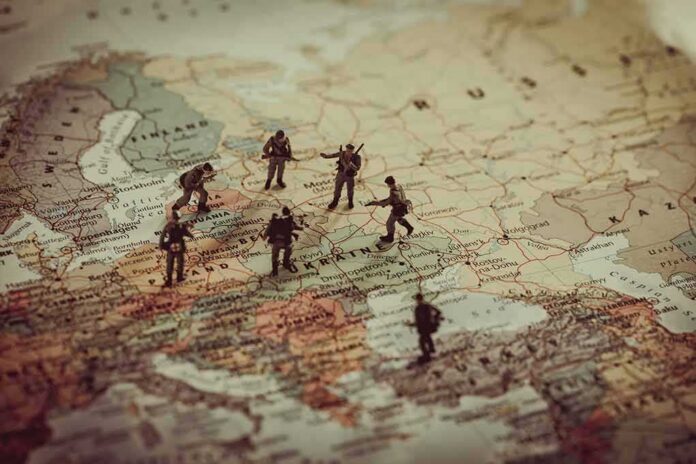
Russia says an Su-30 fighter crashed near Chernyakhovsk during a training flight, underscoring a war machine that looks strong on paper yet keeps showing cracks where the public cannot see the costs.
Story Snapshot
- Russia reported an Su-30 crash in Kaliningrad during scheduled training; pilots survived.
- Independent analysts say Russia’s 2026 battlefield gains are modest and often offset by losses.
- Moscow touts seized territory, while outside trackers note slow advances and Ukrainian pushback.
- Conflicting claims fuel distrust and deepen a sense that elites spin the war as facts lag.
What Russia Confirmed About the Kaliningrad Crash
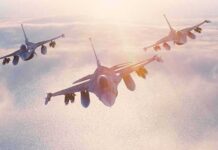
Russia’s Defense Ministry said a Su-30 fighter jet went down near Chernyakhovsk in the Kaliningrad region during a scheduled training flight on October 21, 2026. The ministry reported that both crew members ejected and were evacuated with injuries. Officials did not announce a cause. Local reports described the aircraft as an Su-30 or Su-30SM, a twin-engine, two-seat fighter used for air defense and pilot training. The incident involved one aircraft, not a pair, based on available reporting.
Kaliningrad is a key Russian military hub on the Baltic Sea, sitting between Poland and Lithuania. Russia runs regular air operations there to project power, test readiness, and train new and seasoned crews. A crash in this region draws attention because it touches North Atlantic Treaty Organization (NATO) airspace and major shipping lanes. Russia framed the event as a training accident, not combat damage, and offered no link to Ukraine or outside interference in initial statements.
Why A Single Crash Matters in a Grinding War
One crash does not prove systemic failure, but it lands amid questions about Russian capacity and cost control. The Institute for the Study of War reported that Russia’s average daily advance in 2026 was about a quarter of a square kilometer, and that since September 1 Russia suffered a net territorial loss in Ukraine. These numbers paint a picture of hard fighting for limited ground. They also suggest wear on pilots, airframes, and logistics that a closed system may struggle to refresh.
Russian leaders highlight cumulative gains and say their forces have taken thousands of square kilometers and hundreds of settlements since 2026 began. Analysts counter that many of those gains are small, costly, and sometimes reversed by Ukrainian counterattacks. The same assessment community reported Russian advances and infiltration near Kostyantynivka in mid-October, yet still judged overall Russian progress as slow. The gap between headline claims and mapped changes keeps public trust fragile on all sides.
The Fortress Belt Demand and the Negotiation Puzzle
Russia has pushed for full control of Ukraine’s heavily fortified “Fortress Belt” as part of ceasefire talk framing. The Institute for the Study of War assessed that Russian forces are likely unable to seize that belt purely by force, which would make the demand more of a bargaining tool than a reflection of decisive battlefield control. If so, a pilot-training mishap inside Russia’s secure enclave cannot support claims of momentum at the negotiation table.
This matters for Americans because mixed signals from a nuclear power raise real risks and real bills. Conservatives see a familiar pattern of elite narratives outrunning results and budgets, with taxpayers footing the cost while basic needs get squeezed at home. Liberals see human losses mounting and energy shocks rippling through families and small businesses. Both sides watch dueling claims about territory and ask whether leaders, foreign and domestic, are leveling with the public about tradeoffs and endgames.
How to Read Conflicting War Claims Without Getting Spun
Start with specific, checkable facts. Russia says the Kaliningrad crash happened during training, involved one jet, and left the crew alive. Independent analysts track mapped ground changes and find slow or negative net movement for Russia in recent weeks. Treat sweeping totals and vague victory language with caution unless tied to dated maps, geolocated evidence, or named units. In a long war, time windows can flip a story from “gaining” to “losing” overnight.
What Could Clarify the Picture Next
Clearer data would help: a formal Russian ceasefire text spelling out demands, verified territorial-control maps for the Fortress Belt sectors, and transparent incident records for the Kaliningrad crash. Until then, the smartest course is to separate firm details from negotiating theater. The crash shows the strain of constant operations even far from the frontline. The ground picture shows pressure without a clear breakthrough. Together, they argue for sober analysis over sound bites.
Sources:
youtube.com, understandingwar.org, criticalthreats.org, bbc.com, kyivindependent.com
© primechronicle.org 2026. All rights reserved.