
A Chicago-area organizer admitted he staged hundreds of armed robberies so people could file U-visa applications, and a federal judge sent him to prison for it.
Story Highlights
- Parth Nayi pleaded guilty to conspiracy to commit visa fraud and received two years in prison.
- Prosecutors say the crew staged hundreds of robberies from 2022 to 2024 across several states.
- A federal indictment names alleged co-organizers and purported paid “victims” tied to staged incidents.
- The scheme aimed to generate police reports and records to support U-visa claims.
Guilty Plea and Sentencing in Chicago-Based Visa Fraud Scheme
The U.S. Attorney’s Office in Chicago said Parth Nayi pleaded guilty to conspiracy to commit visa fraud and was sentenced to two years in federal prison and fined $50,000 in October 2026. The case centered on staged armed robberies at shops and gas stations that created police paperwork for U-visa filings. A federal judge imposed a sentence that confirms the case produced a criminal judgment, not just an accusation, after a multi-year investigation.
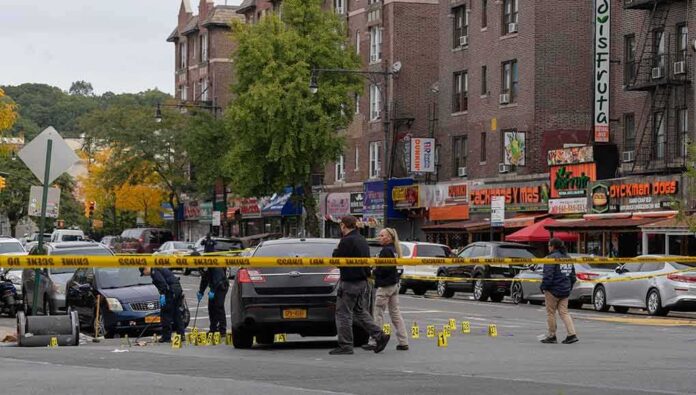
Prosecutors said Nayi organized and took part in hundreds of staged robberies from 2022 through 2024. They described hits at coffee shops, restaurants, liquor stores, and gas stations in Chicago, its suburbs, and places as far as Louisiana and Tennessee. The goal, according to the government, was simple: create the look of violent crime so applicants could claim victim status for immigration benefits. The Department of Justice said the faked crimes helped fuel U-visa applications.
How the Scheme Worked and Who Was Involved
A federal grand jury indicted six people in 2024, alleging they organized and carried out staged robberies so supposed victims could apply for U-visas. The indictment names Nayi and another alleged organizer, Kewon Young, and lists individuals who allegedly arranged to pose as victims. The document says the group created false statements and records to back up claims. The charging papers outline roles across locations and incidents, building a picture of an organized fraud network.
Local reporting that cited federal filings said purported victims paid Nayi thousands of dollars each, sometimes up to $30,000, to take part and get needed paperwork. The payment claims support the prosecution’s view that this was a business, not a one-off mistake. While the indictment sets out many details, it remains a charging document. The plea and sentence apply to Nayi. The other named defendants’ cases are legally distinct until they plead or go to trial.
Public Safety Risks and Program Integrity Questions
Federal statements and press reports stress that real harm can happen when crime is staged. One outlet reported a Bucktown store clerk was shot during a staged event tied to the scheme, showing how fake crimes can still turn dangerous. The Department of Justice also noted that the fraud reached across city and state lines, pulling in many businesses and police agencies that diverted time and resources to investigate false events.
Prosecutors stated that the fake victims submitted fraudulent applications after obtaining law-enforcement certifications for the staged robberies, and that these applications made up a substantial share of the annual 10,000-slot U-visa cap during the scheme.
But in a separate…
— Bonnie Speck (@BonnieESpeck) October 25, 2026
The U-visa program exists to help victims of serious crimes and to aid police in solving those crimes. Federal materials describe how a case often depends on police reports, victim statements, and a law enforcement certification that the victim helped with the investigation. That structure can be abused if someone fabricates a crime to build the file. Officials in this case said staged robberies were designed to generate those very documents for applications.
What We Know and What We Do Not
The government and news reports agree on the scale in broad terms, but the record does not pin down exact counts. Prosecutors used the phrase “hundreds of robberies,” but did not release a complete list of incidents, the number of participants, or how many U-visa applications succeeded. The public filings also do not show the full text of each application or every false statement that may have been submitted by each person.
The conviction stands on Nayi’s plea and the judge’s sentence. The indictment describes the wider network, but those allegations must still be resolved case by case for each defendant. That distinction matters in a polarized time. Many readers on the right see proof of immigration loopholes and weak enforcement. Many on the left see a warning that bad actors can warp a victim program that also protects people who genuinely need help. Both can agree that staged crimes waste police resources and put bystanders at risk.
Why This Case Matters Now
This ruling lands in a moment when faith in institutions is low and many Americans think the system favors insiders. This case shows how a determined group tried to game a federal program by creating fake violence for cash. It also shows that investigators and a federal judge can still act, bring charges, and impose prison time. Protecting real victims means stopping fraud while keeping paths open for those who face real harm, which is the hard work of government.
Sources:
twitchy.com, justice.gov, thestate.com, cwbchicago.com
© primechronicle.org 2026. All rights reserved.