

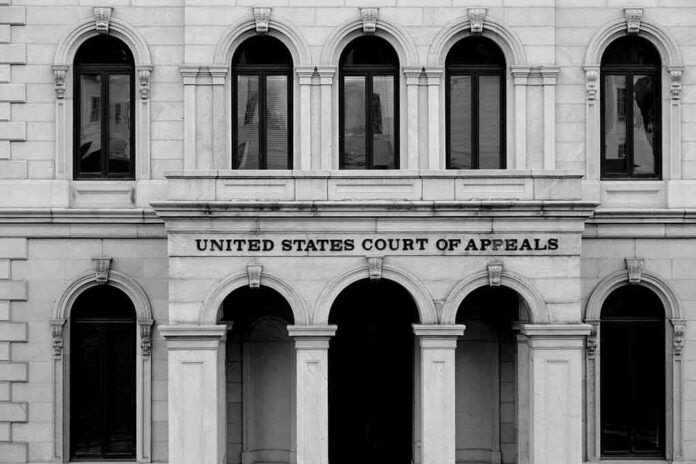
A rare, on-the-record misconduct probe has forced a sitting federal judge to answer under oath about alleged racial remarks, hostile conduct, and leaked sealed files.
Story Snapshot
- The Fifth Circuit opened a formal judicial-conduct investigation and ordered an in-person interview.
- Internal records reported a “reasonable basis” to question the judge’s fitness and workplace conduct.
- A mass email allegedly sent sealed and confidential court materials to about 140 people.
- The judge denied misconduct and rejected claims of a mental-health issue in a detailed response.
What The Fifth Circuit Has Officially Put On The Record
The Judicial Council of the United States Court of Appeals for the Fifth Circuit said it reassigned matters, identified a formal complaint, and appointed a special committee to investigate a Texas federal judge. The Council’s October 19 statement listed key orders from late September and mid-October, confirming Complaint No. 05-26-90196. The committee then ordered the judge to appear in person on October 30 for an investigative interview tied to the ongoing probe.
The October 20 special committee order cites a need to question the judge about an early-morning email that shared confidential misconduct materials and sealed court filings with roughly 140 recipients. The order documents the formal requirement that the judge answer questions before investigators. That step shows the matter moved beyond initial screening and into a compelled, on-the-record phase of fact gathering within the judiciary’s own process.
Allegations Reported Beyond The Docket Entries
Bloomberg Law reported that internal court materials describe a “reasonable basis” to believe the judge has a mental condition affecting job performance and that colleagues and staff endured “egregious and hostile” treatment. The outlet also reported claims that the judge “abandoned her post” and that a psychiatric evaluation was ordered by October 21. These accounts, while detailed, reflect preliminary investigative findings, not final discipline or a medical diagnosis.
Coverage also ties the probe to an April courtroom exchange with an attorney that included alleged racially charged remarks. Public sources do not provide the full transcript, audio, or full context of that hearing in the record now available. That gap matters because many readers will hear quotes secondhand. The committee’s public orders confirm the investigation, but they do not publish the hearing text or every exhibit that would settle debate over tone and meaning.
Judge Brown’s Response And What Remains Unknown
In a 76-page response described by Bloomberg Law, the judge denied having a mental-health issue, rejected claims of misconduct, and said her courtroom discussions about race could have been handled more delicately. She said she did not want anyone to think she was biased against any race and cited pride in her diverse ancestry. She also argued the lawyer at issue treated Black lawyers and women differently than white men, disputing the allegation of bias.
OUTWARDLY RACIST JUDGE CANT BE FIRED. GETS ALL RESPONSIBILITY TAKEN AWAY AS REWARD.
Explosive internal Fifth Circuit documents reviewed by Bloomberg Law reveal that U.S. District Judge Ada Brown (N.D. Tex.) has been stripped of her entire civil and criminal docket following a… pic.twitter.com/Gj9htUhHKm
— Nuanced_Mouse (@Pink_Meeces) October 29, 2026
These denials underline the core tension: the judiciary has opened a formal case, but many records remain sealed or internal. That leaves the public to weigh a few official orders against selective leaks and summaries. The Council’s unusual transparency about the case number and orders signals seriousness. Yet the rules of judicial discipline keep most evidence under wraps until later stages, if it ever becomes public at all.
Why This Matters For Equal Justice And Accountability
Federal judicial complaints are common, but most end quickly at the chief judge stage. Only a small fraction advance to a special committee for deeper review. That base rate makes this probe notable even without a final outcome. When the judge on the bench faces questions about fairness, workplace safety, and leaked filings, trust in the system itself takes a hit, especially for people who already believe powerful insiders protect their own.
People on the right and left can agree on core stakes here. Courtroom conduct must be even-handed. Sealed files must stay sealed. Staff must be safe at work. When judges police judges behind closed doors, citizens doubt the process. The Fifth Circuit’s orders confirm action, but the missing transcript and sealed evidence keep the public in the dark. That gap feeds suspicion that the system serves elites first, not equal justice under law.
What To Watch Next
Watch for release of any verified transcript from the April hearing, which could confirm or refute the most disputed language. Track whether the committee’s work leads to public findings, corrective steps, or referral to higher bodies. Follow whether the court addresses the mass email of sealed materials with a clear rule-based outcome. Each step will show if the system can hold its own leaders to the same standards it applies to everyone else.
Sources:
zerohedge.com, news.bloomberglaw.com, news.bgov.com, ca5.uscourts.gov, uscourts.gov
© primechronicle.org 2026. All rights reserved.