

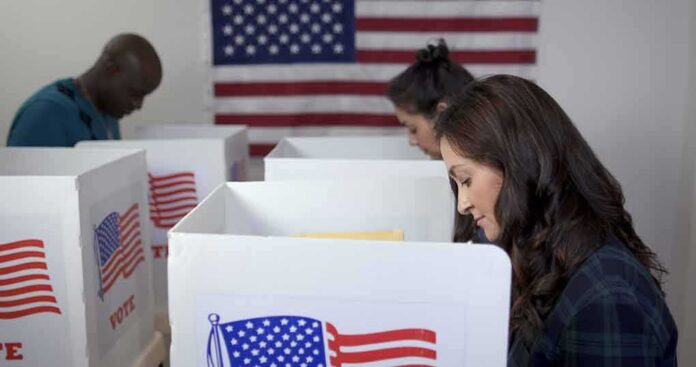
Colorado voters, in a state Democrats have carried in every recent election, just approved three ballot measures that crack down on child sex trafficking, bar transgender girls from girls’ sports, and ban certain surgeries on minors tied to gender identity.
Quick Take
- Colorado’s Proposition 133 passed with more than 62% support, raising the penalty for trafficking a minor for sex to life without parole.
- Proposition 134 requires school and college sports teams to be split by sex assigned at birth, with an exception letting girls join boys’ teams if no girls’ team exists.
- Proposition 135 banned certain surgeries meant to alter a minor’s sex characteristics, but does not ban puberty blockers, hormone therapy, or counseling.
- The sports and surgery measures passed by a tighter margin, about 52% to 48%, and civil rights groups are already pushing back hard.
- Because the two closer measures changed state law rather than the state constitution, lawmakers could still amend or repeal them with a simple majority vote.
What the Three Measures Actually Do
Proposition 133, called the Children Are Not for Sale Act, mandates life imprisonment without parole for anyone convicted of trafficking a minor for sexual servitude, with an exception for victims coerced into helping traffickers. It passed by the widest margin of the three, clearing 62% support according to unofficial Secretary of State results. Proposition 135 followed a tighter path, landing at roughly 52.2% to 47.8% in results reported by the Associated Press.
Proposition 134 sets sports eligibility by sex assigned at birth for school and college teams, though it allows a female athlete to join a boys’ team if her school has no equivalent girls’ team. Proposition 135 targets surgeries intended to change a minor’s biological sex characteristics but carves out medical exceptions and leaves nonsurgical treatments, like hormone therapy and counseling, untouched. Supporters, including the Colorado Catholic Conference, backed all three measures as child-protection policy.
A Long Fight That Finally Qualified
The group behind the measures, Protect Kids Colorado, failed to gather enough signatures for the 2024 ballot. It later succeeded with help from conservative religious organizations. Executive Director Erin Lee has framed the campaign as a grassroots parents’ movement built over three years. A pending campaign-finance complaint, however, concerns payments to a professional canvassing firm that were not reported to the Secretary of State, an unresolved question that could complicate that narrative.
Because Propositions 134 and 135 amend state statutes rather than Colorado’s constitution, state lawmakers can change or repeal them with a simple majority vote. That means the election results, while a clear win at the ballot box, do not guarantee the policies stay in place long-term. Supporters calling this a decisive mandate face a legislature that could revisit the issue entirely in a future session.
Opponents Say Families, Not the State, Should Decide
The American Civil Liberties Union of Colorado argued the sports and surgery measures hand deeply personal decisions to the government instead of families and doctors, and warned Proposition 134 could expose female athletes to invasive sex-verification checks since it does not specify how schools would confirm a student’s sex. One Colorado said it would keep fighting to protect transgender students’ access to healthcare and school activities, framing the goal as letting kids “be kids, not political symbols”.
🚨 AT 12, THIS GIRL SAID SHE WAS A BOY. THE SCHOOL STARTED TRANSITIONING HER IN SECRET.
ONE YEAR LATER, SHE REALIZED SHE WASN'T. HER STORY HELPED CHANGE COLORADO.
In 2021, Chloe Lee was 12 when her mother, Erin, says her sixth-grade daughter was recruited into a school gender… pic.twitter.com/702msqMPKJ
— ℹ️ DeeCoded Feed (@DeetheBee) November 9, 2026
Groups like Families Not Politics argued the measures create costly new barriers to medically necessary care and could exclude some students from full participation in school. The dispute mirrors a national pattern: by 2023, twenty-one states had already passed laws restricting transgender youth sports participation, part of a broader legal fight over Title IX, parental rights, and how much certainty exists around youth gender medicine. Colorado’s results add one more data point to that unsettled national debate, not a final answer to it.
What stands out is less which side “won” and more how deep blue Colorado delivered a result many assumed only red states would produce. For voters on both sides tired of national politics, the outcome shows local ballot measures can still cut against expected party lines, even as legislators, courts, and advocacy groups prepare to keep fighting over what the vote actually means in practice.
Grassroots, Not Money, Won The Ballot Initiatives In Colorado!
Erin Lee, Protect Kids Colorado, fought for three years to protect children from gender ideology and defend girls sports; On November 3rd the efforts of one mom and 5000 plus grassroots volunteers paid off. Three… pic.twitter.com/BTa37i4gWe— Moms for Liberty (@Moms4Liberty) November 7, 2026
Sources:
coloradokids.org, completecolorado.com, kimmonson.com, coloradotimesrecorder.com, gazette.com, cpr.org, denverpost.com
© primechronicle.org 2026. All rights reserved.