
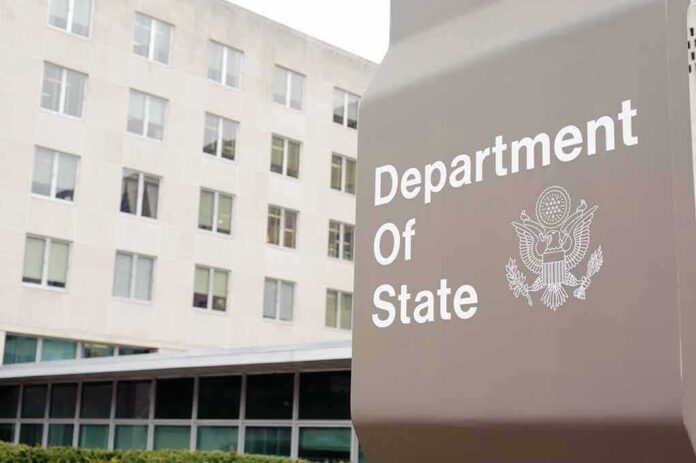
An official State Department video praising America’s Christian roots on International Religious Freedom Day triggered an immediate partisan and legal backlash.
Story Highlights
- The State Department posted a video linking American history to Christian mission work.
- Democratic officials and secular groups said the post promoted Christianity using a government account.
- Critics challenged a famous image of George Washington in prayer used in the video.
- Recent Supreme Court guidance favors historical practices over the old “endorsement” test, shaping this fight.
What the State Department Posted and Why It Matters
On October 27, the State Department’s official account shared a short video for International Religious Freedom Day. The post said America “was shaped by the Christian tradition of spreading the gospel unto all nations,” and invited viewers to celebrate the day. The message echoed long-running debates about how faith influenced early explorers, settlers, and leaders. The video’s timing and framing placed the department in a long dispute over where historical recognition ends and endorsement begins.
The department’s policy pages routinely stress protecting belief and nonbelief worldwide. That broad aim sits beside a specific nod to Christian influence in United States history. Supporters argued the video described a real strand in the nation’s past, not a call for conversion. They pointed to well-known historical imagery in the clip, including early colonial scenes and a Washington prayer painting, as part of a narrative about roots, identity, and the struggle for freedom over time.
How Critics Framed Promotion Versus History
Democratic officials and secular advocates said the post crossed a constitutional line by using an official account to celebrate Christianity. California State Senator Scott Wiener said the department was “promoting the Christian gospel,” not giving neutral history. The Freedom From Religion Foundation argued the post sent the wrong message for International Religious Freedom Day by spotlighting Christian expansion instead of equal freedom for belief and nonbelief. These groups called the clip an endorsement, not a lesson.
Other critics targeted the video’s use of the painting “The Prayer at Valley Forge.” Oklahoma State Representative Mickey Dollens challenged that image as shaky historical evidence of Washington’s piety. Outlets described the overall package as “Christian nationalist” messaging paid for with taxpayer funds. Critics said the selected visuals and quotes implied a preferred faith. They warned that such signals from a diplomatic agency blur the line between public service and religious advocacy.
The Legal Landscape Shaping the Dispute
The Supreme Court has moved away from the old “Lemon” and “endorsement” tests that asked whether government actions advance religion. In Kennedy v. Bremerton School District, the Court told judges to analyze the Establishment Clause through “historical practices and understandings” instead. That shift gives more room for public references to faith when tied to tradition and history. It does not, however, erase conflicts over tone, purpose, and effect in official messaging.
This change matters because it reframes what counts as a violation. Courts may weigh whether similar religious references appeared in public life across United States history, and how government officials used them. The State Department’s defenders can argue the post reflects that tradition. Opponents can argue the video still signals favoritism, especially because it praises Christian mission work. The facts of the clip, its captions, and its official seal will all shape that analysis.
Why Both Sides See High Stakes
Supporters say naming Christian influence is honest history and pushes back on a culture that erases the past. They argue citizens can handle facts without the state forcing belief. Critics say the problem is power, not facts. They fear that praised narratives become policy, and that federal platforms tilt the field for some faiths. Both sides share a deeper worry: officials often use hot culture fights to distract from core failures on cost of living, security, and trust in government.
What to Watch Next
Watch for formal complaints, inspector general inquiries, or congressional letters asking who approved the video and why. Look for whether the department issues clarifying guidance or posts content highlighting pluralism and nonbelief. Expect social media to amplify outrage from both sides, since platforms reward emotional content and direct confrontation more than nuance. The legal fight may not reach a courtroom, but the policy fight over message and mission inside government will continue.
Sources:
thegatewaypundit.com, answeredfaith.com, youtube.com, ffrf.org
© primechronicle.org 2026. All rights reserved.