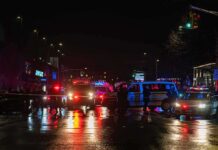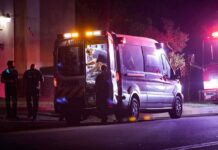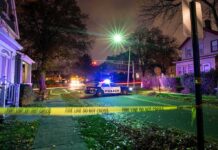

Police say an armed community member chased a teenage gunman into an Oregon elementary school and fatally shot him within minutes, after four people were killed.
Story Highlights
- Police report a community member followed the shooter into Silver Rail Elementary and killed him.
- The attack left three children and one teacher dead, with two others initially hospitalized.
- First calls came just before 1 p.m., and officers arrived around 1:02 p.m..
- The case renews debate over rare but real civilian intervention during active shootings, as tracked by the Federal Bureau of Investigation (FBI).
Police Account of What Happened in Bend
Bend Police said a 16-year-old opened fire at Silver Rail Elementary School on October 15, killing three children and a teacher. Police reported that a community member saw the suspect enter the school, followed him inside, and engaged him, fatally shooting the attacker before officers got to the scene. CNN reported the incident began around 1 p.m.. Reuters reported officers arrived by about 1:02 p.m., underscoring how fast the event unfolded. Local dispatch logs reflected a first call at 12:59 p.m..
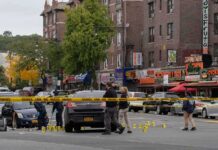
Police said the suspect was found dead inside the school within minutes. Reporters on the scene described a heavy law enforcement presence and a rapid lockdown of the area. Officials have not released a full forensic timeline. Early details from police briefings align on the short window between the first shots and the end of the threat. That compressed timeline matches witness accounts of a chaotic scene, alarms, and swift calls for help as parents rushed to the campus and nearby streets closed.
Victims, Injuries, and Community Impact
Authorities said the shooting killed three children, ages 5, 8, and 11, and one teacher. Police and major outlets reported two additional victims taken to the hospital, including a 7-year-old child and a 54-year-old teacher. The child was later listed as serious but stable, and the older teacher was identified as Becky Drury by subsequent reporting. City and school officials moved to close schools in the area as families gathered for updates and counseling services opened for staff and students.
Parents, teachers, and neighbors held vigils and set up memorials outside the school. Community leaders urged patience as investigators collected evidence, interviewed witnesses, and secured video from the campus and nearby buildings. Police asked the public to avoid sharing rumors about the suspect and potential motives until verified information could be released. Local and state officials promised a review of school security, mental health supports, and emergency procedures in the days ahead.
Civilian Intervention: What the Record Shows and What It Does Not
Police attributed the shooter’s death to a community member who pursued and engaged the attacker before officers arrived. That core fact appears in wire service and national outlet reports that cite Bend Police Chief Mike Krantz. Officials did not name the civilian in those reports, and they did not publish a ballistic analysis or body camera timeline at this stage. Newsrooms cautioned that some details of the sequence may be refined as investigators complete their work.
This case also fits a narrow but documented pattern. The Federal Bureau of Investigation’s recent reporting shows civilians sometimes confront active shooters, though it is not common. In 2025, civilians intervened in seven of the 34 incidents the FBI tracked, or about 21 percent. In 2022, the FBI recorded eight incidents, or about 16 percent, where citizen action helped end the attack. Those totals include both armed and unarmed actions and vary widely by context.
Why This Resonates Across the Political Divide
Families on the right see a failure to protect neighborhoods and schools, even as they push for stronger discipline and faster responses. Families on the left see a safety net full of holes, from mental health access to school resources. Both see leaders who talk more than they fix. This event shows where the gap hits hardest: kids, classrooms, and trust. The speed of the attack and the reliance on a nearby citizen sharpen the question of whether government systems deliver when seconds matter.
Local officials now face urgent tasks that do not fit neat talking points. They must secure buildings without turning schools into fortresses. They must share facts fast without guessing. They must support victims while learning what broke and what worked. Clear records on the call timeline, entry points, and response steps can help the public understand what saved lives and what must change before the next alarm sounds.
What to Watch Next
Expect a formal timeline from Bend Police and the school district, including dispatch logs, 911 summaries, and any relevant video. Watch for updates on the two injured victims and official identification of the civilian who engaged the shooter, if released. Look for specific steps on school entry security, staff training, and family reunification drills. Track how state leaders fund trauma care and whether lawmakers revise guidance based on this fast-moving case.
Sources:
thegatewaypundit.com, us.cnn.com, knkx.org, upi.com, nbcdfw.com, abc6onyourside.com, klcc.org, fbi.gov
© primechronicle.org 2026. All rights reserved.