
U.S. Central Command says its Hormuz blockade has blocked over $25 billion in Iranian oil sales, and independent tanker trackers show visible seaborne exports plunging to near zero.
Story Snapshot
- U.S. Central Command estimated the blockade blocked over $25 billion in Iranian crude exports.
- Commercial trackers reported Iranian oil at sea outside the zone fell to zero by mid-October.
- Data cited showed seaborne crude exports dropping to zero in September and into early October.
- Task Force Iron Gate expanded pressure to Iran’s land borders and the Caspian Sea.
What the U.S. Military Says the Blockade Achieved
United States Central Command publicly estimated that its naval blockade stopped more than $25 billion in Iranian crude exports. Reuters reported the figure on November 7, citing Central Command officials. The command also stood up Task Force Iron Gate in Tampa to choke off sanctioned goods over land and across the Caspian Sea, broadening the effort beyond ships. Major outlets echoed the estimate and framed the task force as an expansion of the campaign.
The $25 billion number is an official estimate, not a cargo-by-cargo ledger. The reporting did not include the exact list of ships, the price assumptions, or the time window used to value blocked sales. That limits outside auditing. Still, the claim lines up with separate signs of strain in Iran’s seaborne flows that commercial trackers and media also described in the same time period.
What Independent Tracking Shows on Oil at Sea
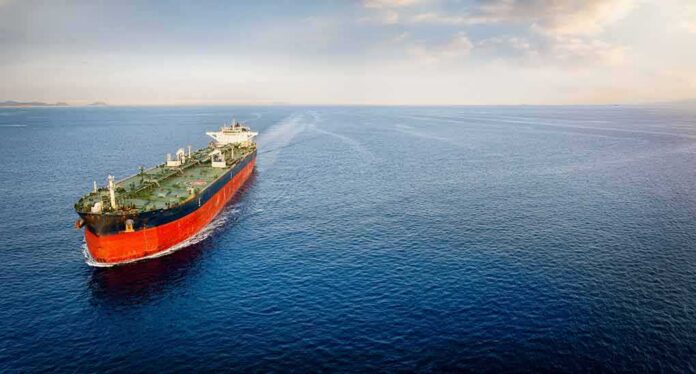
Radio Free Europe/Radio Liberty, citing Kpler data, reported that Iranian oil on the water outside the blockade zone fell from 88.8 million barrels on July 14 to zero by mid-October, after final cargoes were unloaded in China. That points to a steep drawdown in the visible seaborne pipeline. The same outlet noted loaded tankers near Kharg Island, raising questions about storage and timing even as offshore volumes shrank.
Benzinga, drawing on Vortexa and Reuters, said Iran’s seaborne crude exports fell to zero in the second week of September from a two-week average of about 230,000 barrels per day at the month’s start. The report said the figure stayed at zero as of October 5. These snapshots do not prove all sales stopped, but they back the picture of a sharp, enforced slowdown in tracked maritime shipments.
How the Campaign Reached Beyond the Strait
Central Command created Task Force Iron Gate to tighten controls not only at sea but also across Iran’s land borders and the Caspian Sea corridor. The Washington Post and CNBC described the unit as aimed at disrupting overland movement of advanced weapons and sanctioned material, which could include efforts to relabel or reroute oil-linked trade. This design suggests the Pentagon sought to dampen common evasion paths beyond tanker routes.
This broader scope matters because Iran has a long history of working around sanctions. Analysts say authorities use ship-to-ship transfers, shell companies, and non-dollar payments to keep oil moving. Blocking the sea lanes narrows options, but past experience shows governments can shift flows over time. That is why land and Caspian pressure became part of the plan, to close gaps before new habits formed.
What the Evidence Does and Does Not Prove
The strongest facts support a real hit to visible seaborne exports and offshore stock. Central Command’s estimate, plus Kpler and Vortexa snapshots, point in the same direction. At the same time, the public record does not trace every cargo or every dollar. Commercial datasets do not reveal their full methods. The reporting leaves open whether some oil moved through third countries or by barter, which would weaken but not erase the blockade’s effect.
Oil Exports, Deterrence and Escalation Risks | 3/3
[VERIFIED – US DOCUMENT STATEMENT]
The November 18 USNAVCENT blockade update extends the declared enforcement measures to vessels receiving Iranian oil cargo through ship-to-ship transfers. Under the stated US position, such…— Littoral Insight (@LittoralInsight) November 20, 2026
Iranian leaders also claim they can endure pressure. A Stanford-linked analysis argued exports had rebounded by 2024 and relied more on dark fleets, yuan payments, and barter, while Iran’s budget planning touted non-oil revenues. The United States Department of State noted earlier in 2026 that Iran continued exporting oil. These points caution against saying “all sales stopped,” but they do not refute the recent collapse in tracked seaborne flows.
Why This Matters for Americans Watching Washington
For years, both right and left have watched powerful players bend rules while average families pay the price. This story shows the government can act fast and hit a target market hard, but it also shows how opaque numbers and classified methods limit public trust. Clear proof, like a vessel-level tally, would help citizens judge cost, risk, and results. Until then, the best verified takeaway is simple: tracked tankers fell off sharply, and pressure widened beyond the sea.
Sources:
redstate.com, globalsecurity.org, rferl.org, washingtonpost.com, reuters.com, benzinga.com, timesofisrael.com, criticalthreats.org, aljazeera.com, amp.dw.com
© primechronicle.org 2026. All rights reserved.