
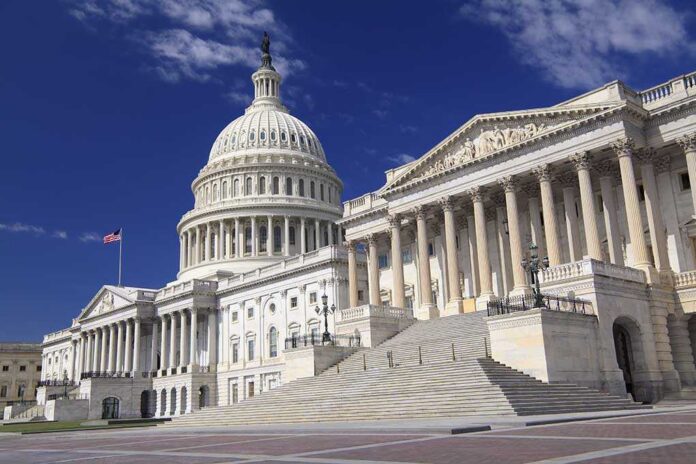
The White House warned House Democrats that some planned subpoenas could be “blatant criminality,” signaling a constitutional showdown before the new Congress is even seated.
Story Snapshot
- Democrats won control of the House and Senate and are preparing oversight investigations.
- White House Counsel Will Scharf sent a letter warning planned probes could cross legal lines.
- Scharf affirmed Congress has subpoena power but only for true oversight purposes.
- Incoming Oversight Chair Robert Garcia says Article One grants Congress its authority.
Democrats Prepare Oversight as Control of Congress Shifts
Democrats won the 2026 midterms and are set to control both chambers of Congress in January, positioning them to run aggressive oversight of the Trump administration’s actions and policies. Transition reporting identified Representative Robert Garcia as the expected chair of the House Oversight Committee. Control of gavels and staff gives committees the power to set hearing agendas and issue subpoenas to agencies and officials. That shift often brings new document requests and witness demands tied to potential laws and reforms.
House and Senate rules give every standing committee authority to issue subpoenas, which can compel testimony and records for legislative purposes. Courts have long treated oversight as part of Congress’s core lawmaking function, even as they recognize limits like executive privilege claims from the White House. In past changes of control, both parties have used this tool to investigate past decisions, test agency performance, and inform new bills. The coming term follows that standard pattern of harder-edged oversight.
White House Letter Warns of Criminal Lines Not to Cross
White House Counsel Will Scharf sent a three-page letter to Representative Garcia that warned Democrats their promised investigations and subpoenas could cross constitutional limits and even amount to “blatant criminality,” if used to harass or intimidate officials. The letter argued that compulsory process must serve a legitimate legislative purpose and not wander into law enforcement functions that belong to the executive branch. The message previewed likely resistance to requests seen as improper or overly broad.
Scharf also acknowledged Congress’s right to issue subpoenas for oversight. He wrote that compulsory process is a tool Congress has “for oversight functions, and only for oversight functions,” stressing that purpose is the test for what is lawful. That framing signals a familiar fight ahead: committees will assert broad needs for information, while the administration will press constitutional shields. The letter suggests the White House will scrutinize each demand and may challenge those it views as abusive or untethered to lawmaking.
Incoming Oversight Chair Cites Article One Authority
Representative Garcia responded that Congress does not need permission from the White House to investigate. He pointed to Article One of the Constitution as the source of legislative power and said the House will conduct oversight as part of its duties. Garcia signaled that committees plan to pursue inquiries into the Trump administration’s actions. He also suggested that resistance from the White House raises concerns, stating that “it appears Donald Trump has something to hide,” a political claim that reflects the coming clash rather than settled fact.
Democrats have framed their probes as legislative oversight rather than criminal prosecution, a distinction that matters in court fights over scope and privilege. The White House’s letter, by recognizing lawful oversight, also left room for negotiations on specific topics. The key legal question, case by case, will be whether a subpoena links clearly to potential legislation and avoids needless exposure of personal or privileged material. That is where courts have often drawn the line in past disputes.
What the Fight Means for Voters and Institutions
Americans who worry about waste, abuses of power, or special treatment for elites see real stakes in this fight. Aggressive oversight can expose failures, protect taxpayer money, and fix broken programs. But power cuts both ways. If either side uses the process to score points or punish enemies, the country pays with more delay, fewer answers, and rising legal bills. The law allows oversight, and it also guards against harassment. The tension is built into our system.
What is Fiction / Misleading
• No "At All Costs" Mandate. The U.S. government has not issued an official directive or law declaring that Musk must be protected at all costs. That specific phrasing comes from sensationalized social media posts and partisan commentary summarizing…
— Joseph G Dupont (@JosephGDupont) November 13, 2026
Expect deadlines, subpoenas, privilege claims, and court filings in the months ahead. Committees may target agency decisions, contract spending, and ethics rules to shape new bills. The White House will likely insist on narrower requests and accommodation talks. If either side overreaches, judges can step in, though courts often urge negotiated solutions first. For citizens who feel Washington serves the connected few, this moment is a test: can leaders seek truth and fix problems, not just win the next news cycle?
Sources:
pjmedia.com, cbsnews.com, nytimes.com, pbs.org, latimes.com, abcnews.com, constitution.congress.gov
© primechronicle.org 2026. All rights reserved.