
In Maine’s first Senate debate, Troy Jackson said “No” to voter ID while Susan Collins said “Yes,” putting election rules at the center of a tight race.
Story Snapshot
- Jackson opposed voter ID on stage; Collins backed it as a simple safeguard.
- Jackson argued noncitizens are already barred from voting, so new ID rules are redundant.
- Collins supports proof of citizenship at registration and photo ID at the polls.
- The exchange fits a national fight over security, access, and trust in elections.
What Each Candidate Said, Clearly and On the Record
During a lightning round in the Portland debate on October 6, moderators asked if voters should show identification to cast a ballot. Susan Collins answered “Yes” and added, “Only Americans should vote in American elections.” Troy Jackson answered “No.” Multiple outlets reported the same split, anchoring the record in several independent accounts of the same exchange. The moment drew attention because it cut to a core issue: how to balance ballot access with proof of eligibility.
Jackson’s brief explanation leaned on two points. First, he said that as a working logger he often voted without his identification. Second, he argued that noncitizens are already barred from voting, making voter ID unnecessary. These remarks place his stance in a camp that sees new ID rules as a fix in search of a problem. The debate reporting did not supply a full transcript or detailed rationale, so the specific policy contours of his opposition remain unclear.
Collins’s Position and the Current Republican Proposal
Collins has backed a national plan that pairs a one-time proof of citizenship when voters register with a photo identification check at the polls. She has said the registration proof should be one time only and that requiring it at every vote would go too far. She frames the approach as a simple reform that can boost trust in results without adding repeated burdens on voters, a line that mirrors many Republican campaign messages.
That policy track links to a broader push in Congress to tighten election rules. Recent fights on Capitol Hill tied voter identification provisions to other measures, which opponents called “poison pills.” That tactic helped stall unrelated bills, including a proposed ban on congressional stock trading. The national back-and-forth shows how election rules often ride alongside bigger political battles, which can fuel public cynicism about priorities in Washington.
Why This Debate Moment Hits a National Nerve
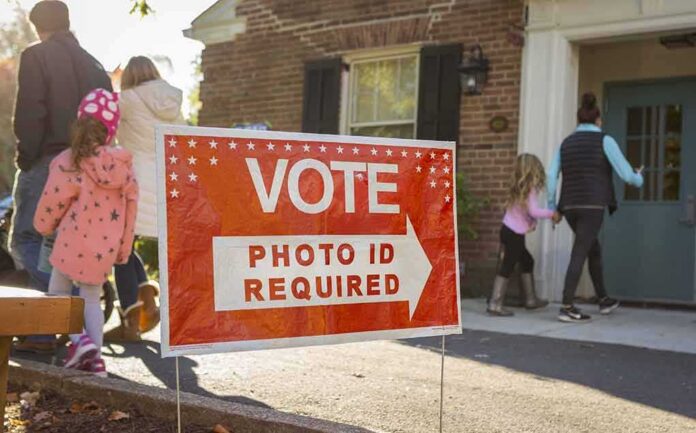
Voter identification laws sit at the fault line between two public concerns: preventing illegal voting and avoiding barriers for eligible citizens. Research summarized by the Government Accountability Office has found mixed effects on turnout, and the evidence on in-person voter fraud is thin and hard to measure. Supporters argue that ID checks are normal in daily life and help deter wrongdoing. Critics counter that added steps can confuse or slow lawful voters, especially seniors and low-income citizens.
Maine’s split mirrors the country’s divide. Many conservatives, worried about weak systems and lax enforcement, see photo identification as common sense. Many liberals, focused on access and error risks, see extra documents as a needless hurdle. Most Americans, regardless of party, also worry that politicians game the rules for advantage. When Congress links voting rules to other hot issues, people see dealmaking, not problem solving. That perception deepens distrust in a system they believe serves insiders first.
What We Know — and What Is Still Missing
Several reputable outlets documented the debate exchange, which supports confidence in the core facts: Jackson opposed voter identification and Collins supported it. The reports, however, captured only brief quotes and summaries. They did not provide a full debate transcript or full video of the specific answers. That gap limits clarity on whether Jackson objected to photo identification at the polls, documentary proof of citizenship at registration, or both. Precision matters because those policies differ in impact.
Congress stock trading ban: the Senate vote on Sept 30 was 53-47, short of the 60 needed. The bill also carried a voter ID requirement. Search insider trading on your senator's Suffragium page. Separate bills? #stocktrading #senate #congress pic.twitter.com/BpUj3jPXr3
— Valentina (@suffragium_us) October 6, 2026
Collins’s policy detail is clearer due to prior statements and coverage. She backs one-time proof of citizenship at registration and photo identification at voting sites. Jackson’s broader record on election administration was not included in the reports reviewed here. For voters, the simple contrast remains: Collins favors new checks to boost confidence; Jackson says current law already blocks noncitizens and that extra identification is not needed. That is the choice on this issue in the Maine race.
Bottom Line for Voters
If you want new proof rules to confirm citizenship at sign-up and a photo identification check at the polls, Collins is offering that plan. If you believe current law is enough and you worry new checks will add costs or cause mistakes, Jackson voiced that view. The larger frustration across left and right is real: Washington keeps bundling election rules into bigger fights while everyday concerns pile up. Clear, narrow laws — debated in the open — would serve the public better.
Sources:
nypost.com, cnn.com, pressherald.com, cpr.org, abcnews4.com, wionews.com
© primechronicle.org 2026. All rights reserved.