
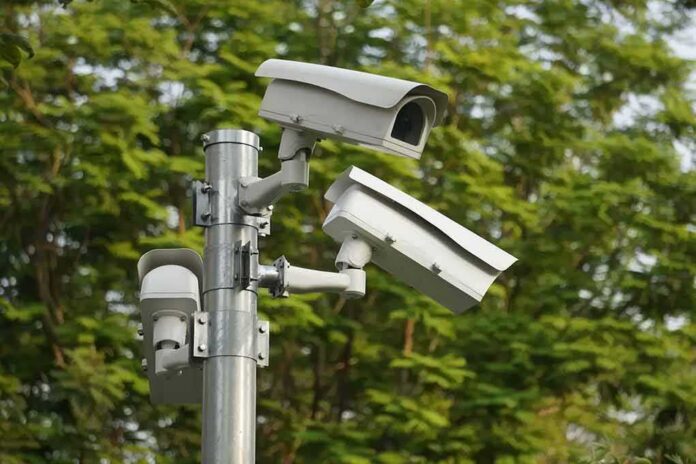
Across the country, Americans are tearing down high-tech Flock cameras and forcing cities to cut ties with a growing license-plate surveillance network that many now see as a direct threat to everyday freedom.
Story Snapshot
- Dozens of cities and counties are canceling or suspending Flock camera contracts after public outcry over mass surveillance and data sharing.
- Residents and civil-liberty groups say the cameras enable warrantless tracking of innocent drivers and feed federal immigration enforcement efforts.
- Reports of misuse, data access without local approval, and mistaken camera reads leading to dangerous police stops are fueling anger.
- The backlash is uniting conservatives and liberals who believe powerful companies and government agencies are quietly building a nationwide tracking system.
Flock Cameras Spread Fast — Then Hit a Wall of Public Anger
Flock Safety, a private surveillance company, has installed tens of thousands of artificial intelligence license-plate cameras in thousands of communities, often sold as a simple crime-fighting tool. These cameras sit on street poles and at neighborhood entrances, quietly logging the time, place, and plate number of nearly every passing car. For several years, local officials signed contracts quickly, hoping to curb car theft, gun crime, and drug trafficking without hiring more officers or fixing deeper problems. But as the cameras spread, residents began asking a basic question: who is really in control of this data, and how is it being used?
Investigations and local audits began to answer that question, and the answers alarmed people on both the left and the right. In Mountain View, California, city officials discovered that federal agencies had accessed local Flock camera data without city approval, violating local policy on outside data sharing. Similar reports showed local police across the country tapping into Flock’s national database to assist federal immigration enforcement, deepening fears that a neighborhood safety tool had quietly become part of President Trump’s deportation machine. These findings turned vague worries about “big brother” into concrete evidence of a growing, largely hidden surveillance network.
Cities Cancel Contracts as Privacy Fights Reach City Halls
Once the data-sharing picture became clear, the issue jumped from activist circles straight into city councils and county boards. Dane County in Wisconsin voted overwhelmingly to cut off funding for two dozen Flock cameras after supervisors raised privacy concerns and questioned the lack of strong guardrails. Liberal college towns like Flagstaff, Cambridge, Eugene, and Santa Cruz deactivated their cameras or tore up contracts, many after learning their data was flowing more widely than they had been told, including to federal immigration authorities. According to public tracking projects such as DeFlock, at least dozens of cities—often counted at 68 or more—have now canceled contracts, deactivated cameras, or rejected new proposals. That level of organized pushback is rare in policing technology and shows how deeply the distrust runs.
This revolt is not limited to blue college towns or left-leaning cities. Reporting finds that more than 70 communities across at least 28 states have canceled or rejected Flock camera contracts, from Sedona, Arizona, to Windsor, Connecticut, and Lockhart, Texas. In Denver, the city council unanimously voted to dismantle the Flock network over fears of data sharing with immigration authorities, and then moved to hire another company under tighter rules. Los Angeles recently suspended use of Flock cameras amid growing concern over who controls the data and how it might be shared with other agencies, including federal immigration officers. These decisions reflect a wider sense that local leaders rushed into high-tech surveillance without first securing basic protections for law-abiding residents.
Misuse, Mistakes, and Vandalism Fuel Grassroots Resistance
While officials debate contracts, ordinary citizens are taking direct action against the cameras themselves. Reports describe residents putting trash bags over camera heads, spray-painting lenses, and even cutting cameras down in at least five states after local fights over surveillance. These acts, while illegal, show how personal the issue has become for people who believe they are being tracked anytime they drive to work, church, or school. Groups like the American Civil Liberties Union argue that Flock’s automated license-plate readers amount to dragnet surveillance that tracks movements without a warrant and treats every driver like a suspect. Their campaigns call on communities to “get the Flock out” by ending contracts and banning future deals.
Culling the Flock: Sheriff, police investigating vandalism of license plate reader cameras https://t.co/C2iWZ4b48Q by @daveobrienct
— The Chronicle-Telegram (@YourChronicle) July 24, 2026
Concerns are not only about intent but also about errors and abuse. A Business Insider investigation documented cases where Flock cameras misread plates or vehicle details, leading to innocent people being stopped at gunpoint, jailed, or even attacked by police dogs after officers failed to double-check the alerts. Other reports show officers using the system to stalk ex-partners or track people for personal reasons, with some losing their jobs after these abuses came to light. For many Americans, these stories confirm a broader fear: when powerful technology is handed to flawed institutions with weak oversight, the people who pay the price are everyday citizens, not the elites who approved the systems.
Why This Fight Resonates Across the Political Spectrum
The Flock camera backlash is tapping into a shared frustration that crosses party lines. Conservatives who already distrust federal power and “deep state” agencies see the cameras as another tool for distant bureaucrats to monitor their lives, especially when tied to immigration databases and other federal systems. Liberals who worry about policing, inequality, and discrimination see the same cameras as fresh fuel for racial profiling, mass deportations, and harsh crackdowns on protest and dissent. Both sides agree on one core point: the public was never clearly told how far this technology would reach into daily life, or how much control private companies and government agencies would gain over their movements.
This conflict also exposes a deeper problem with how the federal government and its partners handle new technologies. Tools like Flock’s cameras spread quickly because they promise cheaper, easier “law and order” without tackling root causes like addiction, poverty, and broken immigration systems. City officials, pressed to show action, sign contracts with private vendors that profit from data while ordinary people carry the risk. Detailed public rules, strong local control, and true transparency often come only after backlash and scandal. The growing wave of canceled contracts, trash-bag-covered cameras, and bipartisan anger shows that many Americans now see this pattern clearly—and are no longer willing to accept “trust us” as an answer when the government and its corporate allies want to watch every car on the road.
Sources:
military.com, govtech.com, theguardian.com, washingtontimes.com, kimmonson.com, townhall.com, businessinsider.com, npr.org, abc7chicago.com, naturalnews.com, yahoo.com, motherjones.com, wsj.com
© primechronicle.org 2026. All rights reserved.