
Iran has tied reopening the Strait of Hormuz to a sweeping set of U.S. concessions, turning a vital shipping lane into a bargaining chip in a high-stakes regional standoff.
Quick Take
- Iran’s top national security official said the strait will not reopen until the United States changes course.
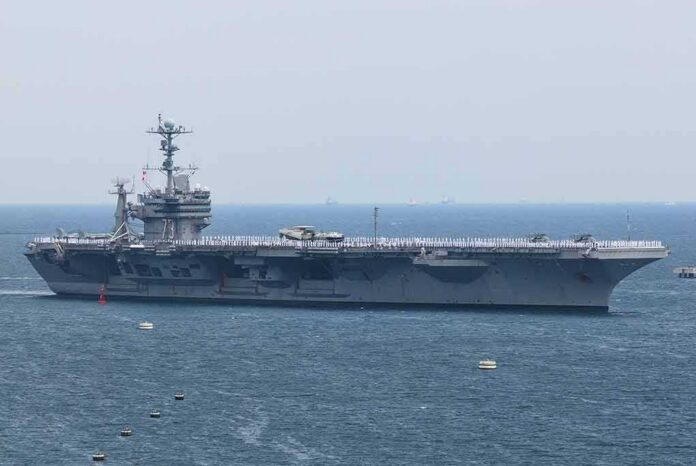
- The reported demands include lifting the naval blockade, easing sanctions, withdrawing U.S. forces, and releasing frozen assets.
- Several reports also say Iran wants war reparations and an end to attacks on its allies in the region.
- The wording varies across outlets, but the core message is the same: access to the strait is conditional.
What Iran Said
Mohammad Bagher Zolghadr, secretary of Iran’s Supreme National Security Council, was quoted in state media laying out the conditions for reopening the waterway. Reported demands include lifting the naval blockade and sanctions, withdrawing U.S. military forces from around Iran, paying war reparations, releasing frozen Iranian assets, and ending attacks on Iran’s allies in the region.
Zolghadr also framed the dispute as a test of Washington’s conduct, saying the strait would not reopen until America “corrects its behavior.” Other reporting quoted Iranian officials saying reopening depends on U.S. compensation for violations of earlier agreements and on a new security or management setup for the channel.
Why the Strait Matters
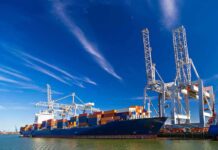
The Strait of Hormuz is one of the world’s most important oil routes, so even partial limits can affect prices, shipping costs, and insurance rates. That is why every sign of tighter Iranian control gets fast attention from the White House, energy traders, and Gulf governments. The dispute is not only about boats passing through water. It is also about leverage, money, and who sets the rules in a choke point the world cannot ignore.
Reuters reported that a senior Iranian source described a temporary plan under discussion with Oman that would give Iran control over inbound shipping and visibility over outbound traffic, with intervention rights if needed. Other reports said the arrangement could include tolls or fees, which suggests Tehran is not simply threatening closure. It appears to be pushing for a managed system that preserves Iranian influence while still allowing some traffic to move.
A Pattern, Not a One-Off
This is not the first time Tehran has linked transit rights to broader concessions. AP reported in April that Iran offered to reopen the strait if the United States lifted its blockade and ended the war, and Reuters later reported similar conditional language in May. That repeated structure matters because it shows a bargaining pattern, not a single emotional statement. Iran has used the strait before as pressure in talks over sanctions, military action, and frozen assets.
At the same time, the reports do not all use the same number of demands. Some say six, while others list more conditions or different wording. That means the exact tally is less solid than the main point: Iran is making access to the strait conditional on U.S. concessions. The available reporting also leaves some room for negotiation, since several accounts describe talks still in motion rather than a final, fully locked-in order.
Iran Raises the Stakes in the Strait of Hormuz
Iran has set new conditions for reopening the Strait of Hormuz as tensions continue around the strategic waterway. Tehran demands that the United States withdraw its forces from the region, lift sanctions, release frozen Iranian… pic.twitter.com/FLaNeb0Av1
— Nordexium (🇫🇷 🇩🇰) (@Nordexium) August 9, 2026
For President Trump, the dispute adds more pressure to a long-running fight over sanctions, military posture, and regional control. For shipping markets, the concern is simpler and more immediate: if Iran keeps treating the strait as a lever, every round of talks can move oil, freight, and insurance markets before any ship even changes course.
Sources:
19fortyfive.com, reuters.com, straitstimes.com, foxnews.com, apnews.com, youtube.com, jpost.com
© primechronicle.org 2026. All rights reserved.