
A high-profile House Democrat just labeled scrutiny of a Senate candidate’s alleged family ties to the Muslim Brotherhood “very clearly racist,” turning a messy campaign fight into a test of where fair vetting ends and prejudice begins.
Story Snapshot
- Rep. Alexandria Ocasio-Cortez called the claims against Abdul El-Sayed “very clearly racist.”
- El-Sayed denied any personal or family ties and dismissed the issue as hearsay from old posts.
- The allegation rests on half-sister posts about their mother and relatives, not on El-Sayed’s actions.
- A recent fact-check found no proof of El-Sayed’s own links to the Muslim Brotherhood.
AOC’s Charge of Racism Escalates a Michigan Senate Flashpoint
Rep. Alexandria Ocasio-Cortez said on October 16 that claims about Abdul El-Sayed’s supposed Muslim Brotherhood ties were “very clearly racist,” after being asked by TMZ. She argued opponents crossed a line by pulling family history into a campaign attack. Her remarks arrived late in a tight race and amplified an already heated exchange over faith, ancestry, and what counts as fair scrutiny in American politics. The congresswoman’s comments drew praise and backlash almost at once.
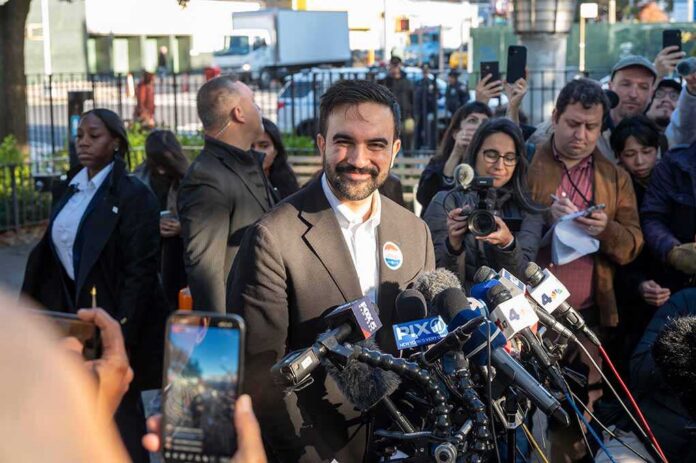
Democratic candidate Abdul El-Sayed rejected the allegations in recent interviews. He said, “I have no ties. We have no ties,” and called the claims “hearsay evidence from a tweet.” He also said he did not grow up with his mother and had never discussed the topic with her, which leaves some family questions unanswered. Still, coverage has not produced evidence that he belonged to or supported the Muslim Brotherhood. His denials remain firm and on the record.
The Core Allegation Relies on Old Posts by a Half-Sister
The controversy traces to resurfaced posts by El-Sayed’s half-sister, Eman Abdelhadi. Reports say she wrote that the family “has long been” connected to the Muslim Brotherhood and that their mother was active in the group while in college in Egypt during the early 1970s. Some posts also mentioned relatives who were jailed for involvement. These are family claims, not documents showing El-Sayed’s own actions or views, and they have not been independently verified in full.
Campaign coverage shows how the claim spread through partisan media and political circles. Opponents repeated the posts to raise doubts, while civil rights groups and allies warned of Islamophobia. The mix of family anecdotes, missing records, and election heat has created noise without settling facts. That leaves voters caught between sweeping attacks and broad defenses. Both sides speak in absolutes, but the public record remains thin on personal ties by the candidate himself.
What Independent Checks Have and Have Not Shown
A September fact-check summarized in later reporting found no evidence that El-Sayed had explicit ties to the Muslim Brotherhood or had pledged support to it. That review undercuts claims of personal membership. At the same time, no independent body has produced a comprehensive archive of the sister’s posts, authenticated statements from family members, or records about the mother’s activity. The gap fuels the fight: each camp highlights what helps its case and ignores what does not.
🚨With just 18 days until Election Day, AOC is going all in for DSA-backed Michigan Senate candidate Abdul El-Sayed.
The embattled Senate hopeful is facing mounting controversy as he fights to win a Senate seat. Will joining forces with the likes of AOC help or hurt his… pic.twitter.com/EGPNCl4wPB
— Outnumbered (@OutnumberedFNC) October 16, 2026
This dispute also reflects a wider pattern that Muslim and Arab-American candidates face. Studies of recent elections found that online narratives often slide from policy to identity attacks. They also found that a small set of accounts and automated networks can push abuse to scale. That pattern does not prove any one claim false. It does show how fast private family talk can become a public weapon in a campaign, with little proof and big impact on trust.
Why This Matters for Voters Who Feel the System Is Failing
People across the spectrum see a system that rewards mud over merit. They watch elites trade in rumor while major issues go unsolved. This case hits that nerve. Voters deserve clear evidence when a candidate’s loyalty is questioned, and they deserve protection from attacks that treat faith or family as guilt by association. The clean fix is simple but hard: show the documents, name the sources, and separate a person’s record from relatives’ pasts. Until then, noise will rule.
Sources:
thegatewaypundit.com, yahoo.com, cbsaustin.com
© primechronicle.org 2026. All rights reserved.