

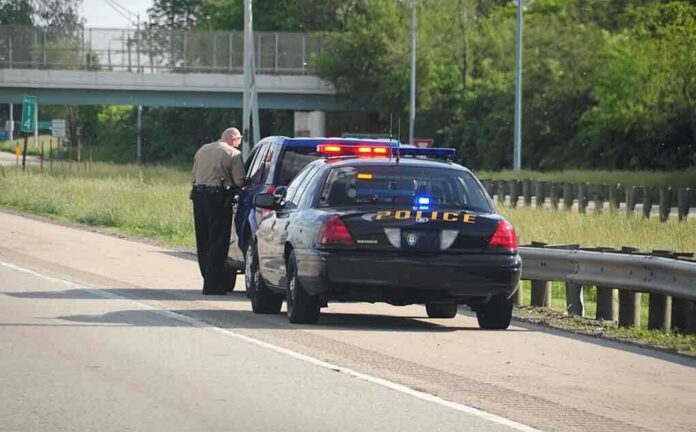
Federal prosecutors say a New Jersey traffic stop turned violent when a man allegedly swung a hammer at two federal officers during an arrest.
Story Snapshot
- Prosecutors charged Reinieri De Jesus Licona Amador with assaulting federal officers with a dangerous weapon after a Gibbsboro traffic stop.
- Officials say body-camera video shows him climbing onto a truck door and swinging a hammer at two officers.
- Officers used pepper spray and force to subdue him; no injuries were reported.
- The charge carries up to 20 years in prison and a $250,000 fine if convicted.
What Prosecutors Say Happened During the Stop
On October 19 in Gibbsboro, New Jersey, federal officers approached a pickup after a license-plate check, according to the U.S. Attorney’s Office for the District of New Jersey. Officials say Reinieri De Jesus Licona Amador got a hammer from a tool container, ignored commands, moved across the truck, and exited while holding it. Prosecutors allege he climbed onto the passenger door and swung the hammer several times at two officers. Officers used pepper spray and restrained him without reported injuries.
New Jersey 101.5 reported that prosecutors said body-camera footage captured Amador climbing onto the door and swinging the hammer multiple times. The outlet says the description of the video came from the government’s filing and statements, which match the sequence in the federal press release. The report does not release the video, but it cites the claim that cameras recorded the critical moments of the encounter described by authorities.
The Criminal Charge and Possible Penalties
Federal prosecutors charged Amador by complaint with assaulting federal officers with a deadly or dangerous weapon. He was arrested on October 19 and appeared before U.S. Magistrate Judge Elizabeth A. Pascal in Camden federal court, the U.S. Attorney’s Office said. The offense can carry a maximum of 20 years in prison and a $250,000 fine if a court convicts him. Several outlets reported the same charge and penalty range based on officials’ statements.
Courts have held that a common tool can count as a dangerous weapon if used in a way that can cause serious injury. Past federal cases explain that the law focuses on how the object is used, not only what it is. That legal view helps explain why prosecutors treated the alleged hammer swings as a weapon offense rather than a lesser charge when bringing the case forward.
Why This Case Resonates Beyond One Traffic Stop
The incident spotlights tension around immigration enforcement and public safety. Conservatives see it as proof that front-line officers face real risks and need firm backing from the justice system. Liberals may focus on due process and the need for careful review of use-of-force decisions and evidence. Both sides worry about fair treatment, clear facts, and a government that enforces laws without fear or favor. Those shared concerns hinge on what the evidence shows and how courts apply the law.
ICE ATTACK: Prosecutors said he ignored commands from officers, climbed out of the passenger side of the truck and swung the hammer multiple times at two ICE officers. – https://t.co/u9m8YuymFu#News12NJ #Crime pic.twitter.com/OdkVACxoG5
— News12NJ (@News12NJ) October 21, 2026
Reports indicate assault cases against federal officers rose in recent years, but they remain limited in number. A review found increases that were meaningful but far below some large claims shared in public debates. That makes single cases like this important on their own facts but poor tools for sweeping claims about national trends. The best guideposts are official records, body-camera footage where available, and courtroom tests of the government’s allegations.
Sources:
nypost.com, noticias.foxnews.com, nj1015.com, newjersey.news12.com
© primechronicle.org 2026. All rights reserved.