
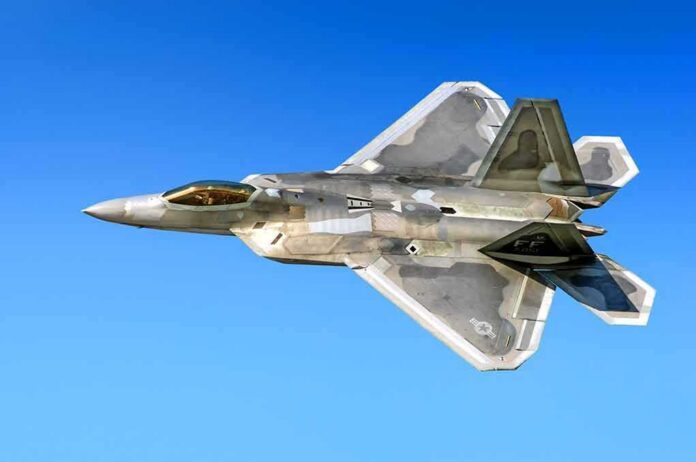
Washington’s 2019 decision to push Turkey out of the F-35 program over its S-400 purchase signaled that the system is a real intelligence and detection threat, not a showpiece.
Story Snapshot
- The S-400 can detect stealth jets at long range, but engagement needs a precise radar track.
- U.S. officials blocked F-35 transfers to Turkey over S-400 data security risks.
- Analysts say the hardest step is getting a weapons-quality lock on F-22 or F-35.
- No verified combat has tested S-400 against U.S. stealth fighters yet.
What Prompted Fresh Debate About S-400 And Stealth
U.S. leaders treated the Russian-made S-400 as more than marketing. In 2019, the Pentagon moved to unwind Turkey’s role in the F-35 program after Ankara bought the S-400. Officials warned that operating both systems could expose sensitive F-35 data to Russian collection. That step carried real cost. Turkey had invested in the jet’s supply chain and stood to lose industrial work. The choice showed Washington believed the S-400 could gather insights on U.S. stealth features.
Russia designed the S-400 to defend large areas with layered sensors and long-range missiles. Open sources describe the 91N6E surveillance radar for wide-area detection and the 92N6E radar for tracking and missile guidance. The system fields several missile types, including the 40N6 series that Russia advertises at hundreds of kilometers against aircraft. Those figures target conventional aircraft. The question many ask is how far the system can track and guide on low-observable jets like the F-22 and F-35.
The Core Technical Question: Detection Is Not A Kill
Experts stress the “kill chain.” A radar must detect, track, classify, target, guide, and then a missile must hit. Each step can fail. Low-frequency radars may spot that “something” is there. But fire-control needs a stable, precise track to guide a weapon. Stealth shaping and materials work hardest against those higher-frequency fire-control radars, which the S-400 relies on for a weapons-quality lock. This is why many analysts frame the issue as tracking and guidance, not first detection.
Public estimates vary on ranges against stealth. A report cited by analyst Mauro Gilli said publicly available data suggested modest S-400 detection distances for approaching F-22 and F-35 fighters, in the tens of kilometers, not hundreds. Other overviews argue the system might not get a reliable weapons lock until a stealth jet is much closer, also within several tens of kilometers, depending on conditions. These figures are not official and depend on unknown variables, but they reflect the detection-versus-lock split.
What We Know Versus What We Do Not
There is no confirmed combat case of the S-400 engaging an F-22 or F-35. That means we lack real-world data at scale. Analysts note that many Russian range claims rest on brochures and lab tests, not combat proof against low-observable targets. Still, the United States treated the S-400 as a serious collection risk to the F-35 program. That policy choice remains one of the most concrete signals of perceived threat from the system’s sensors and networks.
For citizens worried about whether Washington protects American advantages, these facts cut both ways. On one hand, U.S. leaders showed they would take a hard line to guard stealth secrets, even against a North Atlantic Treaty Organization (NATO) ally. On the other hand, the lack of transparent data fuels doubt. People across the aisle see a pattern: big claims, heavy spending, and little clarity. The best takeaway is simple. Capability is more than a headline range. It is the entire chain working under stress.
Why This Matters For U.S. Power And Taxpayers
Stealth aircraft are central to U.S. strategy and cost hundreds of billions over time. The F-35 alone connects to jobs in many states and a major slice of the defense budget. If an air-defense system can shorten the safe standoff distance, pilots must fly new routes, use more support assets, or strike from farther away with expensive weapons. That drives costs and risk. If it cannot, then U.S. stealth keeps its edge. Either way, Americans deserve clear, data-backed choices.
Practical lessons follow. Militaries should test kill chains, not only radars. Commanders must train to break the defender’s chain with tactics, decoys, jamming, and stand-in and stand-off weapons. Policymakers should fund sensors, electronic warfare, and munitions that make each step harder for the other side. Citizens should press leaders for results instead of slogans. Ask for test data, not just talking points. The goal is simple: keep U.S. pilots safe and keep waste out of the system.
Bottom Line
The S-400 likely detects more than it can cleanly kill when facing top-tier stealth. U.S. actions toward Turkey show officials fear the system’s ability to gather sensitive data on the F-35. Analysts agree the hardest task is gaining a weapons-quality track soon enough to matter. Until verified combat or transparent testing settles the ranges, the smart view is cautious: respect the threat, protect the edge, and judge claims by the full kill chain, not one radar line on a chart.
Sources:
19fortyfive.com, war.gov, congress.gov, reuters.com, militarymachine.com, theaviationgeekclub.com, defenseone.com
© primechronicle.org 2026. All rights reserved.