
Russia just proved it can fire a nuclear-capable missile from a hidden submarine across nearly the whole country in one shot.
Story Highlights
- A Borei-A submarine launched a Bulava missile from the Sea of Okhotsk to the Arctic test range.
- Russia named the sub as Generalissimus Suvorov and tied the launch to combat training.
- The shot showed long-range reach from the Pacific to the far north of Russia.
- More Borei boats are in service and still being built, signaling steady force growth.
What Russia Did And Why It Matters
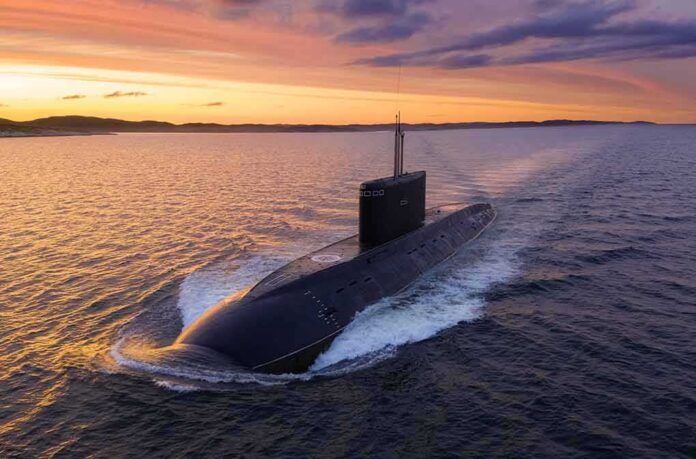
Russia’s Defense Ministry said the Pacific Fleet’s Borei-A submarine Generalissimus Suvorov launched a Bulava intercontinental ballistic missile from a submerged position in the Sea of Okhotsk. The missile’s warheads reached the Chizha test range on the Kanin Peninsula in the Arkhangelsk Region at the planned time, according to the ministry’s account. The event was part of the crew’s combat training plan, not a lab demo or factory test, and occurred within posted navigation warning windows.
The launch matters because it shows the core sequence of a sea-based nuclear deterrent: a hidden submarine receives orders, fires while underwater, and delivers warheads over a vast distance. This test linked Russia’s Pacific waters to a northern test range in one flight, which signals reach across the nation’s breadth and into Arctic approaches. Multiple outlets and analysts tracked the event’s start in the Sea of Okhotsk and its endpoint at Chizha, confirming the path that makes strategic sense for Russia.
The Platform Behind The Shot
The Generalissimus Suvorov is a Project 955A Borei-A ballistic missile submarine, part of Russia’s newest strategic class. Reports say the boat entered naval service in late 2022 and shifted to a Pacific Fleet base in Kamchatka in 2023, placing it where Russia protects its submarines with layered defenses. Identifying the exact boat, rather than a generic platform, shows Russia is fielding the class in real operations, not just in trials or plans on paper.
The Defense Ministry framed the launch as combat training by the crew, showing the routine cycle of practice and readiness checks. Notices to mariners and airmen reportedly covered missile activity for several days around the event, which fits how militaries secure air and sea lanes for tests. That pattern suggests the test sat inside a broader schedule, rather than as a single publicity move. Additional Borei and Borei-A boats are in service with the Northern and Pacific Fleets, with more under construction at Sevmash.
What The Test Shows—and What It Does Not
The test shows that a Borei-A can fire a Bulava missile from underwater and that the missile can reach a far northern range on time. It also shows Russia is training crews on an operational cycle and linking its Pacific and Arctic ranges in practice. However, a single successful firing does not reveal how quiet the submarine is, how often such boats patrol, or how many are ready at once. Those factors are central to wartime survival but remain classified.
Russia test-fires its nuclear capable Bulava submarine launched ballistic missile! 🇷🇺
The RSM-56 Bulava was launched underwater from the Borei-A class submarine Generalissimus Suvorov in the Sea of Okhotsk.
Key capabilities:
• Range: ~8,300 km
• Propulsion: Three-stage… pic.twitter.com/fCfGME76lc
— Military Observer (@TheMilObserverr) November 1, 2026
The broader nuclear logic explains why this matters to every major power. Submarines that can hide and still launch give leaders a backup strike if land forces are hit. That is why navies invest in ballistic missile submarines and why tests like this draw fast global attention. The United States and its allies watch the Sea of Okhotsk because Russia treats it as a protected patrol area for these boats, aiming to keep them safe enough to deter any first strike by an enemy.
Sources:
19fortyfive.com, indiastrategic.in, russianforces.org, militarnyi.com, aerotime.aero, united24media.com
© primechronicle.org 2026. All rights reserved.