
America’s skies went quiet as the Federal Aviation Administration halted all departing flights nationwide for safety after key air traffic communications faltered.
Story Highlights
- The Federal Aviation Administration ordered a nationwide ground stop on departing flights for safety reasons.
- Officials tied the halt to communication problems at multiple Air Route Traffic Control Centers.
- Flights already in the air kept flying, and international arrivals were handled case by case.
- Chicago airports saw an earlier equipment outage before the nationwide halt.
Nationwide Order Tied To Communications Failures
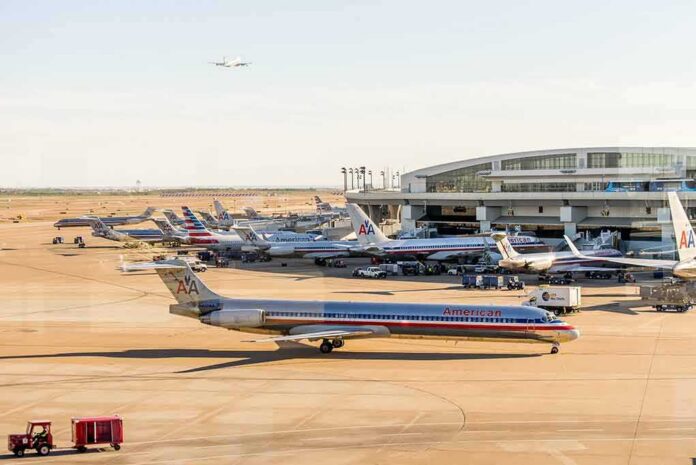
The Federal Aviation Administration stopped all departing flights at United States airports on Friday, citing extraordinary circumstances and safety. The agency said communication issues were affecting multiple Air Route Traffic Control Centers, which guide flights across large regions of airspace. The ground stop did not include planes already airborne. Those flights continued under controller management. The Federal Aviation Administration stated that the pause was a safety step until the situation stabilized.
Transportation Secretary Sean Duffy amplified the message in public posts. He said the stop followed a communication issue impacting all Air Route Traffic Control Centers and that technicians were investigating. The Department of Transportation pointed to the Federal Aviation Administration as the lead on restoring service. Officials framed the move as a short-term action to reduce risk while they worked the problem. The cause was not named in initial updates.
How Operations Were Managed During The Disruption
The Federal Aviation Administration limited the order to departing flights because takeoffs add traffic complexity fast. Controllers can land aircraft already in the air with existing tools, but they cannot safely launch new departures without reliable communications. International arrivals were handled case by case to match airport capacity and controller workload. This approach tracks with past safety playbooks when core systems do not perform as needed across regions.
Earlier in the day, Chicago O’Hare and Midway faced a separate ground stop due to an equipment outage. That local pause highlighted how a single weak link can ripple through a busy network. The Federal Aviation Administration later expanded actions nationwide as signs of wider communication problems became clear. Reports did not confirm whether the Chicago issue was the same technical fault or a separate event.
Why This Pause Matters Beyond Today’s Delays
Nationwide ground stops are rare and signal a high-risk moment. In 2023, the Government Accountability Office noted that a failure in the Notice to Air Missions system led to the first nationwide ground stop since the September 11, 2001 attacks. The current event shows how one central function can force a broad halt to keep people safe. Even short outages can cost millions and strain gates, crews, and schedules across the system.
US lifts flight ground stop after a telecom outage disrupted 7,000 flights
The FAA halt ran from 3:54 pm to 11:30 pm Eastern on Friday.
Sean Duffy blamed ageing infrastructure; Air India warned affected travellers.
— Pramod (@vpramodraju) November 14, 2026
For travelers, this was more than a delay. It was a window into how fragile critical systems can be when communication links fail. For airlines and airports, it revived calls to harden networks and speed upgrades that add resilience. For many citizens across the political spectrum, it fed a larger concern: key national systems often break down before leaders explain why, and the public pays the price in lost time, money, and trust.
What To Watch Next
Expect the Federal Aviation Administration to release more details on which facilities saw degraded communications and for how long. Clear timelines and root cause findings can show whether a national stop was the best option. Lawmakers may press for audits of backup systems, staffing, and vendor roles. Travelers should watch for rolling delays as airlines reset crews and aircraft. Safety came first today, but transparency and resilience will decide how the public judges this response.
Sources:
washingtontimes.com, edition.cnn.com, cnbc.com, cbs58.com, cp24.com, wsvn.com
© primechronicle.org 2026. All rights reserved.