

A headline-grabbing claim that a tiny-brained human relative buried its dead is now locked in a hard test of evidence, not hype.
Story Snapshot
- Researchers report disturbed cave layers and intact body positions they say fit deliberate burial by Homo naledi.
- Critics say natural cave processes still explain the bones and that key soil tests do not back burial.
- Editors and reviewers call the complex-behavior claims incomplete or not yet proven.
- Both sides agree more transparent data and independent tests are needed to settle the question.
What The New Claim Says Was Found In The Cave
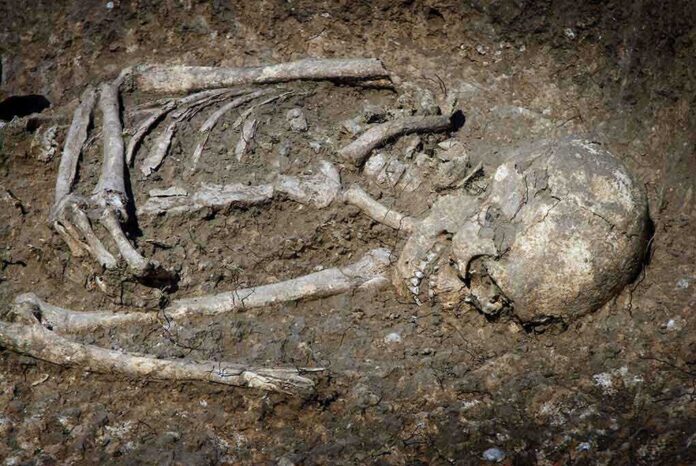
Berger and colleagues reported two main signs inside South Africa’s Rising Star cave system. First, they describe patches of disturbed layers in deep chambers. They argue these look like holes dug into older sediment, then filled back in. Second, they point to body parts still connected in place and supported by the surrounding sediment. They say this matches a body covered by soil before it fell apart. They frame this as “minimal” cultural burial by Homo naledi.
The team adds that the deposits occur in more than one chamber. They say that pattern fits repeated mortuary behavior, not a one-off event. They also argue gravity, slow build-up of sediment, or bodies sliding down slopes do not fit the positions seen in the cave. Their public summaries stress that no “natural” cave process offered so far explains the full pattern. The group’s goal is to keep the claim narrow: burial, not big ritual or art, as the base case.
Why Other Scientists Say The Case Is Not Proven
Several researchers argue the evidence does not yet clear the bar for deliberate burial. A team led by María Martinón‑Torres says bodies could have entered or moved by natural means. They list a death trap, water transport, and even carnivore activity as options to test and exclude. They say the current record does not yet prove that Homo naledi dug and filled pits. They call for more field proof and clearer documentation.
A second line of critique targets the soil and layer tests. Kimberly Foecke and coauthors report that samples from the “features” and from normal cave sediments overlap in composition. They say they cannot detect a sediment difference that would mark a dug hole filled by different soil. They also say key instrument settings and methods were not reported well enough to repeat the analysis. Their bottom line: there is no sediment proof of burial so far.
How Peer Review And Editors Have Framed The Dispute
Public peer reviews posted at the journal site list natural explanations the burial team must rule out. Reviewers highlight gravity‑driven slumps, slow burial by normal cave sediment, and burial of bodies that had already dried or mummified. They call for stronger taphonomy, better micromorphology, and clearer excavation records. The message is firm: extraordinary behavior needs robust, transparent evidence, not inference alone.
An editorial assessment grouped the burial claim with other complex behaviors, like engravings and controlled fire. It judged the combined case as incomplete. That does not end the debate, but it lowers confidence in the broader narrative until new data arrive. The burial paper itself also uses careful language, calling burial a “minimal hypothesis,” not a final verdict. That framing keeps the claim testable and invites replication.
Why This Matters Beyond The Cave And What Would Settle It
If a small‑brained hominin buried its dead, then care for the dead is not tied only to brain size. That would nudge our shared story toward humility and away from elite gatekeeping of what counts as “human.” But claims must rest on checks anyone can audit. Independent teams need access to exact sample locations, raw lab data, and full field records. Shared protocols and repeat tests would cut through the noise and the hype.
Specific steps could close the gap. First, re‑excavate feature edges and publish thin sections to confirm cut‑and‑fill structures. Second, preregister soil tests, release all raw files, and repeat them in more than one lab. Third, build precise three‑dimensional maps of bones and sediment contact zones. Fourth, model cave transport to see if water, gravity, or slumps can recreate the same positions. Clear methods and open data would let the facts, not reputations, decide.
Sources:
deephistory.substack.com, elifesciences.org, biorxiv.org, gmu.edu, bereanarchive.org, wisconsin.edu, sciencealert.com
© primechronicle.org 2026. All rights reserved.