
After Iranian threats, Treasury Secretary Scott Bessent says a Wall Street Journal photo of his home made him move his family onto a U.S. military base.
Story Snapshot
- Scott Bessent accuses a Wall Street Journal editor of “reckless journalism” over a geolocated home photo.
- Bessent says he followed Secret Service guidance and relocated to a military base for safety.
- Reuters and the BBC report security concerns rose after the Journal published an aerial image of his Georgetown home.
- The case highlights rising threats to officials and new risks from image-based geolocation.
Bessent’s Allegation and the Immediate Security Move
Scott Bessent, the United States Treasury secretary, said a Wall Street Journal editor approved an image of his house that could be geolocated. He called the decision “reckless journalism.” He also said he and his family moved to a military base after receiving threats tied to Iran, and that he followed Secret Service instructions to do so. News outlets reported that security concerns increased after the image ran, and that the move followed those concerns.
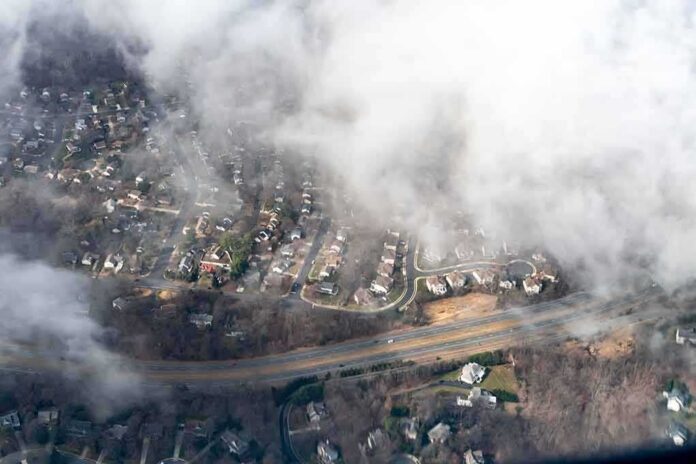
Reuters, citing people familiar with the matter, reported that Iran-linked threats targeted Bessent. It said an aerial photo of his Georgetown mansion in the Journal was a factor that raised concern. The BBC, citing a source shared with CBS, also reported that the online photo allowed the home’s location to be pinpointed and that the alert level then rose. Bessent publicly linked the image to the decision to relocate, though the reports describe that link through unnamed sources.
What Is Known About the Photo and the Property
Reports describe the image as an aerial view of Bessent’s Georgetown residence. Reuters said Bessent bought the home in early 2025 for about $12.5 million, shortly after his Senate confirmation, which made the property notable and easier to identify as his. Published accounts do not include a public technical readout of the image file or metadata. They do state that the image, as posted online, enabled geolocation of the residence, according to a source cited by CBS and reported by the BBC.
Some details remain outside public view because of safety and national security limits. The available reporting does not include an official threat bulletin or a released Secret Service directive. The outlets rely on named public comments by Bessent and on people familiar with the situation. Those reports agree on the key sequence: aerial image published, concerns rose, and relocation followed under protective guidance.
Why This Matters for Safety and Press Judgment
This dispute lands at a tense point where public safety meets press freedom. Threats against officials have increased in recent years, and many states now shield home addresses of public workers in open-records laws to reduce the risk of harassment or worse. At the same time, courts have long protected the press when it publishes information of public concern that was lawfully obtained, though some states have narrowed what can be shared about officials’ home details.
The digital risk is also changing fast. Geolocation of images no longer depends only on hidden coordinates. Investigators and bad actors can sometimes pinpoint a place from visible clues like roof lines, street angles, skyline features, or yard patterns. Guides for journalists explain these methods, and recent research warns that new artificial intelligence can infer locations even when obvious hints are removed. That makes an aerial home photo far more sensitive than it may seem.
Shared Concerns Across the Political Spectrum
Americans on the right and the left worry that powerful institutions do not guard public safety with care. Conservatives see elite media as careless with security. Liberals see a growing threat climate and want restraint when private homes are involved. Both sides can agree on one point here: a senior official’s family should not face avoidable risk because a photo made a home easy to find. The balance between sunlight and safety is the real test.
Responsible coverage of public figures can reveal what matters without painting a target on where they live. That standard asks editors to weigh the value of a striking image against the danger it might pose. It also calls on officials to communicate risks early and clearly when a publication may cross a safety line. This case shows how one online image, shared in a tense global moment, can trigger a major security response and a hard conversation about judgment in the digital age.
Sources:
facebook.com, rawstory.com, mezha.net, independent.co.uk, bbc.com, cnbc.com, x.com, endtimeheadlines.org, crowd.cs.vt.edu, reason.com, nfoic.org
© primechronicle.org 2026. All rights reserved.