
One New York City bar owner says a few blocked streets for Taylor Swift and Travis Kelce’s Madison Square Garden wedding weekend turned his busiest holiday shift into a costly dead zone, and he is not alone in feeling that the system favors celebrity security over local workers.
Story Snapshot
- A bar owner near Madison Square Garden says wedding-week street closures cut his holiday revenue about in half, costing “thousands” in lost business.
- New York City Police Department (NYPD) documents confirm planned road and sidewalk closures around Madison Square Garden to secure a private event for up to about 1,000 guests.
- Media and fans praise the couple’s huge charity donations while frustrated workers and owners say their loss story is being pushed to the background.
- The dispute highlights a deeper problem: everyday businesses struggle to prove and recover losses when government-ordered closures favor the rich and well connected.
Wedding Hype Meets Holiday Weekend Reality
Local coverage says Taylor Swift rented Madison Square Garden for several days over the July 4 holiday for a private wedding celebration with Travis Kelce, turning a normal busy weekend into a tightly controlled event zone. Reports describe security tents, truck staging areas, and street closures right outside neighborhood bars, all focused on protecting a star-studded guest list that could reach around a thousand people. For fans, this looks like a once-in-a-lifetime spectacle. For nearby workers, it looks like a wall between them and their customers.
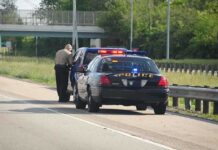
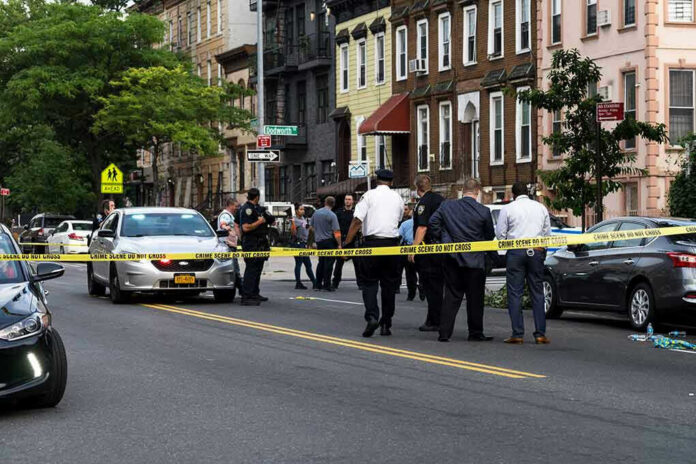
Permits and police advisories confirm that event planners asked the city to shut streets around Madison Square Garden from July 2 through midday July 4. The New York Times reports an event company filed paperwork with the Street Activity Permit Office for closures, tents, and truck access for 500 to 999 guests. ABC7 New York and NYPD posts show Seventh Avenue and nearby blocks placed under strict control for public safety, with managed pedestrian zones and heavy officer presence instead of normal foot traffic.
What Nearby Bars Say They Lost
Across from Madison Square Garden, bar owner Michael O’Brien told reporters he saw a sharp drop in customers and tips once the wedding security plan went into effect. Another owner, identified in one CBS segment as Allen Weah, estimated his bar’s revenue fell about 50 percent on what is usually one of his best weekends of the year. He blamed the fenced-off sidewalks and blocked access on Seventh Avenue, saying many regulars simply could not get through police lines to reach his doors.
Several outlets and social clips quote owners saying those percentage drops translate into “thousands of dollars” gone over the holiday stretch. They also describe thinner shifts and staff sent home early because there was no crowd to serve. None of these claims are backed by bank records or tax filings yet, so the numbers remain self-reported estimates rather than audited data. Still, the pattern they describe fits past stories where sudden government actions wiped out expected business income that small shops counted on to stay afloat.
Why Proving Losses Is So Hard
Courts in New York have long made it tough for businesses to win lost-profit claims tied to events or shutdowns, especially when many factors can affect sales. Legal guides note that owners must show their losses with “reasonable certainty,” often by comparing detailed sales records before and after the disruption. That means a bar near Madison Square Garden would need clean data from past July 4 weekends and this year’s receipts, then rule out the impact of heat waves, holiday travel, and normal ups and downs.
The recent history of business interruption fights shows how steep that hill can be. During the pandemic, hundreds of businesses filed insurance claims over forced closures, only to see many of them rejected when carriers argued the losses were too indirect or speculative. Damage experts say even when a shutdown is obvious, turning that into a clear dollar figure that survives in court takes careful modeling and often expensive expert help. For a neighborhood bar already hurting, that kind of legal and accounting firepower may be out of reach.
Celebrity Privilege, Public Safety, and Everyday Frustration
Coverage of the wedding often highlights the couple’s large charitable gifts, including reports of tens of millions of dollars in donations and funds for New York food banks. That story line paints Swift and Kelce as generous stars whose presence brings big cultural and economic benefits, a view backed by “Swiftonomics” data showing her brand can lift spending across weddings, travel, and events. Against that glossy backdrop, a few angry bar owners on Seventh Avenue are easy for media and fans to frame as bitter or ungrateful.
An NYC bar owner says the street closures surrounding Taylor Swift's and Travis Kelce’s wedding week cost his business thousands of dollars after the NYPD implemented extensive street closures around Madison Square Garden for the couple’s nuptials: https://t.co/qDnbJFChb2
— The Washington Times (@WashTimes) July 4, 2026
Social media reaction has been mixed, with some users blasting the complaining owners as “anti-Swiftie” and others arguing that no celebrity should be able to lock down parts of Manhattan on a major holiday. This tension taps into a wider feeling shared by many on both the left and the right: the rules seem to bend more easily for the rich and well connected than for ordinary people trying to earn a living. The NYPD can say closures are about safety, but without any plan to help nearby businesses recover, the message to workers sounds like they are collateral damage.
Sources:
washingtontimes.com, reddit.com, yahoo.com, facebook.com, hcamag.com, youtube.com, tribune.com.pk, nytimes.com, cbsnews.com, instagram.com
© primechronicle.org 2026. All rights reserved.