
Washington says the Lebanese army has started taking charge in three southern villages, putting a U.S.-backed handoff plan into motion after weeks of talks.
Quick Take
- The Lebanese army began operations in **Froun, Srifa, and Zawtar al-Gharbiya** under the Trilateral Framework.
- The deal says the army will take **exclusive control** of the pilot zones, with non-state actors excluded.
- U.S. Central Command is helping oversee the mechanics of the transfer with both sides.
- The move is being watched as an early test of whether the plan can hold on the ground.
Army Deployment Begins in Three Villages
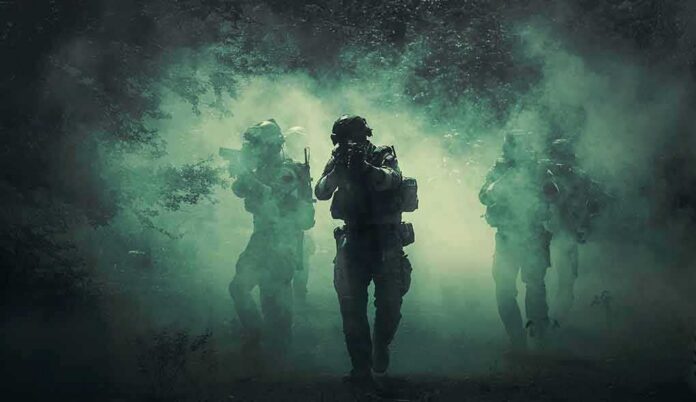
The United States State Department said Lebanese army operations began in three southern villages on July 20. The villages are Froun, Srifa, and Zawtar al-Gharbiya. The statement said the move happened “in accordance with the Trilateral Framework” and under the Military Coordination Group for Lebanon. State Department spokesman Tommy Pigott called it a direct result of the Rome talks and said Washington would keep working with both sides.
The first step matters because it moves the plan from paper to the field. Reporting also says the framework is meant to help secure an Israeli withdrawal from south Lebanon and set conditions for disarming Hezbollah. That is why supporters describe the pilot zones as a limited but real test of whether Lebanese state forces can take over territory long shaped by armed groups and outside pressure.
What the Framework Says
Officials and reported joint statements say the arrangement gives the Lebanese army exclusive control in the pilot zones and bars other armed actors. One report quoted the joint Washington statement as saying the army “will take exclusive control of the territory to the exclusion of all non-state actors”. Another report said U.S. military planners are coordinating the process with Lebanese counterparts, while U.S. Central Command is tasked with overseeing the mechanics.
That structure shows how tightly managed the handoff is. The plan does not rely on a sudden border change or a broad peace deal. Instead, it uses small zones, outside coordination, and staged withdrawal steps. Supporters present that as a practical way to reduce risk. Critics see a system that keeps key decisions in Washington and Tel Aviv, which leaves Lebanese sovereignty tied to conditions set elsewhere.
Security Questions Still Remain
Even with the first deployment under way, major questions remain about enforcement and timing. Reporting says the wider framework ties any Israeli pullback to conditions on the ground, including the removal of Hezbollah weapons and fighters from the South Litani area. U.S. and Lebanese military delegations met in Beirut earlier this month to work out the first phase, and the talks also involved how the zones would be monitored.
🇱🇧🇮🇱🇺🇸 U.S. announced Lebanese Army ops kicked off today in southern Lebanon “pilot zones” villages Froun, Srifa, and Zawtar al-Gharbiya.
The Trilateral Framework is meant to get Israel pulling troops out of Lebanese territory so the Lebanese Army can move in, take full control,… pic.twitter.com/Nl3pegMQVl
— Mario Nawfal (@MarioNawfal) July 20, 2026
The political problem is clear. The plan depends on the Lebanese army proving it can hold ground, while Israel still wants security guarantees and Hezbollah rejects the deal outright, according to earlier reporting in the package. That leaves the pilot zones as more than a local military move. They are also a test of whether a weak state can reclaim space without becoming trapped between armed resistance, foreign oversight, and a withdrawal process that has no firm end date.
Sources:
insiderpaper.com, straitstimes.com, thenationalnews.com, english.aawsat.com, middleeasteye.net, aa.com.tr, allisraelnews.com, turkiyetoday.com
© primechronicle.org 2026. All rights reserved.