
North Korea just put a “nuclear-capable” warship to sea, raising hard questions America cannot ignore.
Story Snapshot
- Kim Jong Un commissioned the 5,000-ton Choe Hyon destroyer and claimed nuclear capability [1][4].
- State media says the ship has 74 vertical launch cells and fired cruise missiles during tests [3].
- Independent verification of nuclear claims and readiness is still missing [1][4][6].
- Analysts doubt full combat readiness and even the ship’s exact naming has been inconsistent [1][3][4].
Kim’s Commissioning Claim and Why It Matters
Kim Jong Un presided over the commissioning of the Choe Hyon destroyer at Nampo Port on June 23, 2026. North Korean outlets said the ship is nuclear-capable and already operational. They framed it as proof that the navy will carry nuclear weapons as planned. This claim fits North Korea’s pattern of bold announcements that often lack outside proof. The statements drew fast headlines, but they still rely on state sources, not independent data [1][4].
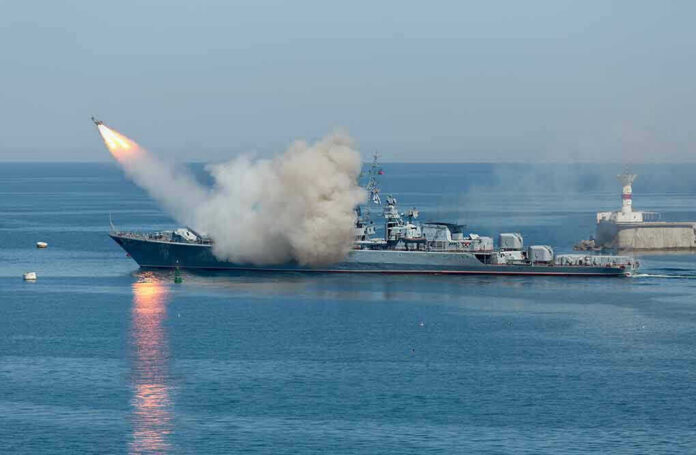
Korean Central News Agency reports said Kim oversaw missile launches from the ship earlier this spring. The reports described tests of strategic cruise missiles and anti-ship cruise missiles from March into April. State descriptions also said the destroyer finished 14 months of operational testing before the ceremony. Those details suggest a long timeline, yet they remain unverified by radar or satellite tracking from outside observers at this point [3].
What The Ship Reportedly Carries
North Korean state media and open sources say the Choe Hyon displaces about 5,000 tons and features a large vertical launch system. One account lists 74 launch cells, with around 20 for ballistic missiles that the regime labels nuclear-capable. Photos and briefings hint at mixed loads of cruise and ballistic systems. However, reports do not confirm exact missile types on board, or prove any nuclear arming on this specific hull. Key technical details remain unclear [3].
Kim said the navy’s nuclear armament program is moving “as planned” and “unerringly.” He also pledged more ships, including a larger 10,000-ton class. That signals a long push to take nuclear weapons to sea, beyond land launchers and submarines. It also aims to deter the United States, South Korea, and Japan. Still, the hard question is proof. Outside evidence has not confirmed the nuclear part of this destroyer’s loadout or the status of its launch systems [2].
Skepticism, Confusion, and the Verification Gap
Western outlets and defense analysts remain skeptical about readiness. They flag the lack of third-party tracking data, the absence of named nuclear-capable missiles for this ship, and shifting reports on the vessel’s name. Some stories call it Choe Hyon, while others use different names. That confusion does not help the regime’s claims or its credibility. Analysts say the ship could need more time and fixes before being truly combat-ready at sea [1].
Media reports also stress a familiar pattern with North Korea. The regime spotlights a “breakthrough,” then the world struggles to verify specifics. Sanctions and isolation limit direct access. Outside experts must rely on satellite imagery, naval photos, and careful reading of state releases. That creates a delay between a claim and hard proof. This case fits that model so far. Until real tracking or on-scene evidence appears, doubt will remain [4][6].
Why This Matters for U.S. Security and Allies
American families and our allies live closer to risk when rogue states push nuclear delivery at sea. A nuclear-capable surface combatant would complicate defense plans around Korea and Japan. It could stress U.S. Navy operations, air defenses, and missile warning networks. It could also pressure regional trade routes and fuel costs if tensions rise. Clear and verified facts must guide responses, not hype or panic. Verification is the next step our government should press [1].
North Korea just commissioned the 5,000-ton Choe Hyon destroyer, armed with an 88-cell VLS capable of deploying sea-based nuclear missiles. With suspected Russian tech transfers, Pyongyang is actively shifting to a blue-water nuclear navy. 🚢🇰🇵 #Geopolitics #NavalDefense #DPRK pic.twitter.com/BOSsLVG5BL
— X News (@xnewsgusrix) June 26, 2026
Congress and the administration can act on three fronts. First, demand and declassify enough satellite and radar summaries to confirm or debunk key claims without risking sources. Second, tighten naval exercises with South Korea and Japan to track and deter any real threat at sea. Third, cut through noise online by sharing basic, verified facts with the public. Strength through clarity keeps deterrence firm and avoids overreaction that enemies can exploit [6].
Bottom Line
Kim Jong Un wants the world to believe he put nuclear weapons on a surface warship. The reports describe missile tests and a big launch cell count. Yet independent proof is still missing, and analysts remain doubtful. America should not shrug or panic. We should verify, prepare, and stand with allies. Peace comes from strength, discipline, and facts. That approach protects our homeland, supports our sailors, and keeps our word to friends who count on us [3].
Sources:
[1] Web – North Korea Unveils 5,000-Ton Destroyer, Touting Nuclear Capabilities
[2] Web – Kim Jong Un signals nuclear ambitions at sea with major naval …
[3] YouTube – Kim Unveils Nuclear-Capable Destroyer ‘Choe Hyon’ | Firstpost Live
[4] Web – North Korean destroyer Choe Hyon – Wikipedia
[6] Web – DPRK leader Kim Jong Un said the country would equip its navy …
© primechronicle.org 2026. All rights reserved.