
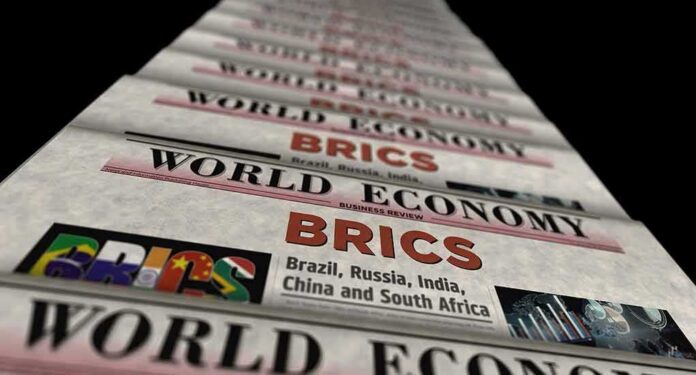
BRICS leaders adopted a joint New Delhi Declaration urging “maximum restraint” in the Middle East as a United States–Iran war strains global trade and energy security.
Story Snapshot
- BRICS called for “maximum restraint” and warned against actions that worsen the conflict.
- The declaration urged protection of civilians and vital infrastructure under the United Nations Charter.
- Leaders stressed keeping global trade, supply chains, and energy flowing amid the crisis.
- The statement was adopted unanimously after tough talks in New Delhi on September 12, 2026.
What BRICS Agreed To In New Delhi
BRICS leaders meeting in New Delhi adopted a joint declaration that urges “maximum restraint” in the Middle East and warns against moves that could worsen the war. The text, echoed across multiple outlets, says the group is deeply concerned by rising tensions and calls on all parties to avoid escalatory acts and provocative words. Reporters present at the summit said the leaders reached a unanimous statement, underscoring the weight of the message despite sharp differences among members.
The declaration also ties its plea to core global rules. It urges protection of civilians and civilian infrastructure aligned with the purposes and principles of the United Nations Charter, including respect for sovereignty and territorial integrity. That framing places humanitarian safety and state borders at the center of the bloc’s message, without naming a specific aggressor. Coverage of the text shows BRICS also links restraint to dialogue and diplomacy as the path toward lasting stability.
Why This Language Matters Now
The bloc’s call lands as fighting between the United States and Iran shakes Gulf shipping lanes and energy markets. BRICS leaders highlighted the need to keep trade moving and supply chains intact, with special focus on energy flows that power many economies far from the front lines. When tankers face higher risk and insurers raise rates, prices ripple into family budgets worldwide. That spillover risk is the shared concern bringing rivals like Iran, Saudi Arabia, and the United Arab Emirates to the same table.
Past BRICS statements on wars often rely on broad terms to keep the coalition together. Members hold clashing interests in the region, so consensus tends to form around words like restraint, civilian safety, sovereignty, and talks. New Delhi followed that pattern. Multiple reports say the hard work was getting everyone to agree to one text at all, given the live conflict and the diplomatic rifts within the group. The final result reflects unity of message rather than assignment of blame.
How The Declaration Balances Principles And Pragmatism
The civilian-protection clause signals a basic floor: do not target people or vital infrastructure. The sovereignty language warns against strikes that cross borders or break international law. The trade and energy lines show a practical aim: avoid shocks that hit working families through inflation, fuel costs, and supply delays. Together, the points set a standard most capitals can accept, which helps the group speak with one voice even when members back different actors on the ground.
The BRICS summit in New Delhi demonstrated something increasingly important: Russia is being normalised as an international partner without ending its aggression against Ukraine or abandoning its war aims.
But the summit also revealed what BRICS itself is becoming.
Expansion… pic.twitter.com/RM09OGgBYD
— GMan | GMan’s Chronicle (@FAB87F) September 14, 2026
Reports also note that leaders pushed for diplomacy to prevent the war from pulling more countries into open conflict. That matters for Americans too. When global shipping slows and oil prices jump, families face higher costs while wages lag. Many readers across the political spectrum feel large institutions talk big but fail to deliver safety or stability. This statement, while cautious, shows pressure from outside Washington and Brussels to cool the fight and protect everyday people from the fallout.
What Comes Next And What To Watch
Diplomacy will be tested on shipping safety, energy price swings, and any new cross-border strikes. Watch whether naval escorts expand in key sea lanes, whether insurers ease or tighten terms, and whether civilian sites remain off limits. Also track if BRICS governments follow the words with action, like backchannel talks, humanitarian support, or energy coordination to steady prices. The declaration is a starting point; its impact will be judged by calmer seas and safer streets, not statements alone.
Sources:
zerohedge.com, freepressjournal.in, dw.com, infobrics.org
© primechronicle.org 2026. All rights reserved.