

A federal appeals court just said private possession of AI-made sexual images of children, when no real child is used, can be protected speech.
Story Snapshot
- A Seventh Circuit ruling says home possession of purely virtual child sexual abuse images can be protected by the First Amendment.
- The decision draws on Supreme Court cases that split real-child images from virtual depictions.
- Federal agencies still warn that computer-generated images can be illegal under other laws.
- Many states already criminalize AI child sexual abuse images, creating a patchwork of rules.
What The Seventh Circuit Actually Ruled
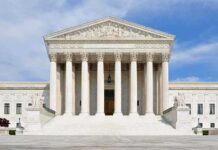
On August 25, the United States Court of Appeals for the Seventh Circuit held that a person’s private possession at home of sexual images that appear to show minors, when created without any real child, can be protected by the First Amendment. The opinion traces earlier federal statutes and explains that Congress drew lines between images using real children and virtual depictions. The ruling does not protect images that involve real minors or public distribution of illegal material.
The Seventh Circuit’s analysis follows a path the Supreme Court set years ago. The Court protected private possession of obscene material in the home, but allowed strict bans on images made with real children. Later, the Court struck down broad federal bans on “virtual” depictions that do not involve actual minors. The new case applies that split to artificial intelligence content, focusing on possession inside the home rather than creation, sharing, or trading.
How Federal And State Authorities Respond
Even with the ruling, federal agencies warn that many computer-generated images can still be illegal. The Federal Bureau of Investigation (FBI) has said that child sexual abuse material made with artificial intelligence is illegal, and that federal law bans possession of any child sexual abuse material, including realistic computer-generated images. That message reflects other federal crimes, like distribution, receipt, or images tied to an identifiable minor.
States are also moving on their own. Advocacy tracking lists say forty-six states criminalize artificial intelligence or computer-edited child sexual abuse images in some form. That leaves four states and the District of Columbia without such laws. Recent state prosecutions and new laws show a fast push to close gaps, which means a person’s risk changes widely by location, even after a federal appellate ruling limited to home possession of virtual images.
What This Means For Parents, Platforms, And Police
Parents face more confusion because technology races ahead while laws lag. Artificial intelligence tools can now create lifelike images that never involved a real child. That raises real fears about grooming, extortion, and demand for abuse. The Seventh Circuit ruling is narrow and only about private possession of images that do not involve an actual minor. It does not bar police from targeting creators, traders, or anyone sharing or selling this material online.
Washington Post reports 7th Circuit ruling on private possession of AI-generated CSAMhttps://t.co/9RP2dZARsC
— AI Understanding (@aiuorg) August 30, 2026
Platforms and law enforcement now must work across a messy legal map. A post or message may break a strict state law even if a federal possession charge would fail under this appellate ruling. Agencies can still investigate distribution networks and images linked to real children. Congress may also act to update definitions, penalties, and safeguards, but any law must fit Supreme Court rules that protect speech in the home and draw clear lines around virtual content.
Why Americans On Left And Right Are Alarmed
Many Americans see this as proof the system serves itself, not kids. Conservatives blame years of legal drift and tech favoritism. Liberals warn that profit and lax rules let abuse spread while the gap between rich and poor widens. Both sides fear a government that reacts slowly, argues over wording, and leaves families to sort it out. The court said what the law allows today. Voters now must decide what the law should say tomorrow, and how to enforce it without gutting core rights.
Sources:
zerohedge.com, jsonline.com, enoughabuse.org
© primechronicle.org 2026. All rights reserved.