
As twin earthquakes shattered Venezuela’s coastal city of La Guaira, desperate survivors and opportunistic thieves rushed into the same broken stores, exposing how disaster and government failure collide to turn human need into crime.[1][2][5]
Story Snapshot
- Quake-hit La Guaira saw people grab food, water, and medicine while others hauled TVs and fridges from ruined shops.[1][2]
- Aid arrived slowly, forcing families to sleep outside in makeshift camps and fueling anger at officials.[2][5]
- Security forces focused on rescue, then the government sent in the military and declared an emergency to restore order.[1][3]
- Research on past disasters shows most “looting” starts when basic needs go unmet, even as media and leaders frame it as pure crime.[13][14]
Quakes, Ruin, And A City Left To Fend For Itself
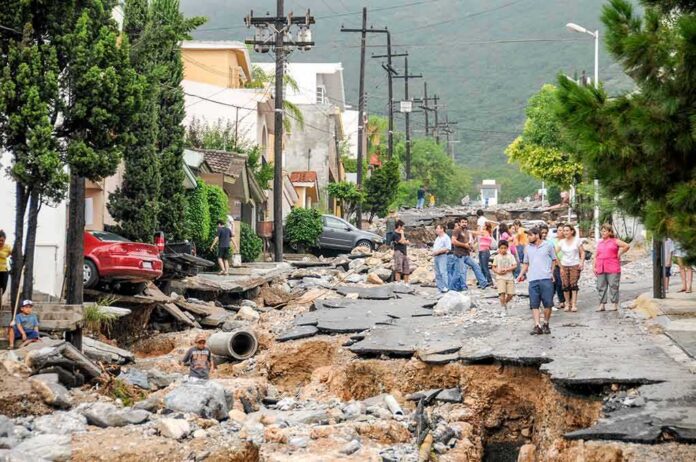
Powerful earthquakes measuring above magnitude seven struck Venezuela’s La Guaira state on June 24, turning coastal neighborhoods like Catia La Mar and Caraballeda into rubble in seconds.[1][2] Thousands of homes cracked or collapsed, forcing families to camp in streets, parks, and stadiums because they feared going back inside damaged buildings.[2] Government counts of the dead and injured jumped sharply over days, with reports ranging from hundreds to more than one thousand killed, adding confusion and fear about the true scale of the tragedy.[2][5]
Basic services failed across much of the region as power outages and blackouts knocked out traffic lights and hurt emergency response, creating pockets of chaos.[1] Survivors reported sleeping outside with little shelter, relying on scraps and whatever water they could find while they waited for official help.[2] International and national aid did begin to move, but reports from residents and journalists described supplies as slow and “meager,” far below the urgent needs of people who had lost almost everything.[2][5][6]
Looting Between Survival And Opportunity
Almost as soon as the shaking stopped, people started entering damaged supermarkets, warehouses, and small shops across La Guaira, especially in the hardest-hit areas.[1][5][6] Video and photos show men and women walking out of a burned supermarket in Catia La Mar carrying bags and boxes of goods, with shop cables and shelves stripped bare.[10][6] Some took clear survival items: food, clean water, clothing, and medicine needed for their families in the first days after the disaster.[1][4]
Other footage shows groups hauling refrigerators, televisions, and electronics on motorcycles, moving high-priced goods that go far beyond bare necessity.[2][5][6] This mix of actions led reporters and witnesses to describe both “desperate survivors” and “opportunistic looters” sharing the same ruined streets.[1][2][5] Officials said police and rescue teams were focused on saving people trapped under rubble when much of the looting began, leaving commercial areas exposed in the crucial first hours.[1][3]
Heavy-Handed Security And Deep Public Distrust
As reports of theft spread, the Venezuelan government declared a state of emergency and deployed the military to “stabilize” La Guaira, giving broad power to crack down on any unauthorized taking of goods.[1][3] That move followed a familiar pattern from past Venezuelan disasters, such as the Vargas tragedy of 1999, when widespread looting led to martial law for over a year.[8] Today, however, anger is not aimed only at street thieves; many Venezuelans blame slow aid, weak planning, and years of mismanagement for turning a natural disaster into a social breakdown.[5][6]
One especially troubling twist is new footage and reports that some security officers themselves were filmed looting valuables and even boxed electronics, instead of focusing on rescue.[3] Such images deepen public belief that ordinary citizens face the full force of the law, while those in uniform or power play by different rules. That sense of double standard echoes worries many Americans have about their own “deep state,” where people see elites shielded from consequences while regular families struggle in crises.
Why Disaster Looting Keeps Sparking The Same Debate
Long-term studies of disaster behavior show that most people act to help one another, not to prey on neighbors, and that looting rates after natural disasters are usually much lower than during riots.[13][15] When looting does occur, researchers find it often starts where needs for food, water, clothing, and fuel are not met in the first days, and where local aid systems fail or move too slowly.[13][7] In those gaps, people may break property laws to get what they need to keep children and elders alive, sometimes sharing what they take with nearby families.[13][14]
🇻🇪 Venezuelan police officers were caught looting in the aftermath of the earthquake
Residents are filming officers loading numerous boxes of goods into the police vehicles
"Local government in La Guaira will be militarized and additional armed forces would be deployed to… https://t.co/OJceiQdtcI pic.twitter.com/Q1wA8lRkIc
— Lord Bebo (@MyLordBebo) June 28, 2026
At the same time, the same research warns that some individuals will use chaos to steal non-essential items, turning survival actions into crime of opportunity.[13] Media coverage and government messaging tend to focus on that “criminal” side, which helps justify strong emergency controls and military deployments but often hides deeper problems with planning, poverty, and trust.[13][14][7] In La Guaira, that global pattern is playing out again: slow aid, broken systems, and angry citizens on one side, strict crackdowns and “looter” headlines on the other.
Sources:
[1] YouTube – Venezuela quake survivors turn to looting
[2] YouTube – Furniture, Appliances& More Looted In La Guaira
[3] Web – Aid trickles in, survivors sleep outside, and looting breaks out in La …
[4] Web – Reports of looting emerged in Venezuela’s La Guaira region …
[5] Web – Looting Reported After Venezuela Earthquake … – Facebook
[6] Web – June 24-25, 2026 — Venezuela rocked by 7.5 and 7.2 magnitude …
[7] Web – La Guaira, Venezuela in the immediate aftermath of the June 24 …
[8] Web – ED’S FIELD REPORT Following the devastating back-to … – Instagram
[10] Web – Looting broke out in La Guaira, Venezuela, after two powerful …
[13] Web – La Guaira, Venezuela before and after the earthquake on June 24 …
[14] Web – Venezuela Live Updates: Window Narrowing to Find Survivors as …
[15] Web – On 25 June 2026, the Federal Council took note of the devastating …
© primechronicle.org 2026. All rights reserved.