
A once-stable Midtown Manhattan skyscraper now held up by jacks and emergency steel is a stark warning of how fragile America’s aging towers—and the systems meant to guard them—have become.
Story Snapshot
- Construction workers found buckling columns and sagging floors in the former Pfizer headquarters at 235 East 42nd Street, forcing a mass evacuation.
- City officials say temporary shoring and jacks have stabilized the high-rise, but engineers still warn of a possible “localized collapse.”
- Nearby buildings and streets remain shut down, displacing workers and residents while emergency crews monitor for any new movement.
- The crisis highlights broader worries that overloaded conversions and lax oversight are putting crowded city neighborhoods at risk.
How a Midtown skyscraper suddenly became a collapse risk
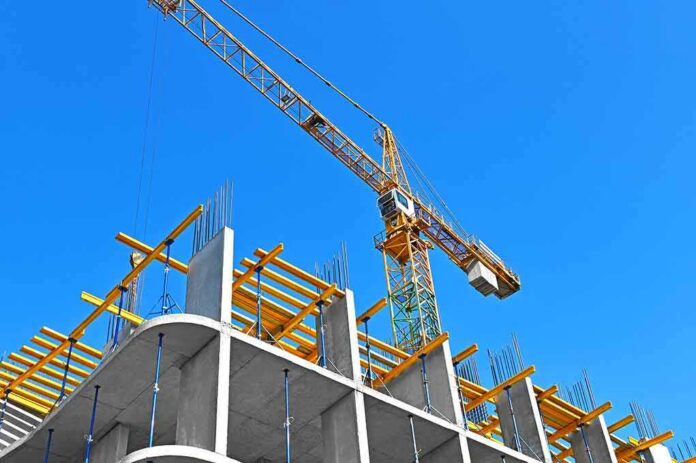
On Tuesday morning, construction workers inside 235 East 42nd Street noticed cracks, buckling steel, and floors starting to sag on upper levels of the former Pfizer headquarters. The tower, now being turned from offices into about 1,600 apartments, was in the middle of a major vertical expansion when they spotted a compromised beam around the 21st floor. Fire officials later confirmed that at least two internal support columns were bending and several floors were drooping, creating a real risk of part of the building giving way.
New York City police and firefighters rushed to the site, shut down streets, and ordered evacuations of the tower and several neighboring buildings as falling debris and the threat of collapse loomed over a busy morning commute. Photos show a frozen zone stretching from First to Third Avenue between 40th and 45th Street, normally packed with cars and office workers. The Israeli consulate and multiple office buildings were cleared as a safety step, with authorities warning that people could be kept out for days or even weeks while the structure is secured.
Officials say the building is “stable,” but the fix is temporary
By late Tuesday, city leaders were trying to calm fears, saying that crews had begun installing temporary shoring—steel supports and powerful jacks—to hold up the damaged parts of the skyscraper. Officials reported that movement inside the building appeared to stop after sensors and engineers watched it closely for hours. A New York fire chief said he believed the design of the tower would prevent a complete collapse, but warned that a “localized collapse” of part of the structure was still possible if repairs failed or the columns shifted again.
The Department of Buildings commissioner explained that emergency trusses and new steel would be added over the coming days to better brace the weakened floors before long-term fixes could even be planned. Engineers must first get inside safely to study the buckled members and figure out why the added floors and new loads pushed the structure to the breaking point. Until that work is done, city officials admit they cannot say for sure how close the building came to disaster—or how easy it will be to make it truly safe again.
What this crisis reveals about aging towers and public trust
Structural engineers following the case say this kind of failure is not a freak event, but part of a growing pattern as developers stack more weight on mid‑century steel towers built for a different era. Online discussions among engineers point to plans for adding roughly 16 new stories on top of the old frame, raising questions about how much stress the original columns were asked to carry and whether checks were tough enough at every step. Some experts suggest that emergency shoring is buying time, not solving the core design problem.
NEW: Emergency services evacuated a busy Manhattan street block during the Tuesday morning rush hour after structural columns buckled inside a skyscraper undergoing construction work, according to firefighters READ: pic.twitter.com/h6XhajMUlu
— official Denton James (@Dentonjameso) July 8, 2026
For many Americans, the scene feels familiar in a troubling way: a major project pushed hard for profit, regulators insisting the situation is “under control,” and ordinary people told to trust a system that keeps revealing cracks—sometimes literally. Conservatives angry about elite-driven urban planning and liberals worried about safety and inequality both see the same thing here: workers and nearby residents were the ones put at risk while big players will likely walk away with lawyers and insurance.
This unstable tower also highlights how much our cities now depend on quick statements from officials instead of slow, careful oversight. First, the building is “unstable and moving.” Hours later, it is “stable,” thanks to temporary fixes. Yet streets remain closed, nearby offices sit empty, and teams of engineers are still racing to understand what went wrong deep inside the frame. For people watching from the sidewalk or online, it is hard not to feel that the system reacts only after danger is obvious—and then asks for trust it has not earned.
Sources:
redstate.com, abc7ny.com, cnn.com, nytimes.com, instagram.com, reddit.com
© primechronicle.org 2026. All rights reserved.