

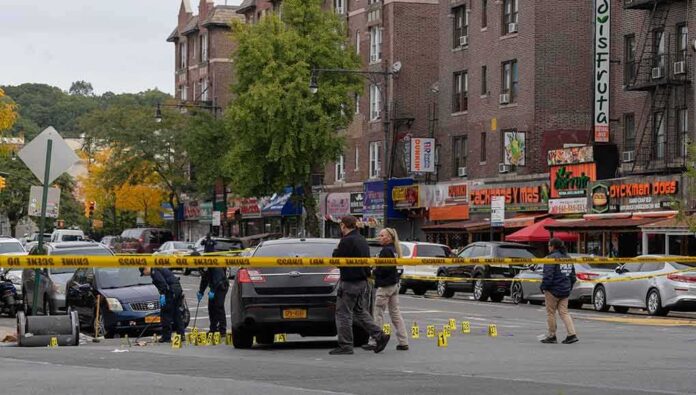
A stranger’s brief fight at Baltimore’s Inner Harbor ended with one man in the water, another allegedly saying “oh well,” and a second-degree murder charge that raises hard questions about safety, justice, and basic human decency.
Story Snapshot
- Police say surveillance video shows James Fitzsimmons pursuing and shoving James Britt into Baltimore’s Inner Harbor after a fight.
- Charging documents describe Britt trying to retreat while Fitzsimmons advanced, moments before Britt drowned.
- Police say Fitzsimmons claimed Britt jumped in and that he answered “oh well” after learning Britt could not swim.
- The case highlights worries about crime at the Inner Harbor and how early police narratives shape public opinion before any trial.
Altercation at the Inner Harbor and the Alleged Shove
On a Sunday afternoon in Harbor East, Baltimore police say a brief encounter between two strangers turned deadly. Charging documents describe 36-year-old James Fitzsimmons and 37-year-old James Jackson Britt fighting near the 700 block of South Eden Street, behind the Whole Foods, around 3 p.m. Police say surveillance cameras captured the men in a physical struggle and then showed Fitzsimmons chasing Britt toward the water’s edge. Detectives concluded Fitzsimmons pushed Britt into the Inner Harbor during this altercation.
In the video described by police, Britt appears to be trying to get away while Fitzsimmons keeps moving toward him. Officers say Fitzsimmons caught up with Britt near the stretch of water between South Central Avenue and South Caroline Street, where the shove allegedly happened. Divers later pulled Britt from the water in the 1300 block of Lancaster Street, and he was taken to the University of Maryland Shock Trauma Center. Doctors could not save him, and he was pronounced dead after drowning.
The “Oh Well” Quote and What Police Say Happened Next
After the incident, homicide detectives interviewed Fitzsimmons about his role in the fight and Britt’s death. Police say Fitzsimmons admitted he had been in a fight with Britt, and that Britt ran away from him. But according to charging documents, Fitzsimmons claimed Britt jumped into the water on his own, not because of a shove. Detectives wrote that Britt’s girlfriend told Fitzsimmons Britt could not swim, and that Fitzsimmons replied “oh well” and walked away. That short phrase has become a powerful part of this story.
Fitzsimmons was arrested and taken to the city’s Central Booking Intake Facility, where he was held without bond. Prosecutors charged him with second-degree murder and manslaughter, signaling they believe the evidence shows serious unlawful conduct leading to Britt’s death. As of the charging reports, court records did not list an attorney for Fitzsimmons, and there was no detailed defense response in the public record. The medical examiner’s full findings, including autopsy and toxicology, have not been widely reported yet.
Crime, Video, and Public Trust at the Inner Harbor
This case is unfolding in a Baltimore waterfront that many residents and tourists already worry is less safe than it should be. Over the past few years, police and media have reported multiple deaths and violent crimes near the Inner Harbor, from suspicious drownings to stabbings and shootings. Those stories feed a shared fear across the political spectrum that basic public order has broken down in many American cities, while leaders focus more on speeches and elections than on everyday safety.
UPDATE: A 36-year-old Parkville man has been charged with second-degree murder and manslaughter for allegedly shoving a man into the Inner Harbor, where the victim drowned. https://t.co/TpkYmbJkjR
— The Baltimore Banner (@BaltimoreBanner) August 3, 2026
The Fitzsimmons case also shows how fast official narratives can harden around video and police documents. Reporters are working mainly from what detectives wrote in charging papers and from their description of surveillance footage. That is common in serious cases, but it means the public hears one side first, long before a trial or any defense expert can test what the cameras truly show. For many Americans who no longer trust the “elites” in charge, this one-sided early picture adds to doubts about how fair the system really is.
Questions Left Open and Why They Matter
Even with a murder charge filed, important questions remain unanswered. The public has not seen the full harbor video, so people must rely on police summaries of what happened by the water. There is no detailed autopsy report in wide circulation that explains whether Britt had other injuries, was impaired, or had any medical condition that affected his ability to survive. No civilian eyewitness has been widely quoted directly describing the shove or jump, beyond what officers wrote.
Those gaps do not mean the police account is wrong. They do mean this case is still in the early stage, where probable cause is enough to arrest but facts have not been tested in court. For Americans who feel both crime and government failure are rising, this story cuts two ways at once. The reported “oh well” sounds like the kind of coldness that makes people fear their neighbors. The heavy reliance on police documents before a trial feeds concern that powerful institutions still expect the public to simply “trust us,” even after years of broken trust.
Sources:
nypost.com, wbaltv.com, baltimorewitness.org, youtube.com, foxbaltimore.com, cbsnews.com
© primechronicle.org 2026. All rights reserved.