
When a president talks about seizing a foreign nation’s oil and “bombing the sh*t” out of it, Americans should ask who benefits—and who pays.
Story Snapshot
- Trump threatened “very hard” strikes on Iran and hinted at taking control of its oil assets [2][3].
- U.S. Central Command said the latest U.S. strikes were “self-defense” and that the Strait of Hormuz remains open [6].
- Attacks on tankers and price spikes show real economic fallout as Iran signals more disruption [8].
- Trump’s claim of moving 100 million barrels through Hormuz drew confusion from his own energy chief [2].
What Trump Said About Strikes, Oil, and Control
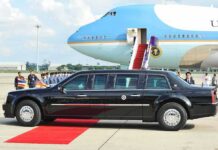
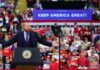
President Donald Trump said the United States would hit Iran “very hard tonight” and spoke about “taking” Kharg Island to assume control of Iran’s oil and gas markets, according to multiple reports summarizing his remarks [2][3]. Speaking aboard Air Force One, he tied ongoing strikes to leverage in talks, saying a deal was possible while attacks continued [3]. This mix of threats and bargaining fits a pattern in U.S.–Iran crises, where leaders blend pressure with negotiation to force concessions [2].
Trump also claimed a secret effort moved “more than 100 million barrels” of oil through the Strait of Hormuz, asserting U.S. control of the waterway. Reporting noted Energy Secretary Chris Wright said he was unaware of such an operation when asked, raising questions about the claim’s accuracy and the government’s internal coordination [2]. Confusion inside an administration fuels public doubt and deepens the sense that elites manage facts to suit politics rather than inform citizens.
Military Operations Framed as Self-Defense
United States Central Command stated that the latest round of strikes against Iran hit surveillance, communications, and air defenses, and described them as self-defense after recent threats and attacks. The command also said commercial traffic continues through the Strait of Hormuz, pushing back on Iranian claims of closure [6]. These statements aim to justify action while calming oil markets. Yet they leave gaps on legal grounds and long-term goals, which keeps both critics and supporters on edge.
Independent and international outlets have tracked a fast tempo of strikes since late February, including large, coordinated attacks by U.S. and Israeli forces. Commentary channels reported hundreds of targets struck and major damage to nuclear and missile sites, though these accounts mix official lines with opinion and need caution in weighing specifics [5][6]. The big picture is clear: force is being used to shape Iran’s choices, even as Washington signals talks remain “open” [3][6].
Oil Markets, Tankers, and the Risk to Everyday Americans
Attacks on fuel tankers and Iranian warnings about shutting Hormuz have already lifted oil above one hundred dollars per barrel, reversing earlier dips on talk of a quick end to fighting [8]. Iran’s messaging suggests a plan to inflict steady economic pain to raise global pressure on Washington [8]. For U.S. families, higher oil feeds into gas and heating costs. For small firms, it raises shipping and input prices. Energy shocks widen the gap between the well-connected and the rest.
#NewsAlert | U.S. President Donald Trump said he has canceled planned strikes against Iran on Thursday, hours after threatening more bombings and a desire to "take" oil export hub Kharg Island#Trump #IranWar #Iran #Strike pic.twitter.com/whekG16dcn
— WION (@WIONews) June 11, 2026
Trump urged shippers to keep using Hormuz despite risks, while allies discussed large reserve releases to blunt price spikes [6][8][9]. These moves can buy time, but they do not settle the core dispute over Iran’s nuclear and regional moves. Prolonged brinkmanship invites mistakes. Reports have flagged alleged civilian harm from flawed targeting in the broader campaign, a reminder that wars do not stay neatly inside military lines when infrastructure and busy sea lanes are in play [7][8].
Why This Matters Beyond Partisan Lines
Americans across the spectrum see a pattern: big claims, secret plans, and shifting stories that leave citizens in the dark while markets and lives feel the shock. Supporters may view hard strikes as overdue. Critics may see overreach. Both can agree that clear goals, honest accounting, and lawful process are nonnegotiable. Congress and the public should press for verified strike objectives, legal justifications, and transparent measures to protect civilians and keep energy stable [2][6][8].
Sources:
[2] Web – Trump: US ‘locked and loaded depending on verification’ after attack …
[3] Web – Trump Blabs to Everyone About Supposed Secret Mission for Iran’s Oil
[5] Web – Oil tankers burn as Iranian strikes defy Trump’s claim to have won the …
[6] YouTube – BREAKING: War Powers Violated—Trump Strikes Iran, Oil Jumps $19 in 48 …
[7] Web – Iran live updates: CENTCOM says latest round of strikes …
[8] Web – Iran strikes oil tankers in Hormuz as Trump claims to have won the war
[9] Web – Oil tankers burn as Iranian strikes defy Trump’s claim to have won …
© primechronicle.org 2026. All rights reserved.