

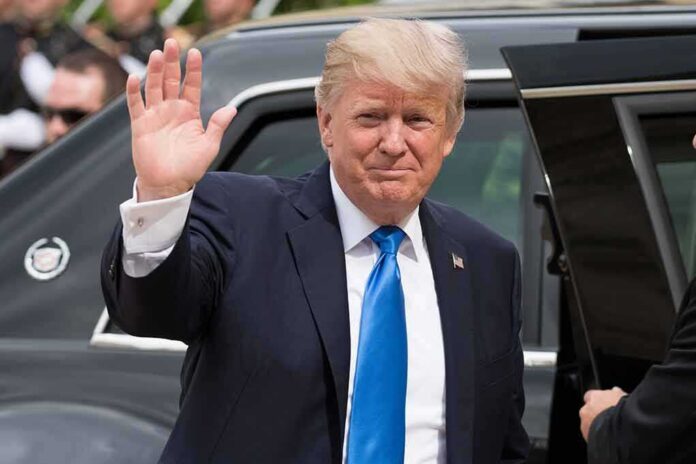
Ukraine’s president is heading to the White House to ask President Trump for concrete security guarantees as the war with Russia grinds on.
Story Snapshot
- Zelensky will meet President Trump in Washington to press for “effective security assurances”.
- The White House session follows earlier, tense Trump–Zelensky encounters that produced no firm pledges.
- Trump has signaled “protection” for Ukraine but has not defined the form of guarantees.
- Both leaders face pressure at home to show results without open-ended costs or risky escalation.
What Tuesday’s Meeting Is About
President Volodymyr Zelensky is set to meet President Trump in Washington on Tuesday. Zelensky says he will seek effective security assurances that can help stop Russian strikes and lock in any future peace deal. The White House meeting is expected to cover air defense, longer-range strike limits, and the shape of talks with Russia. Both sides want progress, but past sessions ended without concrete steps on guarantees, weapons rules, or timelines.
Trump has talked about strong protection for Ukraine, while avoiding a clear promise of a treaty-like pledge. He has not said if any plan would run through the North Atlantic Treaty Organization (NATO) or be a separate United States-led path. That careful language reflects a core friction. Ukraine is pushing for firm commitments that deter future attacks. The United States is balancing support with the costs, risks, and a public wary of blank checks and endless wars.
The Recent Track Record Between Trump and Zelensky
Earlier meetings grew tense on camera, with sharp exchanges over thanks, aid limits, and how fast to push peace talks. Reporting after one Oval Office session described upbeat words but no tangible commitments by the end of the day. That pattern fits high-stakes diplomacy, where leaders float broad ideas in public, then fight over the details in private. As a result, each side frames small signals as wins, even when the paperwork is thin.
Zelensky has kept the focus on stopping the war and shielding cities. He has linked any ceasefire to real security steps, not just pauses in fighting. Trump, for his part, has pressed for negotiations and has suggested the United States would play a role in security, without defining the scope or length of that role. Both messages leave room to claim progress, but they also leave room for future disputes on delivery, timing, and red lines.
Why This Matters for Americans
Taxpayers on the right and the left are asking basic questions. How much will this cost? How long will it last? What is the plan to avoid a forever war and still deter Moscow? Those questions reflect a broader loss of trust in Washington. People see leaders promise results, then stall, shift goals, or spend without clear guardrails. Clear terms on aid, oversight, and limits would address those shared concerns more than headline speeches would.
Zelensky to meet Trump in Washington next week: White Househttps://t.co/Xr1pCuzvLv
— Insider Paper (@TheInsiderPaper) July 24, 2026
If Tuesday ends with only vague talk, markets and allies will see more drift. If it produces a clear first step, such as a written path to air defense support tied to verifiable de-escalation, confidence could rise. Any deal will still need Congress, where leaders weigh security, inflation, energy costs, and border priorities at the same time. That is why specifics—what, how much, how long, and what triggers a stop—will matter more than mood or tone from the cameras.
Sources:
en.wikipedia.org, nbcnews.com, bbc.com
© primechronicle.org 2026. All rights reserved.