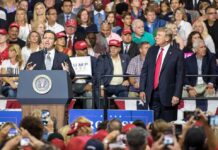

When two young men both claim self-defense but only one is branded a monster, it feeds the growing belief that America’s justice system bends for politics, not truth.
Story Snapshot
- Kyle Rittenhouse says critics call his Kenosha shootings “murder” while defending Karmelo Anthony as a self-defender.[3][2]
- Both cases center on deadly force and self-defense claims, but they sit in different states, facts, and stages of the legal process.[2][6]
- Media rules in the Texas trial of Anthony are tighter than in Rittenhouse’s Wisconsin case, fueling suspicion about what the public is allowed to see.[3]
- Research shows self-defense laws are uneven and can reflect bias, but the record here is too thin to prove a simple one-to-one double standard.
Why Rittenhouse Says There’s a Double Standard
Kyle Rittenhouse was acquitted in 2021 after a Wisconsin jury accepted his claim that he shot three men in Kenosha in self-defense, killing two and injuring one.[3][4] That verdict became a national symbol for people who think the justice system can still work and for others who see it as proof of deep bias.[1][4] In recent interviews, Rittenhouse argues that many on the left still call him a “murderer,” “white supremacist,” or “Nazi” even after the jury cleared him.[3]
Rittenhouse now points to the Texas case of Karmelo Sincere Anthony, a Black teenager charged as an adult with first-degree murder after a fatal stabbing at a high school track meet.[6] Anthony’s lawyers also claim he acted in self-defense.[2] On Newsmax, Rittenhouse said the “same people that are screaming self-defense for Carmelo Anthony are the same ones that are screaming that I’m a murderer” for shooting “three white guys.”[3] He sees that sharp contrast in language as proof that politics and race, not facts, drive public judgment.
What We Actually Know About the Two Cases
Newsweek describes both cases as built around lethal self-defense claims but stresses that they involve different situations in different states.[2] Rittenhouse’s shootings happened during riots in Kenosha, Wisconsin, with video from many angles and wall-to-wall national coverage.[2][6] Anthony’s case is a Texas school event stabbing after an argument over a tent, with prosecutors saying the victim was pushed and then stabbed, and the teen now on trial.[6] Unlike Rittenhouse, Anthony’s case was still moving through court when most of this commentary took off.[2][6]
That timing matters. A jury decided Rittenhouse’s fate years ago, while Anthony was only recently in front of a jury on a first-degree murder charge.[4][6] Side B commentators argue that the public and media may speak more cautiously about Anthony because there has not yet been a final verdict.[6] Others note that the two states’ self-defense laws are not identical, and the available sources do not walk through the exact legal elements in each case.[2][3] That makes it hard to say they are truly parallel in a strict legal sense.
Courtroom Cameras, Media Rules, and Public Suspicion
One flashpoint is how the Texas court has controlled media access in Anthony’s trial. Collin County Judge John Roach Jr. limited photography, video, audio, and live-streaming and set strict rules for media seating and contact with witnesses, citing intense public attention and the need to protect jurors and ensure a fair trial. Critics online claim these limits are tougher than those used in the Rittenhouse or Derek Chauvin trials and argue that such restrictions keep the public from fully judging the case.[3][5]
Rittenhouse fled and did not use deadly force until the mob which threatened to kill him and chased him and opened fire first also cornered him.
Kyle didn't even shoot first.
Clear cut self defense.
Karmelo wasn't chased. Nobody threatened to kill him.— morganimal (@jambillama) June 11, 2026
Those tighter rules play directly into a deeper fear shared by many on both the right and the left: that courts and media “gatekeepers” decide what ordinary people are allowed to see. Rittenhouse supporters note that his trial was livestreamed, replayed, and broken down frame by frame, while the Anthony coverage depends more on curated feeds and limited courtroom footage.[2][3] That difference does not by itself prove bias, but it does strengthen a sense that powerful institutions can tilt the field in quiet ways.
Self-Defense, Bias, and a System People Don’t Trust
Legal scholars and public health researchers have found that self-defense and “stand your ground” laws are applied unevenly across race and gender, and that expanding these laws has not clearly reduced crime. Studies show racial disparities in how often killings are ruled justified, with white shooters often faring better than Black defendants in similar scenarios. Other research flags how the “reasonable person” standard in self-defense can be affected by hidden bias in what people see as a threat.
Those findings cut both ways in this debate. On one hand, they support long-standing complaints, mostly from the left, that Black defendants like Anthony often face harsher treatment and less benefit of the doubt than white defendants. On the other hand, they also echo what many conservatives saw in Kenosha: a young man who was presumed guilty in the media long before a jury heard the evidence, and who is still treated as a villain even after acquittal.[1][3][4] Both sides are pointing to real cracks in the system, even as they talk past each other.
What This Fight Reveals About Today’s America
The clash over Rittenhouse and Anthony is not only about two young men. It is about a deeper fear that labels like “self-defense” or “murder” depend less on facts and more on which tribe you are in. Commentators jump quickly from the evidence in these cases to sweeping claims about race wars, white supremacy, or liberal witch hunts.[3][5] That kind of talk may fire up loyal audiences, but it also makes it harder for ordinary citizens to trust that courts are calling balls and strikes fairly.
For Americans who already believe the federal government and the broader justice system mainly protect the rich and connected, this is more proof that the rules are rigged. The Rittenhouse–Anthony comparison has been pushed in podcasts, social media, and cable shows without the full trial records from either case laid side by side.[2][3][5] That missing data matters. Without it, people fill in the blanks with their worst assumptions about “the deep state,” partisan media, and a legal system that seems to twist itself depending on who is in the dock.
Sources:
[1] Web – Kyle Rittenhouse is calling out a ‘self-defense’ double standard.
[2] Web – Karmelo Anthony vs. Kyle Rittenhouse
[3] Web – Karmelo Anthony, Kyle Rittenhouse and Two Self-Defense Americas
[4] YouTube – Kyle Rittenhouse Comparison In Self Defense Debate – Karmelo Anthony / …
[5] Web – Two Self-Defense Cases… But Completely Different Situations. ⚖️
[6] Web – A Tale of Two Cases: Karmelo Anthony and Kyle Rittenhouse
© primechronicle.org 2026. All rights reserved.