
Trump’s newest birthright-citizenship orders put a long-fought constitutional rule back in the crosshairs, this time with a narrower script and a bigger political message.
Story Snapshot
- President Trump signed two executive orders aimed at limiting birthright citizenship and stopping birth tourism.
- The White House says the orders rely on historical exceptions the Supreme Court has recognized.
- Axios reports the new orders focus on four groups, including children of some foreign diplomatic staff and people tied to commercial birth tourism.
- Reuters reports the Supreme Court already rejected Trump’s earlier effort to restrict birthright citizenship.
What Trump Signed
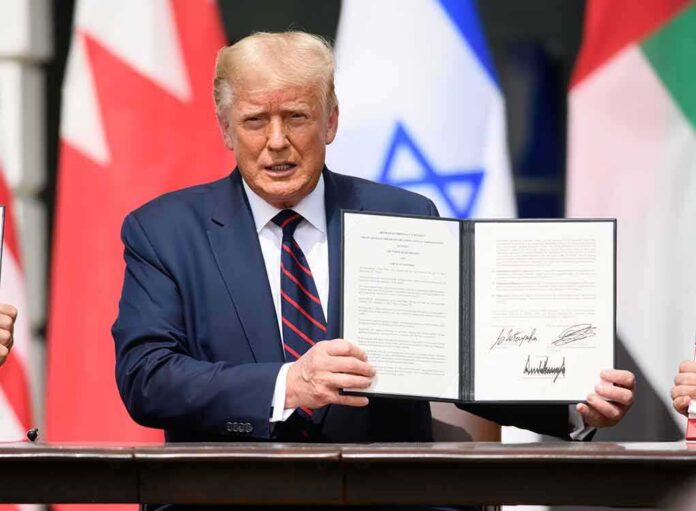
President Trump signed two executive orders on Thursday that target birthright citizenship and birth tourism. One order broadens the list of noncitizens whose children would not qualify for automatic citizenship, while the other aims to stop visitors from entering the country mainly to give birth. The White House says the goal is to protect the “meaning and value” of American citizenship and to act within limits the Supreme Court has already recognized.
The new order narrows its focus compared with Trump’s earlier attempt. The White House says it covers certain children of aliens who are not entitled to birthright citizenship under historical exceptions, and reports say the categories include some foreign diplomatic staff, people tied to foreign enemy groups, some territorial cases if the law changes, and people who enter for the sole purpose of giving birth. That narrower framing matters because it gives the administration a fresh legal theory, not just a repeat of the old one.
Why Supporters Say It Is Legal
The administration’s main argument is that not every child born on U.S. soil is covered by the Citizenship Clause in the same way. The White House fact sheet says the order is “non-exhaustive” and rests on historical exceptions to birthright citizenship that the Supreme Court has recognized. Supporters are trying to shift the debate from a broad ban on birthright citizenship to a smaller list of cases they say already fall outside the usual rule.
That approach is also designed to link citizenship policy with immigration enforcement. The birth-tourism order treats the practice as a kind of visa abuse, and public reporting says the administration wants tighter limits on visitors who seek visas mainly to give birth in the United States. For many voters, that framing will sound like a simple fraud fight. For critics, it looks like the same old attempt to use executive power to redraw a constitutional line.
Why Critics See Another Overreach
Critics have a strong counterpoint: the Supreme Court already rejected Trump’s earlier bid to limit birthright citizenship. Reuters reported that the Court, in a 6-3 ruling, held his prior directive violated the Fourteenth Amendment’s Citizenship Clause. The earlier White House order also tried to deny citizenship to children born to mothers who were unlawfully present or only temporarily present, with a father who was not a citizen or lawful permanent resident. That history will shape every new lawsuit.
WATCH: Trump Signs Executive Orders Adding Limits to Birthright Citizenship and BANNING Birth Tourism * The Gateway Pundit * by Jordan Conradson https://t.co/e1gs42pvl8
— JR (@JRpiecat) August 7, 2026
Mainstream coverage has treated the new move as another attempt to narrow a rule that has been part of American life for generations. That is why this fight lands on both sides of the political divide. Supporters see a president trying to close loopholes and restore control. Opponents see a White House testing how far executive power can go before it collides with the Constitution. Either way, the issue is no longer theoretical.
What Comes Next in Court
The next phase will likely turn on how judges read the new categories against the earlier ruling. If the administration can convince courts that some cases fit old exceptions for diplomats or hostile forces, part of the order could survive. If judges see the new language as a repackaged version of the earlier policy, the legal road will be short. The real test is whether the orders are a lawful refinement or just a fresh label on an old fight.
Sources:
cbsnews.com, whitehouse.gov, bbc.com, theguardian.com, en.wikipedia.org, axios.com, naacpldf.org, brennancenter.org, nytimes.com, aclu.org
© primechronicle.org 2026. All rights reserved.