
When a sitting governor calls a president a “son of a bitch” on national television and predicts democracy’s twilight, the line between political theater and existential warning all but vanishes.
Story Snapshot
- Gavin Newsom’s uncensored attack on Donald Trump jolts the Democratic Party’s public persona.
- Newsom warns that the next legitimate U.S. presidential election could be at risk by 2028.
- The confrontation signals an aggressive shift in Democratic strategy and rhetoric.
- Media and public reaction reveal deep anxieties about the future of American democracy.
Newsom’s Televised Provocation: A Governor Throws Down the Gauntlet
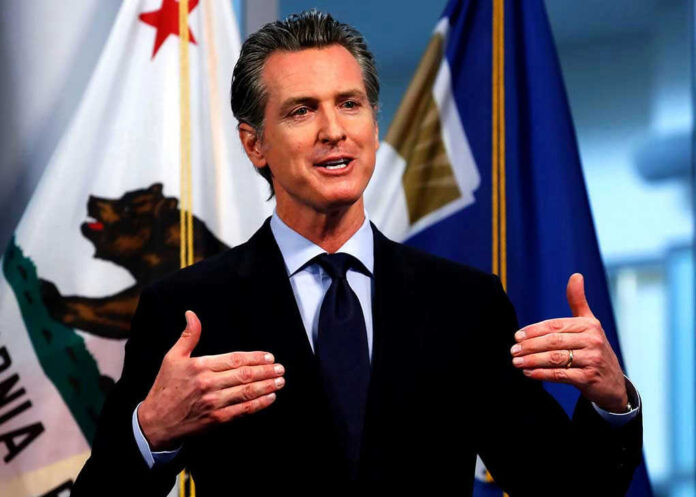
Gavin Newsom’s appearance on “The Late Show with Stephen Colbert” was not another run-of-the-mill political interview. From the outset, Newsom dropped all pretense of polite rivalry, referring to Donald Trump as a “son of a bitch” and laying bare his fear that the United States might not even manage a real presidential election in 2028. The rhetorical gloves were off, and the national audience—already weary from years of political strife—sat up in startled attention. For a governor once known for measured progressivism, these words represented not only a political gamble but a calculated bid to recast the Democratic image as one willing to meet fire with fire.
Newsom’s directness did not appear out of thin air. His tenure as California governor has been defined by protracted legal and political clashes with the Trump administration, including 41 lawsuits against federal policies. Yet, the Colbert moment marked a pivot: from legalistic contest to televised confrontation, signaling to Democratic voters and detractors alike that he intended to fight not just in the courts but in the court of public opinion. The calculated use of an expletive—rare for someone eyeing higher office—suggested Newsom wants to be seen as the Democrat who won’t blink, even when the stakes are the very survival of electoral democracy.
Election Anxiety and the Specter of 2028
Newsom’s warning about the 2028 election was more than a throwaway line. He argued that, unless the country “wakes up,” Americans may not enjoy a legitimate presidential election in just three years’ time. This is a profound escalation in the rhetoric about democratic backsliding, echoing concerns from election security experts and democracy scholars who have watched the erosion of public trust in U.S. elections since 2020. By voicing these fears on a comedy talk show—a staple for political messaging in the digital age—Newsom fused entertainment and urgency, ensuring his warning would ripple across traditional and social media platforms.
Colbert’s platform allowed Newsom to bypass the usual filters of political discourse, reaching an audience that is both politically engaged and prone to skepticism about institutional reassurances. The governor’s message, then, was twofold: a challenge to the Democratic Party to stiffen its spine, and a call to the American public to resist complacency before it’s too late. This approach, while energizing to some, risks further polarizing voters already anxious about the future and fatigued by years of partisan warfare.
Democratic Calculus: Strategy, Risks, and Repercussions
With this televised broadside, Newsom is not just venting frustration—he is staking out a new lane in the Democratic Party. His message is clear: symbolic resistance is not enough, and substantive, even combative, action is required if democracy is to survive the Trump era and its aftermath. This is a marked shift from the “when they go low, we go high” ethos to a more confrontational, perhaps even populist, posture. Party strategists are watching closely to see whether Newsom’s approach will galvanize a base hungry for visible resistance or alienate moderates wary of inflammatory language.
Supporters argue that Newsom’s candor is overdue, given repeated Republican efforts to undermine confidence in U.S. elections. Critics, however, warn that such rhetoric may further erode trust in institutions and push the political center even further into disengagement or cynicism. For Newsom, the risk is calculated: in an era where outrage often trumps nuance, visibility and perceived strength may prove more persuasive than cautious policy debate.
Colbert, the Media, and the Shaping of Political Reality
Stephen Colbert’s late-night platform has become a crucible for political messaging that blurs the lines between satire and alarm. By airing Newsom’s blunt remarks, the show amplified concerns about the health of American democracy and pushed them into the mainstream conversation. Late-night television, once an after-hours diversion, now functions as a key arena where political fortunes are made, narratives are forged, and the American public’s anxieties are both reflected and inflamed.
Media experts highlight how Colbert and his peers serve as both court jesters and contemporary town criers, distilling complex threats into shareable soundbites and viral moments. For Newsom, this is a double-edged sword: the more his warnings resonate, the more he sets expectations for action—not just rhetoric. And with the 2028 election looming, the question lingers: can a governor’s late-night broadside shake the country out of its democratic stupor, or will it simply become another episode in America’s ongoing political drama?
Sources:
AOL: Gavin Newsom Calls Trump a ‘Son of a Bitch’ on Colbert and Warns About 2028 Election Fears