
One unscripted phrase from a president can redraw the boundaries of military tradition, ignite national debate, and test the very soul of American civil-military relations.
Story Snapshot
- President Trump’s reference to nuclear weapons as the “N-word” stunned military leaders and observers alike.
- The Quantico summit marked a rare, direct threat to the careers of America’s top generals and admirals.
- New reforms targeting “wokeness” and physical standards signal a radical overhaul of military culture.
- National Guard deployments and nuclear policy shifts amplify concerns about presidential power and military readiness.
Trump’s “N-Word” Moment at Quantico: Redrawing the Line
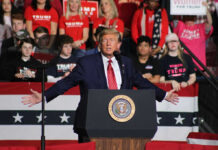
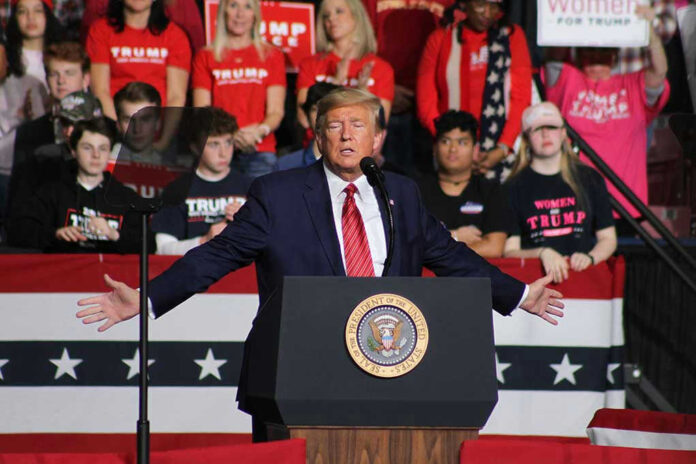
Quantico, Virginia—President Donald Trump, never one to tiptoe around controversy, stood before a sea of uniforms and delivered a 72-minute speech that would send shockwaves through both the Pentagon and the public. Declaring, “I call it the n-word,” Trump likened the gravity of nuclear weapons to the nation’s most incendiary racial slur, instantly electrifying the room. The parallel was unmistakable, unprecedented, and, in the eyes of many, unfathomable for a sitting president. Military leaders, some shifting in their seats, were left to parse the meaning and message behind the comparison.
Directly confronting the assembled generals and admirals, Trump threatened demotions for any who failed to align with his agenda. His rebuke of “wokeness” in the military was more than rhetoric; it set the stage for a new era of cultural and operational reform. Few in attendance could recall a moment when a president so publicly—and so personally—challenged the loyalty and integrity of the military’s top brass. The underlying message was clear: civilian supremacy would not just be asserted, but enforced, with careers hanging in the balance.
The New Military Directives: Anti-“Woke” and Unapologetic
Defense Secretary Pete Hegseth, echoing Trump’s tone, announced sweeping reforms targeting what the administration calls “woke” influences. Ten new directives landed with immediate effect: stricter physical fitness standards, new grooming requirements, and an explicit rollback of diversity and inclusion initiatives. The policy shift was not subtle. Hegseth’s edicts sent a signal to the rank and file: the military’s culture would be remade, top-down, in the image of its civilian leadership. For supporters, these changes promised a return to discipline and cohesion. For critics, they risked alienating key personnel and undermining the apolitical tradition that has long defined the armed forces.
Some lawmakers, like Senators Tammy Duckworth and Mazie Hirono, raised alarms about the impact on readiness and morale. Retired Lt. Gen. Mark Hertling, speaking for many in the military community, called Trump’s remarks “shocking” and “offensive.” The Pentagon’s silence—a refusal to release the full attendee list—only heightened speculation about dissent within the ranks. The institution found itself caught between public controversy and private uncertainty, with the world watching for signs of fracture or resistance.
Nuclear Policy, Command Authority, and the Shadow of Force
The controversy over language was only the tip of the spear. In the weeks leading up to the Quantico summit, Trump issued executive orders deploying National Guard troops to multiple cities, citing civil unrest and rising crime. At the same time, the administration’s stance on nuclear proliferation grew more confrontational, with recent U.S. strikes on Iranian nuclear facilities signaling a willingness to use force where diplomacy once prevailed. The U.S. Strategic Command (STRATCOM) faced the prospect of new roles in nonproliferation enforcement, raising questions about the future of American nuclear policy and global stability.
Henry Sokolski, a respected nonproliferation expert, warned that while Trump’s aggressive posture might deter adversaries, it also risked undermining the credibility built through decades of careful, consistent policy. For military professionals, the juxtaposition of racially charged language and nuclear brinkmanship was more than a rhetorical misstep—it was a challenge to the norms that keep the world’s most powerful arsenal under careful control.
The Fallout: Morale, Precedent, and the Politics of Command
Morale among senior officers faces new strains, while the chain of command grapples with an uncertain future. The cost of the Quantico summit, coupled with ongoing National Guard deployments, runs into the millions. Yet the deeper impact lies in the precedent set. Rarely has a president so openly politicized military leadership, or used language with such potential to divide rather than unite. For minority service members, the tone and substance of the reforms present new challenges to inclusion and trust.
Supporters hail Trump’s moves as a necessary course correction, a long-overdue assertion of civilian control and military effectiveness. Critics warn of lasting damage: an erosion of civil-military norms, diminished international standing, and a military more vulnerable to political winds than at any time in recent memory. The debate is far from over, with calls for resignations, public hearings, and deeper scrutiny of the administration’s approach to America’s armed forces. In the end, the legacy of Trump’s “N-word” moment may prove to be not just what was said, but how the nation—and its military—chooses to respond.